Sleepers
The Door into SummerSleepers are people who enter cold sleep and later awaken decades beyond the lives and skills they once knew. In Dan Davis’s experience, that passage through time is not a simple reset: a Sleeper may possess assets yet lack local bearings, and may be treated as a suspicious stranger precisely when seeking help. Dan’s own long interruption becomes the basis for a broader sense of kinship with others who have undergone the same rupture.
Identity and Historical Displacement
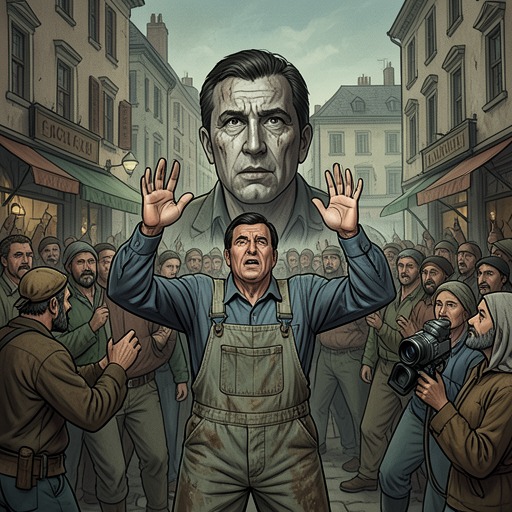
The term refers to people emerging from cold sleep into a society separated from their earlier lives by years or decades. Dan knows this condition from within: he identifies himself as a Sleeper when applying for engineering work, explaining the gap in his professional experience. The explanation does not restore his credentials. Instead, the hiring office treats his decades outside active practice as a reason his engineering degree is no longer useful and rejects him on age grounds, taking his birth year, 1940, as decisive even when he says he is only thirty.
That exchange captures the mismatch at the heart of Sleeper life. Dan’s own sense of age follows his lived experience, while the employer measures him by calendar time. Cold sleep has preserved his youth in one sense but has not preserved the professional record that an employer expects to see. The social system recognizes the elapsed years more readily than the Sleeper’s interrupted biography.
Searching for the Missing
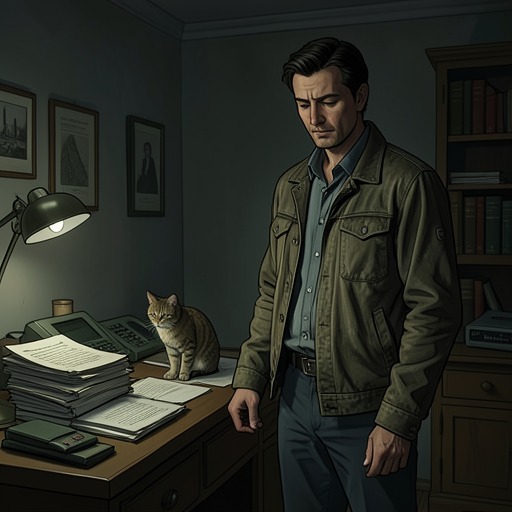
After awakening, Dan tries to locate Belle and Miles, who are no longer with Hired Girl, Inc., and especially Ricky. His search has to bridge a thirty-year gap with little time and limited money. None of the three appears in the Los Angeles telephone listings or in the national information search he pays to have made through Cleveland; he has Belle searched under both Gentry and Darkin. The Los Angeles County voter register yields no trace either.
Hired Girl, Inc. cautiously confirms by letter that people with those names were once company officers thirty years earlier, but cannot help him further. Dan recognizes that a cold trail would demand resources he lacks: he has neither fingerprints to offer the FBI nor the Social Security numbers that might make a search more precise. He imagines that a well-funded detective agency could work through utility records and newspaper files, but cannot afford to hire one or undertake that labor himself. His search therefore narrows: he gives up, for the time being, on Miles and Belle while promising himself that he will arrange professional help to trace Ricky as soon as he can afford it.
He also investigates whether Ricky’s disappearance might be connected to property held for her. He has already determined that she owns no Hired Girl stock, then writes to the Bank of America to ask whether it holds or ever held a trust for her. The bank first replies with a form letter about confidentiality. When Dan explains that he is a Sleeper and that Ricky is his only surviving relative, a trust officer sends a personal response but still cannot disclose beneficiary information. The officer does provide one negative fact: the bank has never held a trust for Frederica Virginia Gentry through any of its branches. Dan’s exceptional situation earns a more considerate answer, not access to the records he needs.
Institutional Suspicion and Vulnerability
A Sleeper’s unfamiliarity with the world after awakening can make a genuine family claim difficult to distinguish from a confidence scheme. When Dan seeks information about Ricky, Dr. Bernstein warns him that criminals prey on newly awakened Sleepers, who may have considerable assets while being unworldly, lonely, and frightened. The warning frames the Sleeper not only as someone injured by dislocation but also as someone whom institutions and individuals may need to protect from exploitation.
That protective logic has a cost. Dan says that he is Ricky’s cousin and that he entered cold sleep before she did, so he did not know she would follow. Dr. Bernstein answers that supposed relatives are a familiar claim among people targeting Sleepers, and looks at Dan as if he might himself be recognizable. The scene makes his status work against him: his appeal to shared family history is precisely the sort of story that officials are trained to doubt. The Sleeper must negotiate a new social world in which vulnerability invites safeguards, but those safeguards can obstruct reunion and recognition.
Kinship Among Sleepers
Dan’s response to his own displacement extends beyond the particular search for Ricky. Though he usually reads little of the newspaper, he continues to check its vital-statistics column for withdrawals—the people coming out of cold sleep. He imagines that one day he may see the name of someone he knew before, go to welcome that person, and offer a hand. The chance is small, but the routine gives him satisfaction.
He understands the impulse as a sense that other Sleepers are his kinfolk. The comparison is to people who served in the same outfit: the bond need not amount to intimate friendship to justify at least sharing a drink. This is not an abstract label imposed on a population; it grows from Dan’s memory of being abruptly out of place and his recognition that another newly awakened person may be lonely and unorientated in much the same way. His impulse to welcome them reverses the suspicion he encounters when he seeks help himself.
Narrative Significance
The novel presents cold sleep as more than a means of moving a character across historical time. It creates a recurring social condition: the Sleeper carries a past that may be emotionally vivid but is difficult to prove, while employers, banks, and medical staff respond according to records, rules, and risks in the present. Dan’s search shows how a lost generation of records and relationships can turn a simple question—where someone went—into a costly investigation constrained by privacy and institutional caution.
Dan’s daily check for withdrawals gives this condition a quietly humane counterpoint. He cannot make the missing people reappear, and his own search remains uncertain, but he can watch for others who have crossed the same temporal divide. The practice turns an isolating technological fate into a modest form of mutual obligation: Sleepers may arrive as strangers to the age around them, yet Dan treats their shared experience as grounds for welcome.