
The Case Against the Wrong Man
The Final CurtainInvestigators’ growing certainty that Seizo Naemura is the missing killer collides with witness testimony, exposing how an attractive theory can itself become a source of conflict.
increasing Bearing strength in each event
 decreasing
Bearing strength in each eventdecreasingThe Teacher Disappears
A Missing Figure from Hiromi’s Past
The search begins
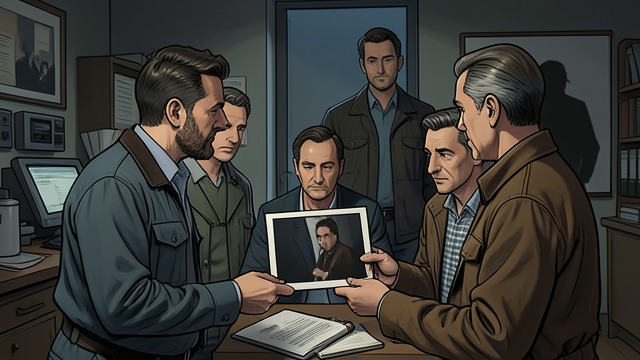
The possibility that Michiko Oshitani’s trip was connected to Hiromi Asai leads police to examine their school years. Seizo Naemura, their former homeroom teacher, has been out of contact since leaving his post, and his residence registration was eventually canceled. The timing of his departure and divorce makes him a compelling person to investigate.
A sketch takes shape
Former classmates remember Naemura as a serious teacher who helped students, while old yearbooks show him changing markedly in appearance before he left the school. The later photograph makes him look thinner and more troubled, giving detectives a plausible route from the teacher they remember to the older man in the police sketch.
The case’s uncertainty encourages the team to build around the one missing adult who connects to Asai’s past. Yet the connection is only circumstantial. Naemura’s disappearance may explain the sketch and the alias trail, but it does not explain the murders or prove that he was the dead man.
The Ruby Connection
A Gift with Two Histories
The former lover
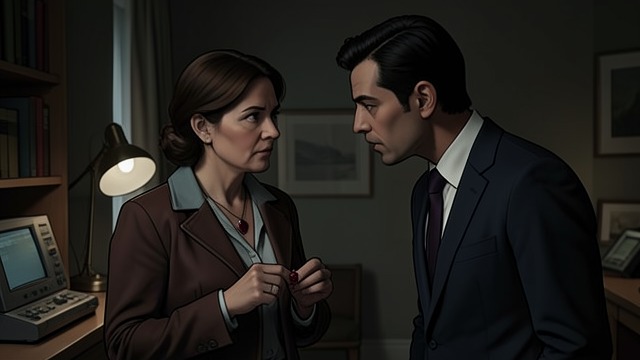
Takeo Suwa tells Matsumiya that Asai had been unsettled by a breakup before their marriage. Emiko Okamoto recalls seeing Asai with an unidentified man and remembers that she later stopped wearing a ruby pendant. Neither witness knows the man’s name, but both accounts suggest a hidden relationship that mattered to Asai.
A second trail
Naemura’s former sister-in-law says that his marriage collapsed after he became devoted to another woman. She recalls a ruby pendant appearing on his credit-card bill, an expense that helped expose the affair. The matching object seems to connect the teacher’s marital crisis with Asai’s lost pendant.
The detectives begin to see Naemura as the former lover who gave the jewel and left his wife to move to Tokyo. The clue is emotionally persuasive because it supplies a motive for both his disappearance and his attachment to Asai. But the pendant is an object shared by two accounts, not proof that the identities in the murder investigation are one and the same.
A Plausible Composite

Connecting the Missing Man
A chain of identities
Koshikawa’s apartment evidence points toward a dead man connected to nuclear-power work. A train timetable, radiation records, and witnesses gradually suggest that he used the name Shunichi Watabe and may also have worked as Kazutoshi Yokoyama. Because Naemura vanished and was once close to Asai, investigators tentatively fit him into the same chain.
The theory gains momentum
The ruby pendant appears to support a relationship between Naemura and Asai, while the school history offers a reason for a long separation. Matsumiya argues that a teacher could have left his wife, quit his job, and concealed himself under successive identities. The team’s scattered facts now seem to tell one coherent story.
Kaga remains unconvinced. A narrative can be coherent without being true, and the supposed transformation from a schoolteacher into a wandering laborer requires direct confirmation. The conflict is no longer merely between suspects; it is between the pressure to solve the case quickly and the obligation to test each link independently.
Witnesses Break the Theory
Recognition Against Inference
A decisive refusal
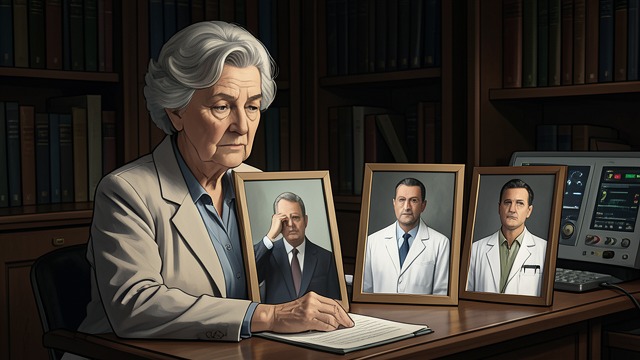
Matsumiya takes photographs of Naemura to Yasuyo Miyamoto, who once knew Shunichi Watabe closely. He hopes she will recognize the man after accounting for age and weight changes. Instead, she firmly says that neither image resembles Watabe, distinguishing the man she knew from the teacher in the photographs.
The case is forced to turn
Her certainty destroys the easiest identification. Kaga had suspected that Naemura and Watabe might not be the same person, but the task force had already begun treating their resemblance and overlapping relationships as a strong lead. The witness’s refusal prevents the investigation from converting coincidence into fact.
The rejection does not eliminate Naemura from the story; it changes the question. If he is not Watabe, then Asai may have had more than one missing man in her past, and the actual killer’s identity remains unresolved. Matsumiya must release a theory he had helped construct and return to evidence that does not fit neatly.
The Teacher’s Real Place
A Suspect Restored to the Past
The correction
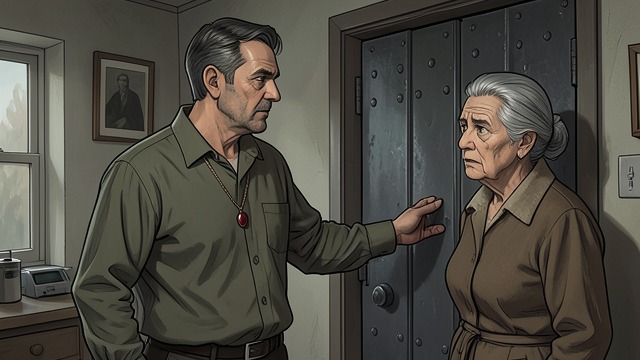
Kaga identifies Tadao Asai, not Seizo Naemura, as the man living under the name Shunichi Watabe. Naemura’s relationship with Hiromi explains the ruby pendant and his disappearance, but it does not make him the murdered man. The investigation had mistaken a genuine secret for the secret behind the murders.
Another crime remains
Tadao’s connection to the old false death, the nuclear-power workforce, and Hiromi’s later life gives the alias trail a different origin. Naemura himself was also killed by Tadao, but that murder occurred years earlier and was concealed separately. The teacher was neither the central killer nor an innocent bystander to the family’s history.
The correction demonstrates how one clue can be true while the conclusion built upon it is wrong. The affair and pendant remain essential to Hiromi’s past, yet the case is solved only when Kaga stops forcing the killer into the role of the missing teacher and recognizes the father hidden behind the aliases.
The investigation’s first week, as school records are examined
During interviews with Hiromi Asai’s former husband and friend
Before the second trip to Sendai
After Yasuyo Miyamoto compares the old photographs with her memory
Near the ending, as Kaga reconstructs Tadao Asai’s life
