Hiromi Asai–Michiko Oshitani friendship
The Final CurtainHiromi Asai–Michiko Oshitani friendship was a close school-age bond that endured in memory after the two women’s lives diverged. Michiko Oshitani’s loyalty to Hiromi Asai, including her support when Asai was bullied, gives the friendship both personal weight and investigative significance: the police eventually recognize that the women’s shared past connected them to the same unresolved network of people.
School Friendship
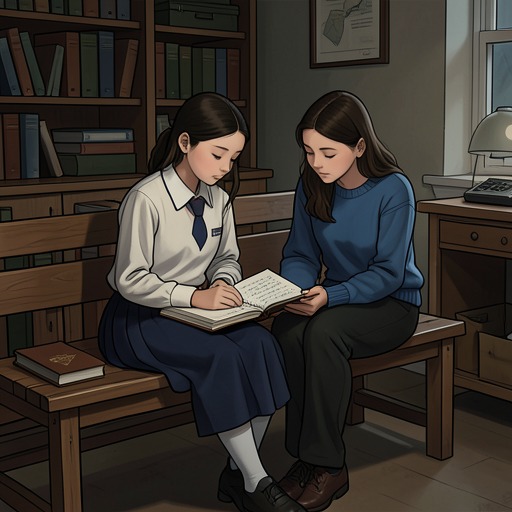
Asai and Oshitani attended school together in Shiga Prefecture and were described by a former classmate as particularly close. Kumi Hashimoto recalled that the two were “like two peas in a pod,” and identified Oshitani as about the only person who stood up for Asai. Another classmate, Akiko Tanikawa, initially hesitated when asked whether Oshitani had joined in the bullying, but Hashimoto firmly said she had not; Tanikawa then acknowledged that this matched her recollection.
The bullying involved other pupils saying nasty things to Asai, rather than physical violence. In the conversation years later, Hashimoto framed it as something that would now be called bullying. The distinction matters to the friendship’s history: Oshitani’s role is remembered not as a bystander’s vague sympathy, but as a person who opposed the group’s treatment of her friend.
A Friendship Across Divergent Lives
After school, Asai pursued a career in theater, becoming known as Hiromi Kadokura, a director, playwright, and actress. Hashimoto believed Oshitani had probably followed that career from its beginnings. Asai worked mainly on stage and was rarely on television, so the public profile of Kadokura did not necessarily make her widely recognizable; Hashimoto described the performing arts as a difficult world and noted that Asai eventually dropped out of sight.
The police’s reconstruction likewise placed the friendship in the past: the only period when Oshitani and Asai had been together was at elementary and junior high school. That separation did not erase the importance of their earlier connection. When investigators later considered how the murdered Mutsuo Koshikawa, also known as Shunichi Watabe, might have been known to both women, their shared school years became a route into the case’s older history.
Significance to the Investigation
The friendship helped define the investigators’ search. They looked for someone who had known both Oshitani and Asai and had disappeared; this led them to investigate Seizo Naemura, their homeroom teacher in the second year of junior high school. The school connection thus became a practical investigative link, although the later testimony of Yasuyo Miyamoto showed that Naemura was not the man they were seeking.
The friendship also informed the detectives’ eventual account of the murder victim’s connection to Asai. Kaga reasoned that Watabe had been connected to Asai for at least ten years and had few other relationships, before proposing that Watabe was in fact Asai’s father, Tadao Asai. In this wider reconstruction, Oshitani and Asai’s old bond explains why Oshitani belonged to the same circle of knowledge as Asai; it does not by itself establish the father’s identity, but it gives the investigation an essential point of connection between the two women.