Hiromi Asai’s school bullying
The Final CurtainHiromi Asai’s school bullying was a brief but consequential episode of verbal hostility, recalled years later by her former classmates. Their memories distinguish it from physical violence while showing how little protection Hiromi had: Michiko Oshitani was among the few people who supported her, and the homeroom teacher eventually stepped in.
Recalled at School
During an interview about their school days, a former classmate described what happened as bullying in contemporary terms. The conduct consisted of nasty remarks directed at Hiromi; the account explicitly says there was no physical violence. The recollection presents the episode as limited in duration, not as a prolonged campaign.
The memories were uneven. Kumi Hashimoto recalled that the bullying did not last long and identified Mr. Hamano as one of the students involved, though Hamano said he did not remember taking part. That disagreement underscores that the episode was being reconstructed long afterward, from recollections that did not fully align.
Michiko Oshitani and the Teacher’s Intervention
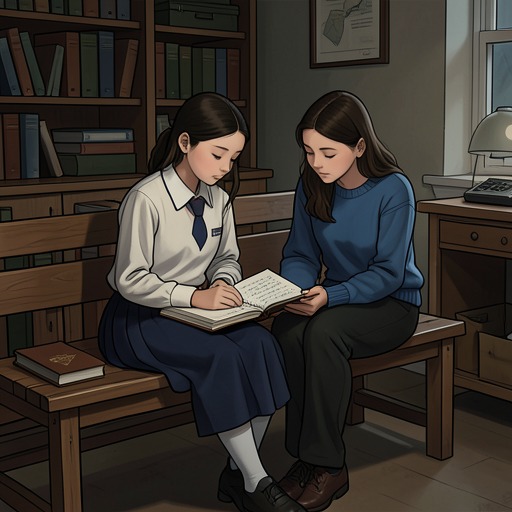
Michiko Oshitani was not among the students who bullied Hiromi. Hashimoto remembered the two girls as close friends and said Michiko was about the only person who stood up for Hiromi. Akiko Tanikawa agreed that Michiko had not been involved. Asked whether Michiko was herself targeted for defending her friend, Tanikawa said she did not think so.
The homeroom teacher noticed what was happening and quietly spoke with several students. The account identifies this intervention as a crucial detail in the investigation’s effort to reconstruct Hiromi’s past. It also marks a point at which an adult recognized the hostility and acted, even though the bullying had not continued for long.
Place in Hiromi’s Wider History
The school episode sits within a much larger history of disrupted care. Later, after Hiromi’s mother left the family and her father died by suicide, a vice principal described Hiromi as a victim of abuse through neglect and abandonment. She was placed in an understaffed orphanage, where she faced another bout of bullying as a newcomer, along with little privacy and little sense of family. Support from Seizo Naemura and Motoko Yoshino helped her endure that institutional hardship.
The two settings should not be conflated: the former classmates’ account concerns Hiromi’s school years, while the later bullying took place after her placement in the orphanage. Together, however, these episodes show how social hostility recurred in different circumstances, and how the account of Hiromi’s childhood depends on piecing together both remembered peer behavior and the failures of adult care.