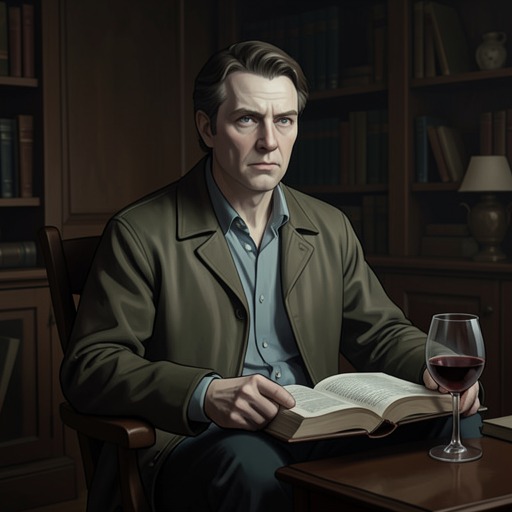
Brent
The Five Love LanguagesBrent is a husband and father whose marriage to Becky reaches the brink of separation after he concludes that he no longer loves her. His chapter-length case traces the damage of an emotionally empty marriage, the pull of a new romantic attachment, and the recovery made possible when he and Becky learn to express love in languages the other can receive. His change is neither immediate nor powered by advice alone: the affair’s emotional high collapses, and sustained counseling helps the couple rebuild their relationship.
Identity and Background
Brent has been married to Becky for twelve years and is the father of their children. Their courtship was exciting, and they married at the height of the “in love experience.” After the early adjustments of marriage, they pursued the American dream. As that initial romantic intensity faded, however, they did not learn to speak each other’s primary love language sufficiently. Becky believed they were working toward a shared goal, and she remembered Brent as kind and caring and as a good father. Beneath that reassuring picture, the couple’s emotional needs had diverged: Becky’s love tank had remained only half full for several years, while Brent’s was empty.
The account does not describe a single dramatic rupture that explains the marriage’s decline. Instead, it emphasizes an extended failure of emotional connection. They spent less time together, and Brent eventually described their relationship as empty and said he no longer enjoyed being with Becky. The difference between Becky’s assumption that the marriage was functioning and Brent’s sense of prolonged deprivation makes their crisis a story of how a relationship can appear intact to one partner while the other has already grieved its loss inwardly.
The Marriage Crisis
Brent initially comes to the counselor’s office not on his own initiative but at the counselor’s request. His stillness contrasts sharply with Becky’s visit a week earlier, when she wept uncontrollably as she reported that Brent had said he no longer loved her and was leaving. The counselor describes Brent as stone-faced and unfeeling, but understands his composure not as proof that the crisis is painless: he seems to have done his weeping inwardly weeks or perhaps months before Becky came to understand what was happening.
Brent says that he has not loved Becky for a long time. He does not want to hurt her, but says they are no longer close, that the relationship has become empty, and that he has no feelings for her. His words show both the depth of his estrangement and his uncertainty about its cause: he wishes the situation were different but says he does not know what happened. The chapter places this conviction in a wider pattern, arguing that a person who believes love has ended may feel emotionally free to seek it elsewhere. That framing explains Brent’s vulnerability without making his choice to pursue another relationship consequence-free.
The counselor suspects that Brent may already be involved in another “in love experience,” since few people leave a marriage while feeling emotionally empty unless they see a prospect of having that need met elsewhere. Brent confirms that he has been in love with another woman for several months. He had hoped his feelings would fade and that he could resolve matters with Becky, but conditions at home worsened, his love for the other woman increased, and he could not imagine living without his new lover.
The Affair and Its Reversal
Brent says he sincerely does not want to hurt Becky or the children, while also feeling that he deserves a happy life. The counselor tells him that 60 percent of second marriages end in divorce and discusses research on divorce’s effects on children. Brent is surprised by the statistic but believes he will beat the odds; he also expects to remain a good father and believes the children will recover from the trauma. The counselor explains the distinction between falling in love and the enduring emotional need to feel loved, outlines the five love languages, and urges Brent to give his marriage another chance. Brent appreciates the concern and asks the counselor to do what he can to help Becky, but remains convinced that there is no hope for the marriage.
A month later, Brent calls to talk again. His earlier composure has given way to visible distress: the other woman is coming down from the emotional high, noticing things in him she dislikes, and withdrawing. Brent is crushed by her rejection, and tears come to his eyes as he describes how much she means to him and how unbearable the loss feels. The reversal exposes the instability of the new attachment on which he had based his hopes for happiness. The counselor listens sympathetically for an hour before offering advice, then identifies Brent’s pain as grief over a loss that will not disappear overnight. He reminds him that the “in love experience” is temporary and that sooner or later people return to ordinary life; Brent agrees that the collapse happened at a better time than it might have.
Counseling and Change
Once the affair has begun to falter, the counselor suggests that Brent and Becky seek marriage counseling. He presents long-lasting emotional love as a choice and explains that love could be reborn if the couple learned to speak each other’s primary love languages. Brent agrees to counseling. Over the next nine months, the work addresses numerous conflicts that the couple had never resolved, but the account identifies their discovery of each other’s primary love language—and their choice to speak it frequently—as the key to the marriage’s renewal.
The transformation is confirmed in stages. Nine months after beginning counseling, Brent and Becky leave the counselor’s office with what the account calls a reborn marriage. Three years later, Brent reports that their marriage is wonderful and thanks the counselor for helping him at a crucial point in his life. He says the grief over losing his former lover has been gone for more than two years. His final image is no longer of an empty emotional tank or an unattainable new romance: he says his tank has never been so full and that Becky is the happiest woman one could meet. This ending presents reconciliation as a sustained change in the couple’s relationship, not simply as Brent’s return after the affair disappoints him.
Love, Choice, and the Wider Argument
Brent’s story illustrates the book’s distinction between the emotional high of falling in love and the continuing need to feel loved. The other woman’s withdrawal makes the first experience’s impermanence concrete; the couple’s counseling, by contrast, treats lasting love as a practice that can be chosen and learned. The two processes are not presented as interchangeable: the affair’s emotional intensity does not guarantee durable intimacy, while the renewal of Brent and Becky’s marriage depends on addressing unresolved conflicts and speaking each other’s love language repeatedly.
The chapter also connects Brent’s case to its advice about actions that may not come naturally. In explaining service as a love language, the narrator discusses his own decision to vacuum for his wife, whose primary language is Acts of Service, despite having vowed as a boy that he would never vacuum a house again. That example supplies a practical counterpart to Brent and Becky’s counseling: love may require action outside habit or inclination. In Brent’s case, the available account does not specify the particular acts either spouse adopted, so the emphasis remains on learning and speaking their respective primary languages rather than on an invented list of tasks.
The story’s narrative shape is a sequence of reversals: Becky arrives devastated while Brent appears composed; his account reveals an inward grief that preceded her discovery; he first refuses hope for the marriage, then returns to the counselor in pain when his new lover withdraws; and, after counseling, he describes a marriage that is happier than before. These contrasts make his case more than an illustration of romantic disillusionment. It tests the claim that emotional emptiness need not dictate the future of a marriage, while showing that renewal requires more than wishing the past away: love does not erase what happened, but changed choices can create a different future.