Chicago
The Five Love LanguagesChicago serves two roles in the book’s discussion of gift-giving: it is where the author studied anthropology and considered cultural patterns of love and marriage, and it is where he heard Jim and Janice describe a turning point in their relationship. The city becomes a point of connection between a cross-cultural observation and a personal account of marital distress and attempted repair.
Anthropological Study
While studying anthropology in Chicago, the author examined detailed ethnographies from societies across the world. His studies ranged from the Mayan and Aztec cultures of Central America to the peoples of Melanesia and Polynesia, the Eskimos of the northern tundra, and the Ainu of Japan. In every culture he studied, gift-giving appeared as part of the process of love and marriage.
That recurring pattern prompted him to consider whether giving is a fundamental expression of love that crosses cultural boundaries. The question, first framed as an academic and philosophical one, also carried practical implications for North American couples. Chicago is thus associated with the beginning of an inquiry that treats gifts not merely as possessions but as possible signs through which affection is communicated.
Jim and Janice’s Account
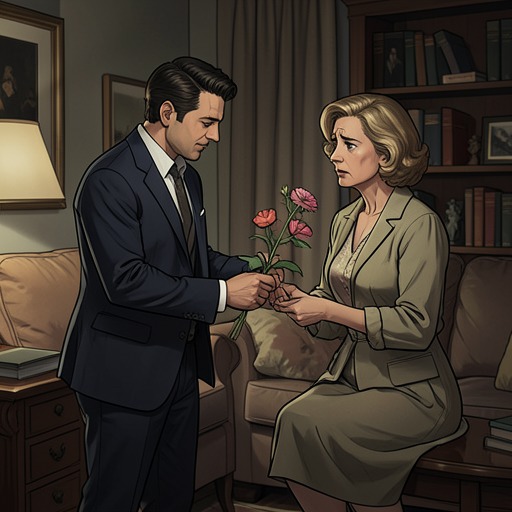
The city also frames the couple’s personal story. After attending the author’s marriage seminar in Chicago, Jim and Janice agreed to drive him to O’Hare Airport on a Saturday afternoon. With two or three hours before his flight, they suggested stopping at a restaurant. The author was hungry and accepted, but the meal became an opportunity for them to tell him about what Janice called a miracle in their marriage.
Jim and Janice had grown up on farms in central Illinois less than a hundred miles apart, then moved to Chicago shortly after their wedding. When they spoke with the author, they had been married for fifteen years and had three children. Janice said that their first Chicago seminar, three years earlier, had found her desperate: she was seriously considering leaving Jim and had told him so. She described their marriage as empty and said she had given up after years of asking for his love without receiving a response.
Janice recalled feeling loved by the children but nothing coming from Jim; by that point, she said, she hated him. She characterized him as methodical, routine-bound, and as predictable as a clock. Her account made the emotional distance concrete through the rhythm of her own efforts: she cooked, washed, and ironed, repeating those tasks in what she believed a good wife should do. She also had sex with Jim because she knew it mattered to him, yet felt no love in return. She felt that he had stopped dating her after their wedding and took her for granted, leaving her feeling used and unappreciated.
The City’s Narrative Significance
The account places Chicago at the intersection of the book’s general claim about gifts and the specific circumstances of a couple’s marriage. The author had already observed gift-giving across the cultures he studied; in Chicago, Jim and Janice’s story offered a personal setting in which the question of how love is expressed became urgent. The seminar, airport drive, and restaurant conversation give the city a role beyond backdrop: it is where Janice explains the depth of her despair and introduces the marital change she calls a miracle.
The narrative also uses the restaurant conversation to move from a broad premise to a particular case. Janice’s description of routine, repeated domestic labor, and unreturned affection shows why a visible expression of love could matter to someone who felt emotionally neglected. The supplied account establishes the background and the couple’s distress, while presenting Chicago as the place where their story is told to the author.