Reynolda Gardens
The Five Love LanguagesReynolda Gardens is the setting for a brief but consequential encounter: during a Saturday stroll, a counselor meets Ann, whose question about whether love can survive hatred prompts him to reflect on his own marriage and on the limits of what he can promise her. The gardens’ calm, cultivated setting frames a conversation shaped by hurt and uncertainty rather than offering a resolution to it.
Setting and Background
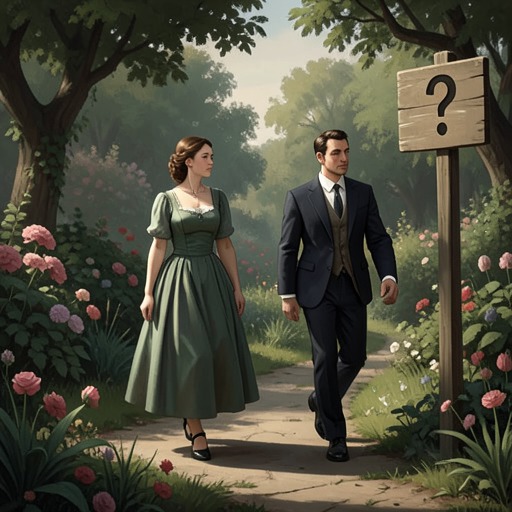
On a beautiful September Saturday, the narrator and his wife, Karolyn, were walking through Reynolda Gardens, enjoying plants, some imported from around the world. The gardens had first been developed by tobacco magnate R. J. Reynolds as part of his country estate and were later incorporated into the Wake Forest University campus. The couple had just passed the rose garden when the encounter began.
The Encounter with Ann
Ann, who had started counseling two weeks earlier, approached while looking down at the cobblestone walkway, apparently absorbed in thought. The narrator greeted her; she was startled, then looked up and smiled. After he introduced her to Karolyn and they exchanged pleasantries, Ann abruptly asked whether it was possible to love someone one hated. The question disrupted the ordinary rhythm of the walk and made the garden a place where a private marital crisis surfaced in public.
The narrator recognized that Ann’s question came from deep hurt and deserved a considered answer. Since he expected to see her at another counseling appointment the following week, he suggested they discuss it then. Ann agreed, and the couple continued their stroll. The question nevertheless stayed with him as they drove home.
Reflection and Narrative Significance
On the drive, the narrator and Karolyn recalled that their own early marriage had included feelings of hate. Condemning words had caused hurt, which gave way to anger; anger held inside, he reflects, becomes hate. Their relationship changed as they chose to love and learned, over about a year, to discuss disagreements without condemnation, make decisions without destroying unity, offer constructive suggestions without demands, and speak each other’s primary love language. As they did so, their anger and hatred diminished.
The contrast with Ann’s circumstances gives the garden encounter its unresolved weight. The narrator knew that Ann’s husband had refused her requests to attend counseling or engage with a book or recording about marriage, insisting that he had no problems and that she was the one at fault. After ten years of constant criticism and condemnation, Ann’s feelings of love had been killed, her emotional energy depleted, and her self-esteem almost destroyed. Reynolda Gardens thus marks the point where a question about love and hatred becomes a concrete dilemma: the narrator’s experience shows that change can begin with a choice, but Ann’s husband has not shown the openness to learn that made change possible in the narrator’s marriage.