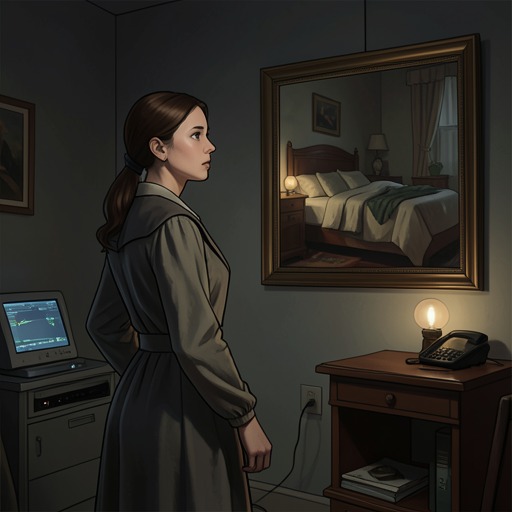
Wife Stops Nagging Bob to Paint the Bedroom and Expresses Appreciation Instead
The Five Love LanguagesThe account of the wife who stops nagging Bob to paint their bedroom and begins expressing appreciation instead is a practical demonstration of how changing the way love is communicated can alter a marital exchange. After nine months of urging him to paint, she is advised to stop raising the unfinished job and to acknowledge the helpful things he already does; she returns three weeks later saying the approach worked.
The Unfinished Bedroom
The wife brings the problem to Dr. Chapman as a counseling question: she has been after Bob for nine months to paint their bedroom and has tried everything she knows, without getting him to do it. Her frustration has narrowed the question to a specific outcome—getting the bedroom painted—while the consultation redirects attention to the couple’s existing pattern of giving and receiving appreciation.
She describes a recent Saturday when the weather was pretty and Bob spent the day washing and waxing the car. The example establishes the contrast at the center of the episode: she sees an uncompleted household task, while the counselor asks her to notice useful things Bob already does. The issue is not resolved by a new plan for painting; the proposed change concerns what she says in response to his ordinary contributions.
Advice: Stop Pressing, Start Appreciating
Dr. Chapman’s first suggestion is emphatic: she should not mention painting the bedroom again. When she doubts that silence will help, he explains that Bob already knows she wants the room painted, so repeating the request supplies no new information. The advice interrupts the cycle of reminders rather than offering another way to make the reminder more forceful.
The second suggestion is to give Bob a verbal compliment whenever he does something good. Dr. Chapman names concrete examples: taking out the garbage or paying the electric bill. He contrasts appreciation with a sarcastic rebuke about the garbage having been left so long that the flies might carry it out themselves. In the recommended response, the wife thanks Bob for the specific act and says that she appreciates it. The point is to recognize the contribution without attaching a complaint to the recognition.
The distinction matters to the counselor’s account of love. Love is not framed as a technique for extracting the desired result; its object is the well-being of the person loved. Appreciation may make someone more inclined to reciprocate, but using praise merely to get the bedroom painted would turn affirmation into another instrument of pressure. The episode therefore presents verbal encouragement as an expression of regard, not as a disguised demand.
A Change in the Exchange
The wife leaves unhappy with the advice, still unconvinced that compliments will get the bedroom painted. Three weeks later, she returns to Dr. Chapman’s office with a different assessment: “It worked!” The account does not specify whether or when Bob paints the room, so the reported success is the wife’s judgment that the recommended approach worked, not a stated confirmation that the original job was completed.
Dr. Chapman describes what she learned as the greater motivating force of verbal compliments compared with nagging words. That conclusion follows the shift in her response: instead of repeatedly centering what Bob has not done, she acknowledges his helpful actions. The narrative’s measurable outcome is her return after three weeks and her report of success; it does not supply further details about the bedroom or the couple’s later circumstances.
Relation to the Book’s Larger Argument
The anecdote gives a small, concrete instance of the book’s broader claim that spouses may express care in ways that do not automatically make the other person feel loved. In its account of love as a kind of language, sincerity alone does not ensure that a message is understood. Here, the advice focuses on a particular communicative practice—spoken appreciation—and on replacing criticism with recognition of specific acts.
The episode also sits beside the book’s discussion of domestic labor and learned expectations. In a separate counseling example, Mark explains that he expected household work to fall to his wife because that was the arrangement he had seen between his parents; the book argues that spouses may need to examine and change such inherited role assumptions. The Bob anecdote does not establish Bob’s motives or household-role beliefs, but its examples of garbage, bills, and car care likewise make ordinary domestic contributions visible as acts that can be acknowledged rather than taken for granted.
Across these examples, the book treats loving communication as an adjustment that requires attention to the other person rather than repetition of one’s own preferred message. The wife’s change is limited and specific: she stops bringing up the bedroom and begins offering sincere thanks for helpful acts. Its significance lies in that change of focus—from pressure for a task to explicit recognition of the person doing something for the household.