Carlo Giachery
The Florios of SicilyCarlo Giachery is an architect, business associate, and friend of Vincenzo Florio whose professional imagination helps turn the Florios’ commercial ambitions into buildings and institutions. He is more than a trusted agent: his work on industrial design and the Favignana tonnara makes him a partner in Vincenzo’s effort to make commerce, production, and the city belong together.
Identity and Approach
Giachery has traveled and studied architectural ideas in Paris and the Veneto. He argues that a factory should be designed for its purpose and its setting, not treated as four walls with machines placed inside. In a city, he says, its location, organization, workers, and relation to the surrounding place all matter. He and his brother Luigi are exploring how mills can be both beautiful and functional, and how they can become part of the communities where they are built.
This outlook suits Vincenzo’s own appetite for large-scale enterprise. Giachery is not simply an architect hired to execute a plan: he can debate commercial and artistic questions with Vincenzo, and he brings a developed view of how industry might fit into urban life. Their collaboration gives practical form to an ambition that others in Palermo regard as improbable.
Business Partnership and Trust
Giachery becomes one of the people Vincenzo trusts most in business. He has power of attorney and oversees property purchases and some business affairs, while also serving as a confidant. The narrative distinguishes that closeness from Vincenzo’s ordinary commercial relationships: he has associates, but few friends. Giachery is presented as a genuine exception, in part because, like Vincenzo, he does not entirely belong in Palermo.
That trust is visible in their informal exchanges. Giachery can speak plainly to Vincenzo, even correcting his description of himself as a storekeeper by calling him a laborer. He also understands when Vincenzo’s attention has wandered and checks whether there is something on his mind. The familiarity of their conversation does not erase their business roles; instead, personal friendship and delegated responsibility reinforce each other.
Their partnership also encounters the resistance that greets Vincenzo’s rise. As they walk near the tonnara, Vincenzo complains that the prince of Castelforte continues to oppose the transfer of a share, while the prior of San Martino delle Scale has agreed to sell warehouses. Giachery identifies the dispute as one involving a legacy to the prince’s wife. Vincenzo believes the refusal is driven by the prospect of being humiliated by a socially inferior purchaser. Giachery’s presence in the conversation gives him a close view of the class prejudice that obstructs the business, as well as the trust Vincenzo places in him while pursuing it.
Architecture and Favignana
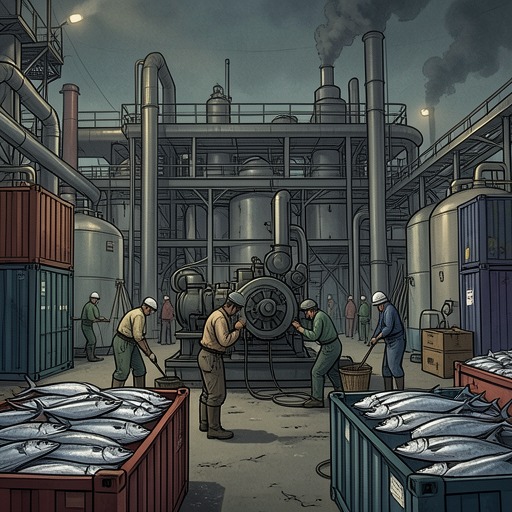
Giachery works directly with Vincenzo on the development of the Favignana tonnara, which Vincenzo has made the centerpiece of an ambitious tuna-preservation operation. When Vincenzo first arrived there with Giachery, the property was in poor condition and offered no decent place to spend the night. Vincenzo sent to Palermo for ship carpenters and builders, and began teaching local people to produce tuna in oil. He later recalls removing his jacket and rolling up his sleeves as he gathered the heads of local families and their wives, wanting those who worked for him to feel part of the undertaking.
The memory connects the architect’s work with Vincenzo’s approach to labor and management. The redevelopment was not only a matter of repairing buildings: it required a network of entrepreneurs, substantial risk, and a new preservation method. Over time, tuna in oil spread across the Mediterranean. When Vincenzo brings his fourteen-year-old son Ignazio to Favignana, he recounts the early work and emphasizes the importance of understanding people, a lesson he traces back to his uncle’s insistence that he work behind the apothecary counter. Giachery’s place in that remembered beginning underlines how long he has been associated with the project.
The collaboration extends beyond industrial premises. Giachery watches Vincenzo study the plan of a villa he is building for him, and Vincenzo approves the design. Later, the family gathers in the completed house: Giulia shows the patterns to the children, including four-year-old Ignazio, while Giuseppina also looks around with pleasure. Vincenzo sees the building as a home worthy of his name and family. Giachery, who admits that he had doubted whether such a building could be accomplished behind a tonnara, recognizes that Vincenzo’s insistence made it possible.
Commercial Vision and Later Presence
The villa stands beside a wider argument about industrial development. Vincenzo points to the tuna-in-oil trade, which the family has been canning and selling for years, and to the Oretea foundry he bought from the Sgroi brothers. He rejects the assumption that Palermo can sustain only small shops and argues that the island will stagnate if no one attempts to think on a larger scale. Giachery’s participation in realizing the Favignana complex gives this claim a concrete architectural counterpart: the enterprise is made visible in a working site rather than left as an aspiration.
The relationship continues across the family’s later life. At a wedding celebration for which Vincenzo has spent lavishly, Giachery greets Ignazio and congratulates him on the party. He has been a constant presence in Ignazio’s life and, in the younger man’s view, is probably the only person who can be called his father’s friend. As they cross the rooms, they discuss the guests and a new sumac mill built behind the tonnara. Giachery laughs at the juxtaposition of a mill and villa, recognizing that Vincenzo puts Casa Florio before almost anything else.
Giachery’s significance lies in the combination of friendship, professional judgment, and sustained participation. He helps Vincenzo convert a contested commercial ambition into an architectural and industrial presence, and he remains close enough to observe both the confidence that drives the work and the isolation behind it. When Vincenzo later reflects on the loneliness left by the loss of his cousin Raffaele, he counts Giachery among the very few friends he has. The distinction is decisive: Giachery is not merely one more associate in the Florio network, but a trusted companion whose shared work gives their friendship its durable shape.