Favignana
The Florios of SicilyFavignana becomes the testing ground for Vincenzo Florio’s industrial ambitions: drawn by a catch said to exceed that of his other fisheries combined, he travels to the island, invests in its tuna operation, and begins to reshape the relationship between the fishery, its workers, and the market. The island is not merely a remote asset on a ledger; its harbor, poverty, and fishing community give the enterprise its human and material scale.
Setting and maritime context
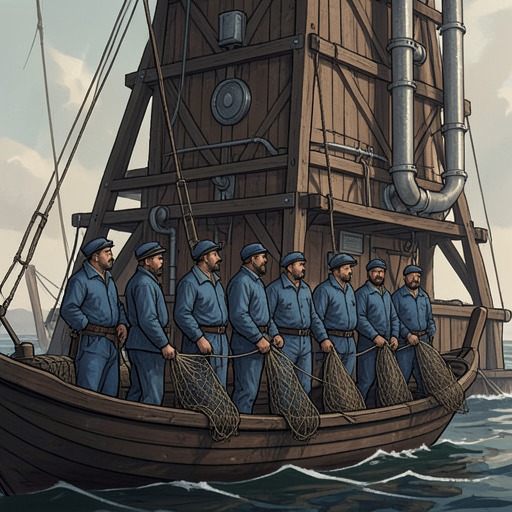
The island belongs to the Aegadian Islands, which Vincenzo and the architect Carlo Giachery approach by steamship. Their voyage skirts the Gulf of Castellammare and passes Cape San Vito before the islands emerge on the horizon. The arrival of a metal-hulled steamship in the harbor is conspicuous: fishermen gather to watch it, while nearby women and barefoot children stand amid a settlement whose houses are described as little more than hovels. The scene sets the island’s stark poverty beside the capital and machinery that Vincenzo brings to it.
Favignana’s wider significance rests on maritime trade and the movement of goods. The novel’s account of commerce stresses how commodities travel through long chains of transport, changing hands before reaching European ports, while shipping links Sicily to foreign suppliers and markets. The island’s fishery belongs to this world of movement, but its operation also depends on local conditions and concentrated labor.
The fishery and Vincenzo’s plans
Vincenzo chooses Favignana and Formica because their combined catch is greater than that of Arenella, Sant’Elia, and Solanto together. The Pallavicini family in Genoa has leased him the tuna fishery for nine years. Their previous practice of sending stewards rather than visiting in person makes Vincenzo’s arrival a departure from the distant ownership the island’s overseer, Vito Cordova, has known.
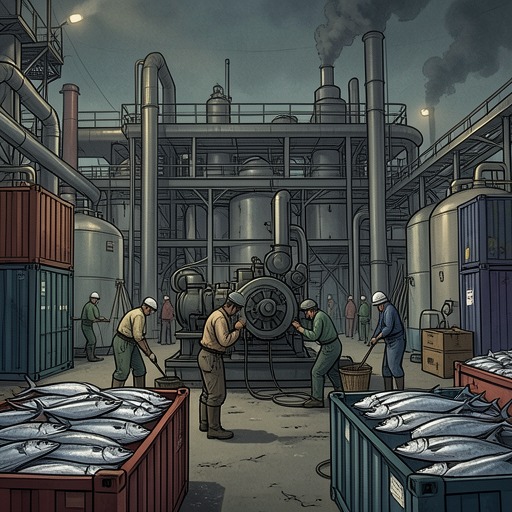
The scale of the catch leads Vincenzo to plan for processing and preservation, not simply extraction. He has ordered olive oil and barrels and says they are already on their way to the Aegadian Islands. He then invites Giachery to accompany him, making the architect’s involvement part of a project that extends beyond the fishery’s immediate harvest. The preparations foreshadow Vincenzo’s effort to turn a seasonal, place-bound catch into goods that can be stored and sold.
Workers, ownership, and change
Cordova, the fishery’s overseer, introduces himself as u’ rais, a traditional title that marks his position within the tuna operation. He greets Vincenzo with the customary Sicilian salutation. When Vincenzo explains that he comes from Palermo and has taken the lease from the Genoese owners, Cordova is surprised: those owners had never come to the island themselves. His offer to show Vincenzo the marfaraggio or the boats places local working knowledge at the center of the visitor’s inspection.
The encounter brings two kinds of authority into contact. Vincenzo arrives as the new lessee, equipped with commercial plans and access to shipping; Cordova represents the labor and practical familiarity on which the fishery depends. The island’s poverty sharpens the stakes of that relation. The novel presents industrial change through material details—boats, barrels, oil, a steamship—and through the people whose work makes the enterprise possible, rather than treating the tuna catch as wealth detached from its source.
Narrative significance
Favignana concentrates a recurring tension in Vincenzo’s business career: expansion requires both command over goods and engagement with the places and people that produce them. The island offers a much larger catch than his established fisheries, but its distance from Palermo and the contrast between its poor settlement and his commercial resources make expansion an encounter with a community, not just an acquisition. In this way, Favignana becomes a setting where the promise of industrial growth is inseparable from the labor, local knowledge, and material conditions of the fishery.