Florio Apothecary Renovation and Reopening
The Florios of SicilyFlorio Apothecary Renovation and Reopening is the transformation of the Florio family’s rented spice shop into a substantial apothecary under Ignazio Florio’s direction. Through a patient negotiation with the landlord, a major refurbishment, and the rapid acquisition of the property, Ignazio converts commercial progress into lasting ownership. The reopening also gives physical form to his bond with Vincenzo: the new sign names them both, while the shop’s stock and equipment announce a business poised to move beyond spices into quinine.
Background: A Business Outgrows Its Premises
The Florios’ expansion had already outstripped the small stockroom in Via dei Materassai. They rented a separate warehouse within the large Palazzo Steri property, behind the customs offices. Its cool, guarded rooms held spices in transit to other ports or awaiting sale to merchants. Because import tariffs were payable only when goods actually entered Palermo, wholesalers could reduce their costs by renting storage there rather than bringing every shipment into the city at once.
The warehouse connected the firm to overlapping Mediterranean and colonial routes. Through British suppliers the Florios obtained spices from India; they also bought goods from French colonies, sold in Livorno and across the Tyrrhenian Sea and brought to Palermo by Italian sailors. Their stock included quality products from around the Mediterranean. They were not yet as wealthy as the Canzoneri family, but Ignazio could see that their position had advanced rapidly. The cramped shop and the growing warehouse network therefore represented different sides of the same change: the business had become too substantial to remain housed in its original form.
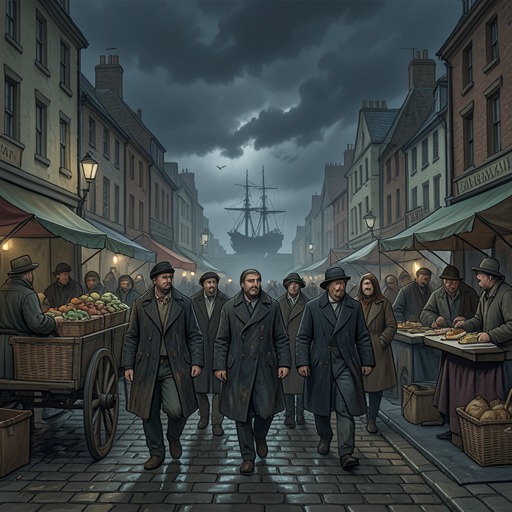
That expansion belonged to a wider transformation in the spice trade. Cinnamon and ginger, like other medicinal and culinary goods, passed through many hands and traveled by caravan and sea before reaching European counters, with costs rising at each stage. At the start of the nineteenth century, British and French sellers supplied European markets from overseas colonies, bringing medicinal herbs as well as sugar, tea, coffee, and chocolate. Falling prices, greater variety, and open harbors widened the trade. Palermo’s aromatari had organized themselves into a guild and established their own church, Sant’Andrea degli Amalfitani; the number of people able to enter the spice business was growing as well. The Florios’ move from a cramped shop toward an enlarged, specialized establishment thus answers both a local problem of space and a broader opening in commerce.
Negotiating the Store
Ignazio’s immediate challenge was not simply to decorate the premises, but to secure control of a building whose condition required extensive work. The rooms and mezzanine needed heavy refurbishment: water came in spurts, the floor was damaged, and the existing shop showed mold stains and creaking doors. Ignazio argued that a superficial coat of paint and a little oil would not solve those problems. If the Florios left, the landlord would still have to repair the building before finding suitable tenants; the firm, meanwhile, could relocate.
He approached the landlord, Romano, with patience and politeness rather than aggression. Ignazio knew Romano’s fondness for money and expected resistance, but treated that resistance as something that could be overcome through a carefully structured offer. He proposed an emphyteusis, a legal arrangement that would leave Romano owner in name while giving Ignazio and his company the rights needed to refurbish and operate the store. Romano complained that he would remain the proprietor only nominally, without meaningful public recognition or power to act. Ignazio answered by emphasizing that Romano could still appear to others as the owner, while the Florios took responsibility for the improvements. He also made the alternative plain: if Romano refused, the business was free to move elsewhere.
Romano accepted sooner than Ignazio had feared. The agreement opened the way to work on the building, but it was only the first stage. After the emphyteusis came the refurbishment; within a few months, Ignazio redeemed the rent and became the absolute owner of the spice store. The sequence matters: he first made renovation possible without forcing an immediate sale, then converted the arrangement into ownership. What began as a negotiation over dilapidated rooms ended as a durable acquisition for Casa Florio.
Rebuilding and Reopening
The improvement was practical as well as visible. Ignazio brought in a well-sinker, a carpenter, and tile workers, and new windows were installed. These were not cosmetic gestures alone: the work addressed the poor condition that had made the store unsuitable for the scale of the business. The slow, specific labor of repair gave the Florios a usable premises and made the shop’s next commercial phase possible.
The reopening presents the result through its contents. New majolica jars and pots fill the shelves, each painted on the bottom with the name Florio. Elsewhere, in the warehouses on Via dei Materassai, at Piano San Giacomo, and at customs, sacks of Peruvian cinchona bark wait to be ground so that quinine powder can be extracted. The renovated shop is therefore more than an improved spice counter: it is the retail face of a supply and processing operation whose materials are distributed across several points in Palermo.
Ignazio keeps one object from the old store: the weighing scales his brother had used since the beginning of his working life. Their presence links the new establishment to the labor and family history that preceded it. Around them, the new pots, windows, and stored bark mark a change in scale. The old shop’s tools and the new apothecary’s equipment belong to the same business, but they signal different stages in its development.
The New Sign and the Quinine Tree
The sign over the shop makes the renovation a family declaration as well as a commercial one. When Vincenzo notices the words naming “IGNAZIO AND VINCENZO FLORIO’S APOTHECARY STORE,” he points to the inscription and asks why his name has been added. Giuseppina covers her lips as though holding back a cry. Ignazio’s inward answer is that Vincenzo is his son in his heart, if not in flesh. The wording therefore records a relationship the family cannot define through biological descent alone: Ignazio publicly associates his nephew with the enterprise and privately recognizes him as a son.
The painted image supplies the shop with a second emblem. A forest surrounds a stream flowing from the roots of a tree, with a lion drinking from the water. The tree is cinchona, the source of the bark stored for quinine production. The image joins commercial identity to material process: the medicinal plant that will be ground and processed is made the center of the sign, while the drinking lion gives the scene a distinctive family image. The shop’s name, illustration, inventory, and intended work all point in the same direction.
Significance
The renovation marks a change in what the Florios possess and what they can do. A rented, cramped spice shop becomes a refurbished property owned outright by Ignazio; a warehouse network and expanding stock are anchored in a proper apothecary. The improvement rests on specific commercial choices—import storage that limits tariff costs, negotiation that turns rent into ownership, and the acquisition and processing of Peruvian cinchona bark—rather than on appearance alone.
At the same time, the reopening binds business growth to inheritance and chosen kinship. The old scales preserve the memory of Ignazio’s brother and the shop’s beginnings; the new sign places Vincenzo beside Ignazio, despite the distinction between heart and flesh that Ignazio acknowledges. The cinchona tree and lion make the enterprise recognizable, while the named partnership gives its future a human form. The apothecary is thus both a material achievement and a declaration: Casa Florio has secured a home for its expanding trade, and Ignazio has made the boy he regards as a son part of that future.