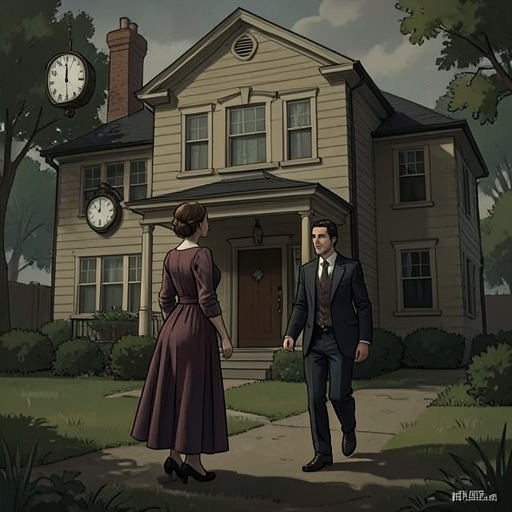
Giuseppina Saffiotti Florio’s cognitive decline in old age
The Florios of SicilyGiuseppina Saffiotti Florio’s cognitive decline in old age brings the family’s concealed past into view even as it makes her increasingly dependent on others. Her fluctuating awareness, failing body, and final illness are not merely a prelude to death: they alter Giulia’s understanding of old grievances and give Vincenzo a last chance to comfort and forgive his mother.
Signs and Progression
For weeks, Giuseppina has moved between lucid moments and days when the world seems to capsize and figures from more than eighty years of memory become real again. In the villa she sits in an armchair, singing in thick Calabrian words that cannot be understood. One eye appears vacant, as though a veil has blotted its light; the narrative states plainly that there is no cure for old age. Her condition is thus conveyed through changes in speech, awareness, and perception, not through a diagnosis or a promise of recovery.
The illness also makes ordinary movement laborious. When Giulia invites her out, Giuseppina struggles to rise, her body bent by arthritis. A maid places a shawl over her shoulders, and Giulia takes her arm. Later she dozes, makes strange sounds, and utters disjointed sentences. These shifts leave her family unable to rely on a stable exchange: she may be asleep or confused, then suddenly grasp another person’s hand and speak with startling urgency.
Memory, Disclosure, and Giulia’s Response
During one such sudden return to speech, Giuseppina catches Giulia’s hand so sharply that Giulia’s pen squirts ink across the paper. She insists that Ignazio must be told she made a mistake and had only one life. Giulia cannot tell whether she means her son or the uncle she never met. Giuseppina then names the feeling that had remained concealed: she loved her husband’s brother, believed he was the one she should have married, and never told him because he was her brother-in-law. She begins to say that marriage should be for something other than money, but breaks into sobs, shouts, and struggles before finishing.
The scene makes cognitive confusion a conduit for a truth the family history had left incomplete. Giulia remembers the stories Vincenzo had told about the strange love between his parents’ generation and recognizes their confirmation in Giuseppina’s words. She embraces her, tells her that Ignazio knows, dries her tears, and leads her back to bed, where she instructs that a tranquilizer be given. The response is tender but also practical: Giulia must interpret a fragmented confession while calming and caring for the person who made it.
Walking with her mother-in-law through the villa has already changed Giulia’s judgment of the past. She has come to think that illness, rather than death, can erase guilt and purify memory. Watching Giuseppina grow old has, in a sense, compensated for the harm Giulia suffered and taught her compassion; she no longer holds even a shadow of desire for revenge. The old woman’s decline does not undo that harm, but it changes what Giulia is able to feel toward her.
Final Illness and Death
In February 1862, after a priest from San Domenico has administered the final rites, Vincenzo remains beside his mother beneath the blankets. Giulia leaves after telling him to call if the situation worsens. The narration describes Giuseppina’s heart giving way beat by beat, and her breath struggling through her body until it dwindles into a mutter. Her hand on the sheet appears like wax and bones. For days she has alternated between torpor and difficult wakefulness, slipping into unconsciousness for longer stretches each time.
Vincenzo watches the bodily distress and wonders why death cannot take pity and end suffering without such prolonged torment. He compares it to childbirth as an opposite, symmetrical pain: an ordeal of passing into the arms of the Lord, or whoever might stand in His place. His mother’s condition is experienced through the burden it places on him as witness as well as through the visible weakening of her body. He remembers that his uncle Ignazio’s death was merciful by comparison, a judgment made newly comprehensible by the prolonged decline before him.
Even near the end, Giuseppina’s disorientation surfaces in simple questions. She asks whether it is nighttime, then searches for Ignazio, calling him her darling. Later she asks Vincenzo not to leave her alone. He kisses her forehead, embraces her, and rocks her, speaking into her ear what he has never managed to say. He forgives her for the errors he now recognizes as errors every mother inevitably makes. Her dependence reverses their earlier roles: the son who once needed to be rocked now holds and comforts his dying mother.
Their last exchange reaches further back into family loss. Giuseppina wonders what would have happened if Vincenzo’s father had lived, and if the other child had been born. Vincenzo can only whisper that he does not know; he can barely remember Paolo. She murmurs that Vincenzo is her flesh and blood, then sinks into torpor. He lies beside her and closes his eyes. When he is roused moments later, she has died.
Meaning Within the Family Story
The decline brings together two kinds of belated recognition. Giuseppina’s disordered speech releases the confession of a love suppressed by kinship and marriage, while Vincenzo’s vigil lets him see his mother not only through old grievances but as a frightened, vulnerable person who needs him. Neither recognition can restore the choices or relationships lost in the past. What it can change is the response to them: Giulia abandons revenge, and Vincenzo offers comfort and forgiveness before his mother’s death.
The narrative gives the illness concrete costs—an armchair, a shawl, a hand that gropes, speech that breaks apart, and breath that dwindles—rather than treating decline as an abstract passage of time. At the same time, the family members’ interpretations remain distinct. Giulia reads illness as a possible counterweight to guilt; Vincenzo confronts suffering and the approaching loss of his only long-standing family member. Giuseppina’s own late words, uncertain in their addressee but unmistakable in their emotional force, make the past newly present without resolving it.