Paolo Florio’s tuberculosis
The Florios of SicilyPaolo Florio’s tuberculosis is the bodily crisis that removes him from the shop and transfers the practical weight of the family business to Ignazio. First seen as a cough that will not go away, the disease becomes unmistakable when Paolo’s lips and mustache are stained with blood; a physician later tells the family that it has devoured his lungs. The illness is not only a private ordeal but a force that reorganizes work, care, and the household’s remaining time together.
Identity and Onset
By the end of 1806, Paolo’s cough has become deep and persistent. He refuses to be seen by a physician despite Ignazio’s repeated urging, and his growing exhaustion limits the time he can spend in the store. The disease initially remains a feared possibility rather than a confirmed diagnosis: Ignazio worries that Paolo’s chest cold may be serious, while keeping his own face composed before customers and retailers.
That uncertainty ends when Paolo is found slumped against his pillows, his lips and mustache marked red. He recognizes the blood as confirmation that what he feared was not a chill. The scene gives the illness a concrete sign and changes the family’s understanding of its condition: the cough has become a life-threatening disease, not an ailment that ordinary rest or shop remedies can simply dispel.
Medical Knowledge and Care
The physician eventually names the severity of Paolo’s condition. After examining him, he tells Ignazio that the disease has consumed Paolo’s lungs and estimates that only days, perhaps a couple of weeks, remain. Ignazio thanks the physician, pays him, and returns to work. His outward continuation of business contrasts with the blunt prognosis, while Paolo survives longer than the estimate, sustained in the narrative by his strong constitution and the Florio family’s stubbornness.
Ignazio’s first response to the crisis is practical as well as intimate. He orders Giuseppina to summon the physician, and after the women leave the room, sits beside Paolo and embraces him. He promises not to leave his brother alone, proposes preparing echinacea, and imagines moving him to a house outside the city, perhaps in Noce or San Lorenzo, for warmer weather and cleaner air. The plan expresses the care available to them—medical attention, a proposed remedy, and a change of surroundings—without suggesting that Ignazio can reverse the disease.
Household and Business Consequences
Paolo’s illness changes the distribution of labor almost at once. Maurizio Reggio keeps the accounts while Ignazio runs the business: customers find Ignazio behind the counter, and retailers bring their orders to him. The shift is visible in his manner as well as his duties. Years of work have erased his delicate features; he speaks calmly, and his face conceals both anxiety about the firm and fear about his brother’s health.
Ignazio understands that Paolo’s incapacity will leave the enterprise exposed. He expects news of the illness to spread through Palermo and anticipates that the Canzoneris, among others, may exploit the family’s vulnerability. The business is now on his shoulders. He knows he will need another worker, must keep Vincenzo’s studies from being disrupted, and must care for Giuseppina. Tuberculosis therefore acts as an economic and familial pressure: Paolo’s absence creates new obligations that cannot be postponed while the disease runs its course.
The illness also redirects Ignazio’s attention beyond the immediate household. He arranges for a traveler returning from Messina to deliver a letter in Marsala to Mattia Florio, Paolo Barbaro’s wife, and insists that it be handed to her alone. The episode shows Ignazio acting within an extended family network while carrying the responsibilities Paolo can no longer manage; the letter’s delivery is treated as important, though its contents are not disclosed in the evidence of this illness.
Relationships and the Limits of Reconciliation
The disease brings the brothers’ bond into sharper focus. Ignazio’s embrace recalls an earlier gesture from Paolo, and his promise to remain beside him reverses the earlier direction of care: now the younger brother assumes responsibility for the one who had once offered comfort. Ignazio’s vow is not merely a declaration of affection; it accompanies immediate decisions about the physician, medicine, and a possible move out of the city.
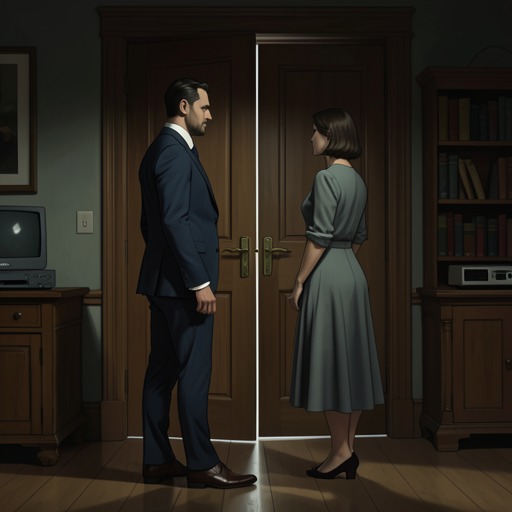
For Giuseppina, Paolo’s decline arrives within a marriage marked by the absence of love and, at times, hatred. She believes she will not be able to ask forgiveness for the harm they have done each other before he dies. The illness makes their inability to speak feel final: Paolo is approaching a boundary beyond which conversation will no longer be possible, and, in the account, they already cannot truly speak to one another. Her fear and guilt become a private burden rather than a reconciliation achieved before his death.
Narrative Significance
The narrative presents tuberculosis through both bodily evidence and its consequences. Blood on Paolo’s face makes the disease legible; the physician’s prognosis gives it a name and a short horizon. But its force extends outward, into Ignazio’s management of the store, his concern about commercial rivals, the demands of raising Vincenzo and caring for Giuseppina, and the household’s uncertain attempts at treatment. Paolo’s refusal of a physician delays confirmation, while Ignazio’s insistence on care cannot undo the illness.
The episode also distinguishes the remedies available to the family from the larger limits of medicine. Echinacea and a proposed move to cleaner air belong to Ignazio’s effort to protect his brother, while the physician’s diagnosis makes clear how little control that effort can secure. Against the changing commercial world of the Florios—where medicinal goods and their trade form part of the family’s livelihood—the illness remains an intimate, physical fact. It does not resolve into a business problem: it leaves Ignazio to carry the enterprise and leaves Giuseppina with an unfinished reckoning as Paolo’s life draws to its end.