Pietro Gulì
The Florios of SicilyPietro Gulì, an established apothecary in Palermo, embodies the old trade’s authority and vulnerability as the Florios rise from spice wholesalers into medicinal commerce. His deserted shop, guild-based challenge to their new authorization, and dependence on their English bark supplies make him a figure through whom the book shows how economic change can unsettle the very people who claim the right to regulate it.
Identity and Commercial Setting
Gulì is an old apothecary associated with Palermo’s established trade in medicinal herbs. The setting around him is changing: spices and medicinal goods travel through long chains of hands and transport, from distant origins across oceans to European ports, with costs rising at each stage. In the early nineteenth century, British and French merchants bring colonial products—including medicinal herbs—into Mediterranean markets. Prices fall, the range of goods broadens, and more merchants can afford to sell them. In Palermo, the aromatari organize as a guild and maintain their own church, Sant’Andrea degli Amalfitani. Gulì’s authority belongs to this organized commercial world, where guild rules define who may trade.
The Florios have become formidable participants in that market without matching the wealth of the Canzoneris. Their business is not confined to a single shop: they rent cool, guarded rooms within the Palazzo Steri property, behind the customs offices, to store spices in transit or awaiting sale. The arrangement allows wholesalers to pay rent rather than incur import tariffs before goods enter Palermo. Their supplies include Indian spices obtained through British channels and goods from French colonies bought in Livorno and carried by Italian sailors through the Tyrrhenian Sea. The stockroom on Via dei Materassai has grown too small. Against this expanding operation, Gulì represents an older, locally rooted trade whose privileged position is increasingly challenged by scale, supply networks, and access to new products.
A Shop in a Collapsing Market
After Napoleon’s defeat, the Mediterranean trade environment shifts sharply. The British no longer need Sicily as their strategic base and can trade elsewhere; the island loses importance, its harbors empty, and Palermo seems almost lifeless. On a return journey, Vincenzo passes Gulì’s shop out of curiosity. Its walnut shutters and alabaster vases frame an interior without customers. Gulì leans on the counter, looking desolate, and spits on the floor when he sees the young Florio.
The gesture registers personal hostility, but the scene also places that hostility inside a broader commercial contraction. Vincenzo finds Gulì’s signed promissory note among a stack of papers and smiles at the signature. The Florios’ leverage is therefore not merely an abstract advantage in a new market: it is attached to a specific debt bearing Gulì’s name. The empty shop and the signed note stand in contrast—the apothecary’s visible distress against the creditor’s documentary claim. Gulì’s contempt does not erase his dependence on the same commercial relationships that now empower his rival.
The Challenge to the Florios’ Authorization
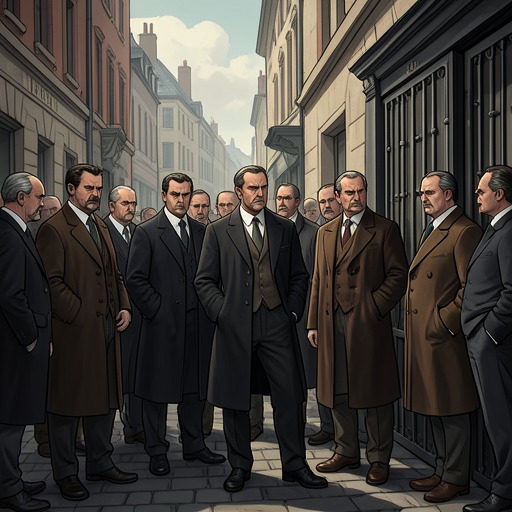
The conflict becomes explicit when Vincenzo decides to import and sell British bark powder, despite anticipating opposition from Palermo’s apothecaries. The official physician responsible for authorizing new drugs in Sicily grants the Florios permission to sell it, protecting the business from complaints. Soon afterward, a delegation of apothecaries arrives at the Florio office to demand an explanation. Gulì is among them, alongside Carmelo Saguto and his brother-in-law Venanzio Canzoneri.
Gulì’s objection is institutional as well as commercial. He invokes the College of Aromatari’s rules: the Florios do not belong to the guild, have not requested its permission, and have not respected its requirements for selling medicinal herbs. Vincenzo answers that guild rules are not the only laws, accusing Gulì of acting as though laws were made for him to make or break at will. Canzoneri presents the meeting as a preventive clarification, but the confrontation carries the threat of a market whose established members may try to enforce their rules against a legally authorized entrant.
The dispute also exposes a contradiction within the delegation’s position. Ignazio asks Gulì and the court apothecary Gaspare Pizzimenti where they have bought their bark supplies during the previous two years. Pizzimenti admits that they bought from the Florios, beginning to qualify his answer before Ignazio reminds him that the Florio product had been praised as the best on the market and that their English bark was bottled without needing refinement. The Florios’ goods have already circulated through the very trade now being invoked to exclude them.
Dependence, Debt, and Defeat
Ignazio’s response joins commercial dependence to the language of obligation. He suggests that severing relations with the Florios will be neither easy nor painless, and points to the names of the men involved. He then places their appeal to guild rules beside another rule of commercial honor: debts must be settled. Gulì looks down at his shoes as Saguto’s smirk disappears and Pizzimenti retreats into the shadows. Canzoneri acknowledges the point, and the delegation leaves.
The outcome is a defeat in the immediate exchange, not a reconciliation. Gulì does not answer the Florios’ challenge; his lowered eyes register the force of their leverage, while the group’s departure ends the meeting without resolving the broader struggle over access to the medicinal market. Saguto turns back at the doorway and bites his thumb at Ignazio and Vincenzo, a sign that the confrontation will be remembered rather than forgotten. Gulì’s silence belongs to the same uneasy ending: the Florios have exposed the delegation’s reliance on their supplies, but neither the guild conflict nor the antagonism it produces has disappeared.
Narrative Role and Significance
Gulì’s appearances connect the book’s account of commodity movement to the personal contest over who may profit from it. The spices and medicines reaching Palermo are not simply goods on a counter: they depend on long-distance transport, customs arrangements, foreign suppliers, storage, credit, and the decisions of wholesalers and retailers. The Florios’ warehouses, British-connected supplies, and new authorization enable them to challenge a guild whose members claim established authority. Gulì’s deserted shop and his reliance on Florio bark make that structural shift concrete in a single merchant’s fortunes.
His role also sharpens the difference between formal legitimacy and practical power. The Florios can point to authorization from the official physician, while Gulì can appeal to the College of Aromatari’s rules. Yet at the decisive meeting, Ignazio turns the apothecaries’ own purchasing history and debts into leverage. The scene does not show the guild vanishing or Gulì changing his convictions; it shows that its claim to control the trade is constrained by dependence on the rival supplier it seeks to challenge. Gulì is therefore neither merely a hostile shopkeeper nor a detached emblem of tradition. He is an actor in a market where rules, credit, and supply chains collide, and where the authority to sell cannot be separated from the power to keep business relationships intact.