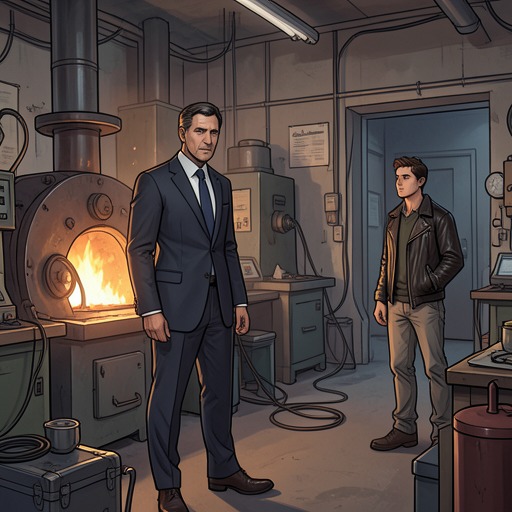
Pietro Ugo delle Favare
The Florios of SicilyPietro Ugo delle Favare is the Marquess delle Favare and Viceroy of Sicily, a senior official whose decision helps the Florios turn a commercial innovation into a legally protected business. His most consequential appearance comes when Ignazio Florio and Vincenzo Florio seek authorization to use their mechanical bark grinder for quinine: he listens to their case, recognizes that their existing permit does not settle the question, and sets in motion the decision that expands their market across Sicily.
Identity and Position
Pietro Ugo occupies an office that gives him a role in the regulation of trade as well as the authority to hear petitions. The Florios come to see him in person after carefully preparing an application and testing the waters through informal conversations. Their request concerns a practical problem with substantial financial stakes: they have the right to sell drugs, but quinine has until then been the exclusive preserve of apothecaries, and they do not want their new machine rendered unusable by a bureaucratic obstacle.
The setting of their audience underscores the unequal social footing on which they meet. Ignazio and Vincenzo wait among other petitioners on brocade couches in a room with a very high ceiling, watched by palace clerks whose inquisitive looks carry contempt. The clerks see velvet-clad laborers expecting to speak directly to the viceroy. Ignazio remains impassive, refusing to let the attendants’ status-consciousness dictate how he approaches the meeting.
The Florios’ Petition
By the time Pietro Ugo receives them, it is late afternoon. A liveried valet leads the merchants into the study, where the viceroy sits behind a desk ornamented with tortoise and horn inlay. His prominent whiskers and bright eyes beneath a high, bald forehead are noted as he looks the visitors over and focuses on Ignazio. After a brief examination, he decides they may sit.
Ignazio presents the matter calmly. With his back straight and fingers indicating the documents, he describes the machine and explains that the Florios already have authorization to sell drugs. Pietro Ugo listens closely and tests the limits of that permission: if quinine is a drug, he asks, should it not already fall under the chief medical officer’s authorization? Ignazio answers that the position is both yes and no. The company does not claim medical expertise; its investment is economic, and its concern is that a bureaucratic restriction might leave it owning a machine it cannot use.
Pietro Ugo identifies the precise gap in the Florios’ position. They are not asking for an undefined favor, but for a specific authorization adapted to quinine and the new method of processing it. He indicates that he will have his secretary examine the matter. His response is attentive rather than dismissive, although at first it seems to treat the petition as one item in the ordinary flow of official business.
Vincenzo then changes the emphasis of the appeal. He places his palms on the desk and insists that the Florios want their rights protected, so they can work as merchants without interference. The machine, he argues, is an innovation; they are not servants seeking patronage but working men asking for recognition of their right to conduct their business. Pietro Ugo, who had been addressing Ignazio, turns his attention to Vincenzo and asks who he is. Ignazio identifies him as his nephew. Their answer comes in unison, though with contrasting feeling: Vincenzo speaks with pride, while Ignazio does so with embarrassment.
Decision and Aftermath
Pietro Ugo calls the pair fire and water. He reflects that the day has brought petitioners seeking money, assistance, protection, or even a particular parish, but that the Florios are the only ones to have asked him to acknowledge their right to work. He stands, and Ignazio and Vincenzo rise with him, apparently assuming the audience is over. Instead, he offers them his hand. They are surprised to realize that he means to shake hands, not receive the customary kiss on it. As the valet shows them out, the viceroy tells them that they will soon hear news.
That news arrives at the end of 1824. Shortly before Christmas, a document bearing the royal seal reaches the office responsible for sales rights. Its passage through Palermo—from the accounts office to bookkeepers and grocery stores, and finally to Via dei Materassai—turns the decision into public commercial news. The Florios are authorized to sell quinine powder not only in Palermo but also in Licata, Canicattì, Marsala, Alcamo, and Girgenti. Pietro Ugo’s intervention is therefore linked to a concrete expansion of their trading territory, not merely a courteous hearing.
The license is celebrated in the Florios’ office, where wine is shared and Maurizio Reggio raises a toast to the family and those who work for them. The success fits into a year of commercial growth: the Florios have also acquired a share in the schooner Assunta, which Ignazio intends to use for regular deliveries throughout Sicily. He describes a distribution plan for quinine packed in sealed bottles, closed with wax and marked with the company seal, with deliveries every month. The chain from petition to authorization thus reaches beyond the palace: it enables a business built on processing, packaging, and island-wide transport.
Narrative Significance
Pietro Ugo’s scene sets formal permission beside the informal barriers the Florios face. Before the meeting, the palace clerks’ contempt casts the merchants as intruders in a space traditionally associated with inherited rank. The viceroy, by contrast, listens to the substance of their case. His question about whether the existing medical authorization already covers quinine clarifies why their application matters; his recognition that they want the right to work acknowledged gives the encounter its larger point.
The distinction between a general drug-selling permit and a specific right to sell quinine shows how commercial opportunity depends on both enterprise and legal classification. The Florios have machinery and an existing authorization, but neither alone guarantees that they can use the machine to enter a market guarded by apothecaries. The royal-sealed document converts their claim into permission that can travel through the company’s accounts and supply routes. Pietro Ugo is not shown as the inventor of the Florios’ ambition or as its sole source of success; his significance is that he hears the gap in their legal position and sets an official process in motion, helping the merchants carry innovation from the workshop into wider trade.