Sicilian Revolution (1848–1849)
The Florios of SicilyThe Sicilian Revolution (1848–1849) is the island’s renewed struggle against Bourbon rule, beginning with the Palermo uprising on January 12, 1848. It briefly reopens the possibility of constitutional government and Sicilian independence, but the insurgents’ political and social divisions leave the revolution vulnerable to defeat. Its rise and collapse unfold alongside the Florio family’s commercial fortunes, showing how changes of regime reach into business, household life, and the everyday meaning of security.
Causes and political background
The revolt grew from a longer history of political upheaval. Since 1796, Napoleon Bonaparte’s campaigns had unsettled the Italian states. In 1799, the Jacobins of the Kingdom of Naples established the Neapolitan Republic, forcing Ferdinand IV and Maria Carolina to take refuge in Palermo; their return to Naples in 1802 was followed by fierce repression. Napoleon’s later conquest of Naples again drove Ferdinand to Palermo, this time under British protection, while he continued to reign over Sicily.
In 1812, revolt against Ferdinand’s income tax led the Sicilian government to promulgate a constitution modeled on the Westminster system. It sharply curtailed the Bourbon king’s power and provided for the abolition of fiefdoms and reform of government. The constitution was part of an effort to modernize Sicilian society and strengthen the island’s connection with Britain, which had an interest in maintaining its independence. Ferdinand reversed this settlement in 1816 by uniting the kingdoms of Naples and Sicily under the name of the Kingdom of the Two Sicilies and annulling the constitution. Sicilians’ loss of autonomy became more than a constitutional grievance: since December 1816, Neapolitans had administered state offices and customs and held military commands in Palermo, while heavier taxes, restrictions, and trade constraints further damaged an already failing economy.
The revolt of 1820 had briefly restored the constitution and revived the Sicilian Parliament, but discord among the island’s cities helped the Bourbons suppress it. The monarchy returned, and Austria intervened on the mainland in 1821 to restore Ferdinand. In the years before 1848, anger at Bourbon rule was sustained by the Palermo aristocracy and secret societies, while the spirit of independence persisted despite the failed earlier uprising. Poverty, social conflict, and renewed demands for independence sharpened the discontent. Ferdinand II’s repressive policies intensified it further.
The uprising and revolutionary government
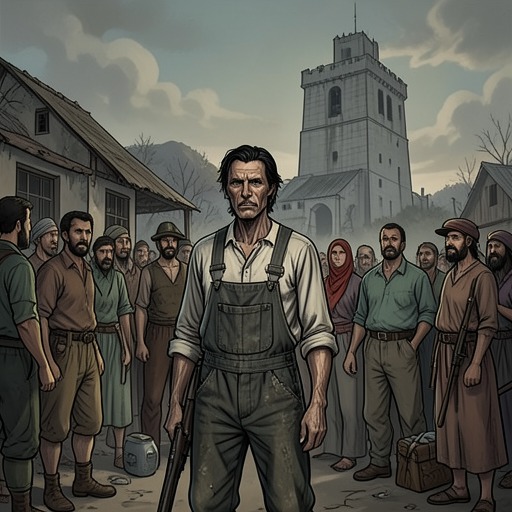
At eight in the morning on January 12, 1848, a cannon shot broke the ordinary calm in Palermo. The sound shook the windows of the Casa Florio residence on Via dei Materassai. In the city, proclamations urging people to take up arms were torn down and trampled by royal guards, who mocked the prospect of revolt and threatened insurgents with rifle fire and hanging. Yet the threats no longer quieted the opposition: residents openly defied soldiers, and resentment of taxes and tyranny had become unmistakable.
Giuseppe La Masa and Rosolino Pilo led the insurrection. Palermo became the first large city in Italy to declare its independence from central authority. Admiral Ruggero Settimo headed the revolutionary government, which sought, with the support of aristocrats and the bourgeoisie, to involve the people in decision-making. Ferdinand granted a constitution, and the Sicilian upheaval formed part of a wider revolutionary wave: other Italian states followed with constitutional concessions or rebellions, and unrest spread across Europe.
The revolution’s claims were not confined to constitutional arrangements. Its independence-minded government sought to restore the Kingdom of Sicily, bringing it into direct conflict with the Bourbon monarchy. The revolutionary moment also altered the circumstances facing the Florios. In the disorder after revolutionary leaders fled and the city’s administration collapsed, Vincenzo Florio, then fifty, took a position in the National Guard despite not wanting it. He later distanced himself from the revolutionary government’s actions as soon as he could, while maintaining that he had managed his business without a misstep. His experience registers the pressure that political upheaval placed on a merchant whose priorities and choices were also shaped by commercial obligations.
Divisions and defeat
The revolution’s coalition could not resolve the competing aims within it. Palermo and Messina remained bitter rivals, and divisions among Sicilian cities weakened the independence movement. The social groups that had joined the rebellion also wanted different outcomes: aristocrats and bourgeois participants sought wealth and the chance to take over Church property, while the people hoped for redistribution of land. Their opposition was not incidental to the revolt’s defeat; it revealed that a shared resistance to Bourbon power did not amount to agreement over the society that should replace it.
In May 1849, weakened and pursued by Bourbon troops, the revolutionary administration surrendered. Ferdinand II did not sentence the revolt’s leaders to death; he sent them into exile and granted a royal pardon to supporters of the rebellion. The settlement ended the revolutionary government without resolving the grievances that had produced it. The patriotic commitment of the exiles continued in their writing and political interventions, keeping the ideal of Sicilian independence alive even after the island returned to Bourbon control.
Political upheaval and material life
The revolution occupies one layer of a history also shaped by trade, transport, and the vulnerability of daily life. Palermo’s role as a free port had brought merchants and sailors from across Europe and goods from places including Turkey, Egypt, Tunisia, and Spain. War and political realignment affected those connections: shipping could become unsafe, and the island’s strategic importance made it a focus of British and French rivalry. The fortunes of the Florio business therefore developed within a commercial world repeatedly remade by political events, rather than apart from them.
The costs of upheaval were also measured in lives lost to disease. In June 1837, cholera reached Sicily amid appalling hygiene conditions and continued until early October; contemporary accounts reported 23,000 deaths in Palermo alone. Against this longer history of political instability, poverty, and public crisis, the 1848 uprising appears not as an isolated burst of insurrection but as a convergence of accumulated pressures. Its defeat restored Bourbon authority, while leaving unresolved the conflict between central rule and Sicilian autonomy, and between the different social interests gathered under the banner of revolt.