Villa dei Quattro Pizzi
The Florios of SicilyVilla dei Quattro Pizzi, designed by Carlo Giachery beside the Arenella tonnara, is at once a family home, a place of refuge, and a monument to the achievement and limits of Vincenzo Florio’s rise. Its transformation from a working fishing site into an elaborate seaside residence gives commercial success a permanent architectural form, while the villa’s role in moments of political danger and social scrutiny reveals what wealth can—and cannot—secure.
Setting and Transformation
The villa stands beside the Arenella tonnara, a place that had captured Vincenzo’s affection. When he arrives, Carlo Giachery is waiting at the entrance with the keys and welcomes the family home. The setting is not incidental: the residence grows directly out of the coastal fishing enterprise that Vincenzo owns in partnership with Augusto Merle, linking the family’s domestic life to its business on the sea.
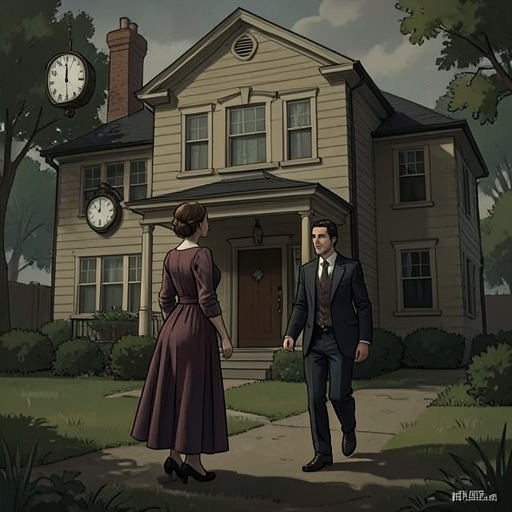
The building incorporates and alters the tonnara’s former structures. Its courtyard has become a front garden with a trellis, trees, and potted plants among the cobblestones. The low building has been raised into a house with large windows and a terrace overlooking the boat ramp; nearer the water stands a square turret. Four corner peaks give the villa its name. Gothic lines, mullioned windows, and stone inlay carved into sinuous, lace-like patterns make the residence resemble an English castle while remaining rooted in the fishing grounds beside it.
A Home and a Place of Refuge
The villa gathers Vincenzo’s household: Giulia and the children arrive with him, while another vehicle carries the children, the nanny, and his mother, Giuseppina. The house thus represents not merely a private retreat but the setting of an extended family life, built around the coastal estate and its work.
When fighting breaks out in Palermo and the city’s gates are taken, Vincenzo decides that the family should leave the city for the villa. Because it lies outside the walls, he considers it easier to defend. He orders the household to take money, silver, and valuable possessions. As preparations proceed, Angelina hides valuable lace shawls in a bag, while young Ignazio repeatedly asks whether he can bring his wooden horse and books. Giuseppina remains seated, troubled by the unrest. In this episode, the villa’s distance from the city gives it a practical function as a refuge; its carefully made domestic interior is also the destination toward which the household carries its most valued belongings.
Architecture, Status, and Exclusion
The villa’s craft and scale make visible the resources Vincenzo has accumulated, but they do not settle the question of social standing. At a gathering there, aristocratic visitors inspect the hall’s vault and furnishings, estimating their cost while betraying envy, admiration, and annoyance. Vincenzo reads their reactions and understands that commercial achievement has not made him their equal in their own eyes. Their inherited titles and coats of arms remain markers of a status they do not readily share with a businessman.
That resistance extends beyond Vincenzo himself. When he considers suitable marriages for his daughters, Gabriele Chiaramonte Bordonaro makes clear that business relations and family alliances are treated differently: Vincenzo’s money makes him a desirable business partner, but his daughters’ particular circumstances prevent the proposed kinship. The villa can display Casa Florio’s accomplishments, but it cannot turn wealth into unqualified acceptance by the old aristocracy.
The Villa’s Significance
Villa dei Quattro Pizzi gives architectural form to the tension at the center of Vincenzo’s ascent. Its foundations lie in the tonnara, the fishing enterprise beside it; its courtyard and house transform a place of work into a family residence; and its distinctive peaks and lace-like stonework proclaim ambition in a visual language associated with grandeur. The refuge episode shows the house’s concrete value in danger, while aristocratic scrutiny there exposes the limits of its symbolic power. It is both a home Vincenzo has made and evidence that money alone cannot erase the distinctions of birth and social legitimacy.