Sisters of Charity
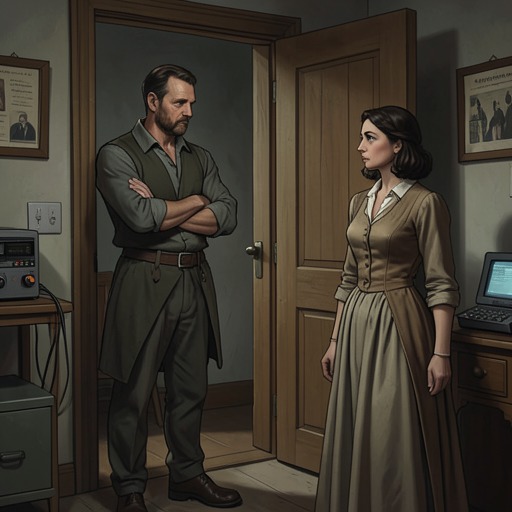
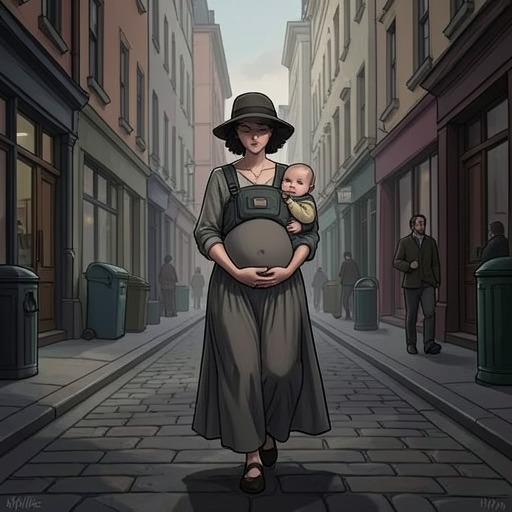
The GiftThe Sisters of Charity is a convent that receives unmarried pregnant girls and arranges for their babies to be adopted. For Maribeth Robertson, sent there by her father, it is meant to keep her out of sight until the birth and then return her home without the baby. Instead, its strict routines and the separation she witnesses sharpen her sense that this process is being imposed on young women; she leaves, and ultimately makes a different adoption arrangement herself.
Role in Maribeth’s Pregnancy
When Maribeth tells her doctor she is afraid of facing her father and asks about ending the pregnancy, he says abortion is costly, dangerous, and illegal. He recommends that she have the baby and give it up for adoption, explaining that girls her age commonly go to the Sisters of Charity once their pregnancies begin to show. The baby is due in December, and the doctor describes the convent as a place where she can stay until the birth.
Maribeth’s father, Bert Robertson, acts on that plan after she tells her family she is pregnant. He arranges her admission and pays eight hundred dollars for six months of room and board, expenses, and delivery at the convent. The arrangement includes the expectation that she will return home a week after the birth, if there are no complications, while the baby goes to an adoptive family. Bert tells Maribeth to conceal the reason for her absence from her younger sister, Noelle Robertson, and insists that she leave the next morning.
Life Inside the Convent
The Sisters of Charity convent is described as cavernous, dark, and gloomy. Maribeth finds two other pregnant girls there, both from nearby towns. One, seventeen, gives birth on Maribeth’s second day; the baby is quickly taken to waiting adoptive parents, and the girl does not see her child. The speed and secrecy of this separation make the process seem to Maribeth as though the girls’ circumstances must be hidden.
The second girl is fifteen and nearing childbirth. The girls eat with the nuns, attend prayers and vespers, and may speak only at certain times. Maribeth learns that the younger girl’s pregnancy resulted from abuse by her uncle. When the girl goes into labor, her cries continue for two days before she is taken to a hospital for a cesarean delivery. Maribeth learns that the baby is safe, but the girl does not return. Once both girls are gone, Maribeth is left alone with the sisters.
A notice of Paul Browne and Debbie’s wedding in the local newspaper deepens Maribeth’s isolation. She feels that Paul has resumed his life while she bears the consequences of their encounter alone. Though the nuns have been pleasant and she has paid one hundred dollars, she cannot accept the convent’s confinement or wait there for the baby to be born and taken away. She has seven hundred dollars left and nearly six months ahead of her, and wants work, company, and a life beyond the institution’s walls.
Departure and the Adoption Plan’s Change
Maribeth tells the Mother Superior that she will leave, saying she plans to visit her aunt. She walks out at dawn with her money and a small bag, feeling newly free despite having nowhere certain to go. She buys an open-ended bus ticket to Chicago, with the option of refunding the unused portion along the way, and writes postcards to her mother and Noelle promising to send an address when she has one. The convent’s intended sequence—concealment, birth, and adoption arranged through others—has been interrupted by her decision to take charge of where she lives.
Later, as Maribeth prepares to give up the baby, gifts from her coworkers make the coming separation newly concrete: the baby has clothes, toys, a teddy bear, and a high chair, but no parents yet. The convent’s original role in arranging an adoptive placement is no longer the final path. Maribeth asks Liz and John Whittaker to adopt the child, making a direct request of the people she trusts rather than leaving the decision to the institution’s arrangements.
Significance in the Adoption Story
The convent represents the social and family response Bert has chosen for Maribeth: a young pregnant woman is removed from home, kept apart from ordinary life, and expected to surrender her child before returning. The other girls’ experiences reveal the emotional cost of that system, especially the immediate separation of a newborn from its mother and the way the girls’ circumstances are treated as secrets. Maribeth’s departure does not erase her need to place the baby for adoption, but it changes her position from someone being sent away under a plan made by adults to someone who makes her own arrangements.
That change remains consequential after the birth. Maribeth signs the adoption papers three days after Kate is born and asks that the baby not be brought to her that day so she can mourn. She then leaves with the Whittakers, while Liz takes on the mothering role. The plan first associated with the Sisters of Charity thus gives way to an adoption shaped by Maribeth’s request and by an ongoing relationship with the adoptive family.