
Knecht’s Inner Conflict over Service
The Glass Bead GameThis flow traces the conflict between Knecht’s loyal service to Castalia and his growing conviction that service requires leaving its protected world.
increasing Bearing strength in each event
 decreasing
Bearing strength in each eventdecreasingDoubts at Waldzell

Loyalty Tested
Criticism
Plinio calls Castalia sterile and detached from ordinary human need. Knecht cannot dismiss the accusation even while defending his school.
Emerging Question
He begins to ask whether spiritual cultivation can remain virtuous when it refuses contact with the world that sustains it.
The Game’s Meaning
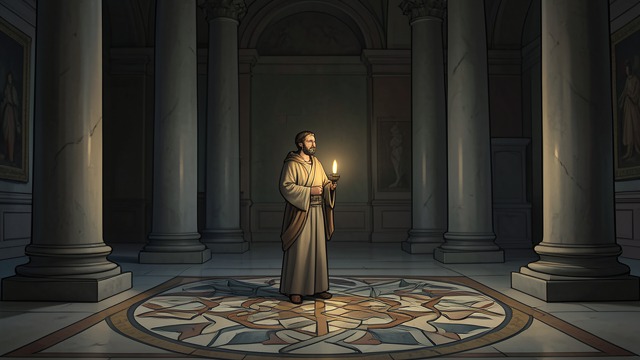
Faith and Doubt
A Transformative Game
Knecht experiences the Glass Bead Game as a sacred language linking diverse forms of knowledge. The experience renews his belief in its deepest possibility.
A Persistent Question
He also sees that many players treat it as technique or ambition. The Game’s highest meaning cannot guarantee the motives of its practitioners.
The Historical Challenge

The World Becomes Real
Jacobus’s Argument
Father Jacobus insists that politics and history cannot be reduced to intellectual patterns. Institutions exist within the pressures they may prefer not to see.
Divided Allegiance
Knecht remains a Castalian but acquires a durable concern for the world beyond it. The tension becomes part of his vocation rather than a passing mood.
The Warning to the Board
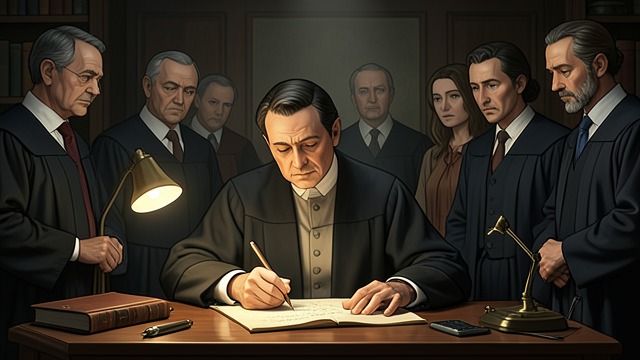
The Crisis Named
Institutional Decline
Knecht sees Castalia’s public connections weakening and fears a political emergency will make its privileges indefensible. He writes that the Glass Bead Game is especially vulnerable.
Conflicting Duties
His colleagues value the warning but reject its urgency. Knecht is left to decide whether obedience means preserving his office or acting on his judgment.
The Break with Hierarchy
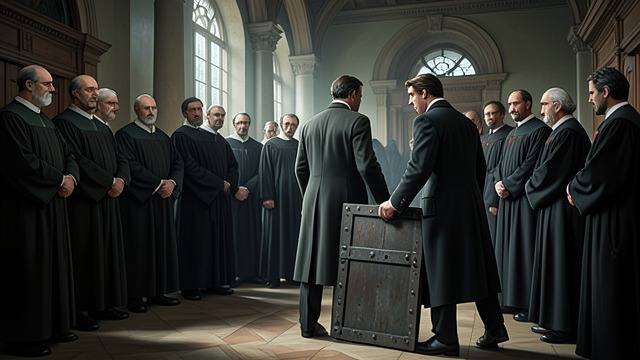
Conscience against Custom
Refusal
Knecht explains that he expected rejection but needed to make the danger known. He will not accept a leave designed to return him safely to his post.
Chosen Risk
He resigns and leaves without sanction, accepting that colleagues may call him a deserter. His action converts private awakening into public consequence.
During the school debates with Plinio
During Knecht’s early Years of Freedom
During Knecht’s stay at Mariafels Abbey
During Knecht’s later magistracy
After Alexander refuses Knecht’s petition
