Bertram
The Glass Bead GameBertram is the long-serving deputy, or Shadow, of Master Thomas von der Trave at Waldzell. A capable player, adequate teacher, and conscientious official, he is nevertheless disliked by much of the younger elite. When his master falls seriously ill just before the annual solemn Game, Bertram inherits its most exposed public role without the support needed to make that role secure. He completes the festival under pressure, but the elite’s judgment has already made his position untenable; after retreating to the mountains, he never returns, and the report that he fell from a cliff is left unexamined.
Office and Standing at Waldzell
For many years Bertram serves Master Thomas as his Shadow. The post is an intimate but precarious one: a deputy represents the Magister and may wear the official robes and insignia, yet the office and the individual remain divided. The Shadow does not thereby become a Magister. The role’s ambiguity also distributes blame unevenly: a deputy may avoid direct responsibility for errors, while the Magister remains answerable for the deputy’s conduct. Bertram’s closeness to his master therefore does not amount to independent authority.
His record is not one of incompetence. Bertram is an excellent Glass Bead Game player, at least an adequate teacher, and a conscientious official wholly devoted to his master. The account describes him as less fortunate than lacking talent or good will. Yet, over the years, he becomes distinctly unpopular. The younger generation of the elite is particularly hostile, and, unlike Master Thomas, Bertram lacks a limpid, chivalric temperament that might have helped him withstand their antagonism. His master shields him from friction by keeping him increasingly out of public view and assigning him chiefly to the chanceries and the Archives. That protection reduces confrontation but does not restore the elite’s trust.
The structural weakness of the post becomes decisive when Bertram must act without his master. A Shadow needs not only the Magister’s confidence, which Bertram has, but also the confidence of the elite. If that support is withdrawn, the hierarchy does not protect the deputy as it protects the Magister; the tutors who were once his comrades can instead become his judges. Bertram’s misfortune is thus personal and institutional at once: he must carry the authority of an office whose protection depends on people already disposed to reject him.
The Annual Game and Its Crisis
A week before the great Game is due to open, Joseph Knecht arrives at Waldzell and finds that Master Thomas is ill. Bertram receives him courteously but curtly, explaining that he is not sufficiently informed about Knecht’s mission to hear his report and directing him to Hirsland to report to the Directorate of the Order and await instructions. Knecht’s surprise at the cool reception prompts Bertram to apologize and explain the emergency: the annual Game is near, and he may have to take the Magister’s place at short notice. He is willing to perform his ordinary official duties, but fears that conducting the festival as well may exceed his powers.
The illness places Bertram at the head of the Glass Bead Game village, Vicus Lusorum, just as guests, officials, and members of the Board of Educators gather for the festival. The news that Master Thomas cannot conduct the Game is not officially announced until the day before it begins. The account leaves open whether this delay was a mistake: it may have been intended to protect the festival and keep the Master’s admirers from being discouraged, and under different circumstances the community’s confidence might have enabled Bertram to represent his master so effectively that the absence passed almost unnoticed. In the actual crisis, however, the delay leaves Waldzell uncertain, and the support Bertram needs never materializes.
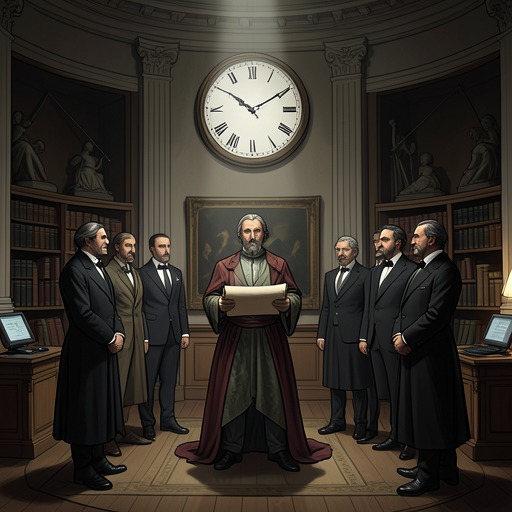
The festival begins with the customary meditation hour. At the sound of bells, crowded Waldzell falls into reverent silence. The next morning brings musical performances, the announcement of the Game’s first movement, and meditation on its two musical themes. Bertram appears in the Magister’s festival robes, outwardly controlled and stately but very pale. As the days pass, he looks increasingly strained, suffering, and resigned, until he seems almost like the shadow his title names. The Game itself is carefully and impressively constructed; its failure lies in the performance and the atmosphere surrounding it, not in a defective plan.
Hostility, Sacrifice, and the Master’s Death
By the second day, rumors say that Master Thomas’s condition has worsened and his life is in danger. Among the elite, one version of events casts Bertram as an ambitious deputy who has been given the solemn task at his master’s expense. In that telling, the Game’s disappointing course makes the sick Magister feel responsible, and his fever worsens as penance for allowing his Shadow to lead. Other rumors claim that the Magister has begged Bertram and two senior members of the elite to preserve peace, or that he has dictated a will naming his preferred successor. These accounts circulate without settling what happened; they expose the elite’s hostility more clearly than they establish Bertram’s motives or the Magister’s intentions.
The aspirants’ reverence for Master Thomas is matched by malice toward Bertram. They want the deputy to fail, even if the Magister suffers as a consequence, and do not rally to help him save the festival. The crowd remains in Waldzell and the ceremony proceeds with formal propriety, but gloom overtakes the performance. Bertram continues to officiate while rumors of his master’s decline sap the festival’s expected delight and uplift.
The day before the Game ends, Master Thomas dies. The news reaches the participants despite the authorities’ efforts to contain it. Students and members of the elite are not permitted to mourn before the festival concludes or to interrupt its prescribed sequence of performances and meditation. They complete the final act, but it takes on the character of a funeral service. Bertram, exhausted, pale, sleepless, and still officiating with half-closed eyes, is surrounded by an atmosphere of cold isolation. Knecht, attending as a guest, concentrates on the Game and views Bertram’s situation with growing compassion; he does not let the rumors dictate his experience of the festival.
After the final musical performance, the Board announces the Magister’s death and the prescribed mourning begins. The customary student celebration is cancelled, and Bertram is spared the burden of receiving congratulations and the Board as acting vice-Magister. Knecht later argues that Bertram did more than attempt to fill the Magister’s role: he sacrificed himself to the solemn Game as his last and most serious official act. Knecht condemns the elite’s treatment of him as cruel, insisting that they could have saved both the festival and Bertram but chose not to. He urges them to meet Bertram halfway when he returns and recognize the sacrifice.
Departure and Unresolved Fate
Knecht initially misreads Bertram’s position. He supposes that the deputy has been defeated by a task beyond his powers and will have to abandon his ambitions. Only after Tegularius tells him that Bertram will not return does Knecht understand that the elite’s cooperation during the festival was meant to prevent a public scandal and protect Waldzell, not to protect Bertram. The elite has accepted the sacrifice as necessary, but that acceptance does not mean it will forgive or restore him.
Once Bertram leaves, the elite temporarily distributes the internal functions of the Magister’s office among three deputies. His own prospects have already been decided by the breakdown of trust that made his Shadow’s authority possible. After the funeral, he asks for leave and sets out on a walking trip in the mountains, having summoned his last reserves of strength to finish the festival. He does not return. In time, the story circulates that he fell to his death from a cliff, and no one pursues the matter further. The narrative gives no confirmation beyond that report, leaving his end unverified and his sacrifice without public vindication.
Narrative Significance
Bertram’s story turns the title Shadow into more than a metaphor for delegated office. He is close enough to Master Thomas to represent him, yet institutionally and socially too vulnerable to inherit his authority. His ability and devotion cannot compensate for the elite’s withdrawn confidence; indeed, the festival makes the distinction between formal responsibility and real power painfully visible. Bertram carries the public burden of the Magister’s absence while others retain the power to judge whether he has deserved to carry it.
The episode also complicates the easy verdict that the Game’s troubled course proves Bertram unworthy. Its design remains impressive, and Knecht recognizes the deputy’s effort and sacrifice, while the hostile elite sees his failure as grounds for removal. The gap between these judgments reveals a community capable of preserving ceremony while withholding solidarity. Bertram’s departure, followed by an uninvestigated report of death, completes that pattern: he fulfills the role to the end, but the institution that used his service does not bring him back into its circle.