Castalia
The Glass Bead GameCastalia is the secluded educational and intellectual province whose schools, scholarly hierarchy, and Glass Bead Game make it a sanctuary for the life of the mind. It embodies an ideal of culture preserved and cultivated apart from ordinary worldly pressures, yet its very separation creates a danger: the province may protect spiritual values while losing touch with the history and society that make its existence possible.
Identity and Setting
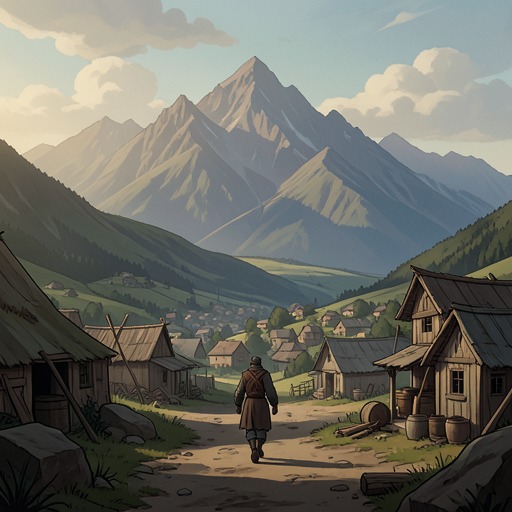
Set in an unspecified future, Castalia is not presented simply as a forecast of a particular utopia. It represents a form of spiritual culture that has appeared, in different historical forms, in institutions such as Platonic academies and yoga schools. The name evokes the spring sacred to the Muses; the province’s defining purpose is to keep intellectual and artistic values alive through disciplined study and the Glass Bead Game. The novel’s narrator places Joseph Knecht’s life within this tranquil mountainous region, traditionally described as a pedagogical province.
Castalia’s position is both protected and dependent. It is a small, orderly world set apart from the country around it, but it is not self-sufficient: its institutions have a relationship with the outside world, and its continued existence rests on conditions beyond its borders. The tension between refuge and dependence is central to the province’s meaning. Its security is real, but not eternal.
Schools and Intellectual Life
The elite schools recruit gifted pupils from the country’s ordinary schools through recommendation rather than competitive entrance examinations. A teacher may invite a child of eleven or twelve to consider entering a Castalian school; the child is given time to decide, and admission on probation requires the unqualified consent of both parents. The system thus frames entry not merely as selection by ability, but as a choice involving both vocation and family consent.
Once admitted, an elite pupil is freed from the ordinary expectation of preparing for a livelihood or specialized profession. Those who complete their studies supply the Order and the academic hierarchy, from grammar-school teachers to the twelve Directors of Studies and the director of the Glass Bead Game. A Council of Studies with twenty members—ten representing the Board of Educators and ten the Order—administers the wider elite-school system. The schools serve not only as places of learning but as the means by which Castalia renews its teaching and governing institutions.
Within Castalia, students have unusually broad intellectual freedom. Academies, seminars, libraries, archives, and laboratories offer extensive opportunities for study, and students are not graded according to their origins or prospects for a career. The hierarchy evaluates them by qualities of mind and character. This arrangement removes many material pressures and temptations associated with secular universities; its promise is an education devoted to intellectual development rather than advancement. At the same time, its shelter distinguishes Castalian life from the less orderly, more dangerous existence of the majority outside.
The Glass Bead Game and Sacred Culture
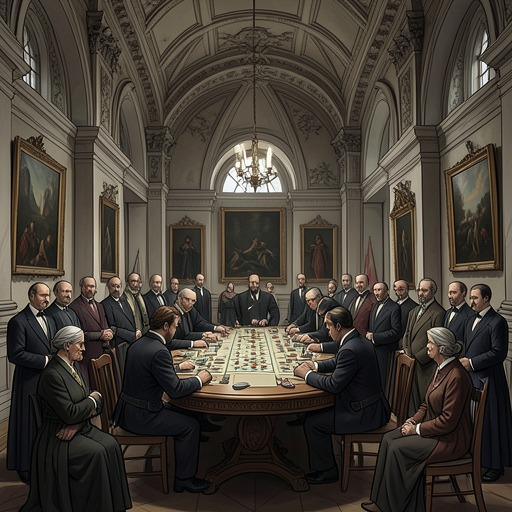
The Glass Bead Game is the focal point of Castalia and the reason for its existence. It developed into a synthesis of intellectual and artistic practice, partially taking the place of art and speculative philosophy. Its symbols can draw together materials from disparate disciplines: a Christian creed or passage from the Bible may be expressed in the Game as readily as a geometrical axiom or a melody by Mozart. The Game does not establish a theology of its own, but for its small circle of true players it approaches the function of worship.
This quasi-sacred character becomes especially visible in the annual public Game at Waldzell. The solemn spring festival, usually lasting from ten days to two weeks, gathers people and tendencies from across Castalia in an enactment of symbolic harmony. It suspends rivalries among the disciplines and recalls the unity that holds their diversity together. For believers it carries the force of consecration; for others it can serve as a substitute for religion. The narrator compares its communal and artistic force to the later reception of Bach’s Passions, which for some performers and listeners became an act of worship and, for others, a solemn religious substitute.
The Game’s cultural ancestry reaches back to the universal symbolic language devised by the Joculator Basiliensis. In the later Castalian era it became the sublime meeting point of the separate members of the Universitas Litterarum. The name Magic Theater, associated with the Age of the Feuilleton, captures an earlier aspiration for an imaginative space where forms of knowledge could meet. In Castalia, the Game is more than a specialized discipline: it is the emblem of the province’s faith in intellectual unity, even as the institution deliberately avoids calling that faith a religion.
Origins, Service, and Historical Dependence
Castalians know that their province did not always exist. It arose at the end of the Age of Wars from two sources: the ascetic efforts of scholars, artists, and thinkers who had recovered their judgment, and the exhausted population’s demand for order, lawfulness, moderation, and normality after periods of distress and betrayal. In this account, Castalia’s foundations are not merely intellectual achievements. They answer a social and historical need.
The Orders and pedagogical provinces are understood to abstain from government and competition, instead sustaining the spiritual foundations of moderation and law. Castalia’s own claim to serve the wider world rests on this division of labor: it provides teachers, books, and methods, and guards the quality of intellectual life and its moral functions. Joseph Knecht recognizes the contrast between the province’s sheltered, orderly existence and the more primitive, dangerous, and disorderly life of most people. He believes Castalians must neither despise that world nor indulge a vague nostalgia for it; their task is to serve the hierarchy without doing injustice to the society on which they depend.
That ideal, however, coexists with political innocence. Most Castalians have little contact with current events, newspapers, or political responsibilities, and Glass Bead Game players may take particular pride in keeping the outside world from disturbing their rarefied scholarly and artistic life. The province’s remoteness is not just geographical. It can become an intellectual habit that obscures the historical and social conditions underlying Castalian privilege.
Historical Crisis and Knecht’s Departure
Joseph Knecht’s studies and encounters make the province’s historical limitations increasingly visible to him. His friendship with Plinio Designori first gives him a personal connection to life beyond Castalia; his stay among the Benedictines and his instruction from Father Jacobus deepen that awareness. When Knecht teaches Father Jacobus about Castalia and the Glass Bead Game, the monk remains wary of an Order that imitates Christian forms without a God, Church, or religious foundation. Over time, however, Jacobus comes to understand the Game as the secret of Castalia’s inward faith. Their exchange contributes to a gradual rapprochement between Castalia and Rome, followed by scholarly cooperation and eventual concord.
As Glass Bead Game Master, Knecht remains an exemplary administrator, but his historical consciousness changes how he sees the institution he serves. He concludes that the province’s relations with the outside world have been declining for decades. The Federal Council still consults the Board of Educators on educational and cultural questions, and Castalia continues to supply teachers and scholarly judgments, but these connections have become routine. Fewer young men from the elite volunteer for teaching posts outside the province. The gap between Castalia and the society it is meant to serve is therefore not an abstraction: it appears in the thinning of practical contact and the weakening of a once-active exchange.
Knecht’s warning is also a judgment on Castalian complacency. The founders built the Order, the Board of Educators, the elite schools, the archives, and the Game through arduous effort, but their heirs risk living as comfortable guests in an inherited edifice, forgetting the sacrifices and historical accidents that made it possible. Knecht sees Castalia as already past its flowering, on a downward slope toward eventual dismantling. He argues that the country’s need for good teachers may outlast its need for elite institutions: the young in ordinary schools, including children destined to become workers, soldiers, politicians, and rulers, need examples of truthfulness, respect for language, and obedience to the life of the spirit.
The crisis culminates in Knecht’s decision to resign. He assures the head of the Order that he does not expect endorsement, but hopes to retain a remnant of respect; he declares that he has left Waldzell and its Players’ Village for good. He returns the chest containing the insignia of office and announces that he is no longer the Glass Bead Game Master, a Board member, a brother of the Order, or a Castalian. The departure shocks his colleagues precisely because his administration had been faithful and no signs of disorder or neglect had been found in Waldzell. Castalia’s outward institutional success cannot answer the inward question of whether its way of life still gives Knecht meaningful work.
Significance
Castalia holds together the novel’s admiration for intellectual discipline and its scrutiny of cultural withdrawal. Its schools offer unusually generous freedom from economic pressure and cultivate learning as a vocation; its Game seeks to unite knowledge and art in a shared symbolic form. Yet the province’s order can harden into a belief that it is permanent, while its hierarchy risks becoming a privileged class estranged from the people whose education it claims to serve.
Knecht’s history of Castalia is therefore not simply an argument for abandoning scholarship. It asks whether a culture can preserve its values without renewing its relation to the world. Castalia’s origins show that it was born in response to historical suffering, not outside history; its institutions depend on a balance between the guardians of culture and the society around them. When Knecht recognizes that the balance has weakened, the province becomes for him another completed stage of life. Its beauty remains, but it no longer grows. His departure turns the sheltered ideal into a question of service: whether spiritual culture can remain alive if it does not return its learning to the changing world that produced it.