Castalia’s growing isolation and decline
The Glass Bead GameCastalia’s growing isolation and decline is the historical and institutional danger that Joseph Knecht perceives beneath the Province’s celebrated intellectual order. Castalia and the Glass Bead Game remain beautiful achievements, but their forms are mortal: their distance from ordinary life, dependence on national support, and growing inability to serve the world threaten to make a living ideal sterile. Knecht’s recognition turns the question of Castalia’s future into a test of what its service is for.
An ideal becoming an institution
The Glass Bead Game has grown from a specialized intellectual pastime into a synthesis of art and learning, and in Castalian life it partly assumes the place of art and speculative philosophy. Its symbolic language can unite mathematics, music, literature, and Christian theological materials without itself establishing a theology. For its devoted players, the Game approaches worship: a disciplined path toward unity and perfection, though its spiritual force rests within a community that has no God or Church as its institutional foundation.
That quasi-religious stature helps explain both the Game’s power and Castalia’s exposure. The annual solemn Game gathers different tendencies of the Province into symbolic harmony; for believers it has the force of consecration, while for others it serves as a substitute for religion and a shared experience of beauty. Yet the narrator’s account insists that this splendor does not make the institution timeless. At the end of his first great festival as Master, Knecht voices the discomfort that beauty itself can provoke when it seems too complete to last: Castalia and the Game are wonderful, he says, but their eventual passing must still be considered. The concern is not a rejection of their value; it is an insistence that value does not exempt human institutions from history.
Historical consciousness and internal warning signs
Knecht’s awareness of decline develops through the history he studies with Father Jacobus, the Benedictine scholar whose teaching helps him see Castalia as a historical entity rather than a permanent order. Knecht had defended the Province in their debates, but their exchange also forced him to examine the limits of his own historical understanding. Their intellectual partnership outlasts the immediate lessons: it helps create a more informed relationship between Castalia and Rome, while giving Knecht a sharper sense of how institutions grow, change, and lose their purpose.
The danger becomes legible to Knecht through a tension in his own character. He is at once the loyal servant who treats the Order and the Game as sacred, and the awakened observer who knows their present forms can age, harden, and decay. He can honor Castalia’s ideal while criticizing the institution that carries it. His friend Tegularius makes the contradiction intimate. Knecht sees in him extraordinary Castalian gifts—melancholy genius, intellectual freedom, and artistry—but also a warning of what those gifts might become without discipline or communal responsibility. If Castalia withdraws further behind its walls and weakens the Order’s moral discipline, Tegularius’s eccentricity could become the type of a deteriorating Province: brilliant in its self-enclosed culture, yet unable to direct its abilities beyond their own enjoyment.
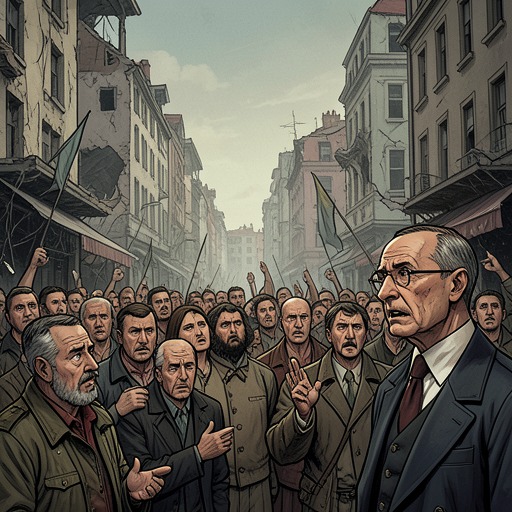
Knecht’s misgivings are confirmed by the direction of Castalia’s relations with the country. The Federal Council still consults the Board of Educators on cultural and pedagogical matters, and Castalia still supplies teachers and scholarly opinions. But these connections have become routine and mechanical. Fewer young Castalians volunteer for teaching assignments outside the Province; people beyond it turn less often to Castalian judgment, even in fields where it once carried weight. Rather than converging, the cultural life of the Province and the country are moving apart. Castalia’s refined, specialized intellectuality increasingly looks to outsiders like a precious but alien antique, admired but no longer felt to be necessary to active life.
The separation is mutual. Citizens’ interest in Castalia and the Glass Bead Game is declining, but so is Castalians’ sympathy for the life and fate of the country. As Master of the Game in the Players’ Village, Knecht works among specialists and feels the cost of that enclosure. His increasing attention to beginners’ courses reflects a concrete educational preference: the youngest pupils are less tamed by specialization and remain more closely connected to life beyond the Province. He also experiences a longing for ordinary people and unreflective life, while the institution around him registers the same malaise in attempts to emphasize physical exercise, games, crafts, gardening, and meditation over overrefined specialties. These responses acknowledge the need for renewal, but the narrator describes Castalia as an aging organism already badly in need of it.
Service, privilege, and dependence
Knecht’s diagnosis concerns more than the loss of outside influence; it asks whether Castalia still understands its obligation to the people who support it. In his critique of Castalian privilege, he argues that many members obey the Order’s rules and cultivate intelligence without understanding their place in the nation or world history. They may neither despise nor envy people outside the Province, yet still fail to regard them as brothers or recognize shared responsibility for events beyond Castalia. Intellectual cultivation risks becoming an end in itself: a pleasurable stroll through a culture that calls itself universal without fully becoming so.
The teachers who leave Castalia for work in the country stand out as an exception. Their often uncelebrated service, far from the Province’s intellectual comforts, is in Knecht’s view the clearest fulfillment of Castalia’s purpose and the way its members repay the nation for their education and support. Preserving intellectual honesty and truth matters not as the private property of an elite, but as a moral foundation for justice and for the larger world. When Castalians leave that responsibility to teachers alone, their prescribed modesty can itself become a source of pride: they congratulate themselves on an abstemious way of life without acknowledging that the nation makes their sheltered existence possible.
That dependence makes institutional isolation a material danger as well as a moral one. Castalia eats the nation’s bread, uses its libraries, and expands its schools and archives only so long as the country continues to authorize the expense. Impoverishment, war, or a change in public will could end that support quickly; the nation might cease to regard Castalia as a valued cultural inheritance and come to see it as an unaffordable luxury or even as an unproductive burden. Castalians’ indifference to world history deepens their vulnerability. They tend to regard history as a record of struggles for power, goods, land, and money, matters seemingly remote from the life of the mind. That narrowed view obscures the political and material conditions on which their own protected intellectual life rests.
The Game as both crown and weak point
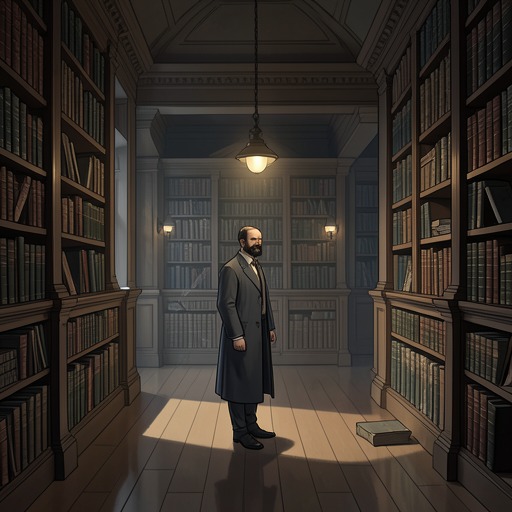
Knecht’s office gives him a particular vantage on the threat. Other Masters work in disciplines, including mathematics, philology, physics, and music, that also exist in ordinary schools and secular universities; these fields precede the Order and are likely to outlive it. The Glass Bead Game, by contrast, is Castalia’s own invention and its most distinctive expression of intellectuality. It is also the most nonutilitarian and fragile jewel in the Province’s treasury. In a crisis, Knecht reasons, it would be among the first things the country might be willing to cut: practical value could be claimed for mathematics, but outsiders would struggle to see what loss followed from closing the Players’ Village and abolishing the Game.
The Game’s exceptional beauty therefore sharpens rather than resolves the question of survival. It draws its authority from the concentration of Castalia’s spiritual and intellectual life, yet that very concentration makes it seem expendable to a world that does not share its assumptions. Its public ritual can still win converts, and its ceremonies still reconcile the Province’s competing disciplines in symbolic form. But ceremonial unity within Castalia cannot, by itself, repair the weakening bond between the Province and the society that keeps it alive. Knecht’s apprehension is that the Game may be most vulnerable precisely because it is the purest, least worldly expression of Castalia.
Diagnosis without easy escape
Knecht’s warning is not a denial of Castalia’s achievements or a call to abandon intellectual life for politics. It follows from the distinction between loyalty to an ideal and obedience to its existing institutional form. He can serve the hierarchy faithfully while judging that its growing separation from the nation imperils the work it was meant to preserve. His historical consciousness makes him register the possibility of an ending where others see only continuity; his concern is for the ideal’s survival, not the assumption that any particular institution is permanent.
The institutional answer to his appeal reveals how difficult such criticism is for Castalia to absorb. When Knecht asks the Board of Educators to release him from office and transfer him to a secular school system, the Board refuses. It objects to his attempt to combine a professional memorandum with a personal petition and invokes the hierarchy’s need to assign each member to his place. It does, however, acknowledge the admonitory value of his writing and expresses concern about his claim that he cannot continue administering his office. The exchange leaves the central conflict exposed: an organization may recognize criticism as stimulating while still defending the arrangements that make reform difficult.
Castalia’s crisis is thus not simply that the outside world has become indifferent or that the Province has grown too specialized. The sharper danger is a circle of mutual estrangement: Castalia’s inwardness weakens its usefulness and recognition beyond its borders, while the resulting distance reinforces its members’ retreat into self-sufficient cultivation. Its ideal of preserving truth remains compelling, but that ideal requires renewed responsibility to the world rather than pride in isolation. In making the decline visible, Knecht’s reflections turn the Province’s splendid order into a historical question: whether it can remain a living form of service, or will preserve its beauty only as an increasingly remote relic.