Castalian elite schools
The Glass Bead GameThe Castalian elite schools are the selective educational system through which Castalia discovers exceptional pupils, develops their abilities, and recruits future members of the Order and leaders of the country’s educational institutions. Their defining method is not competitive entrance examinations but a teacher’s judgment, followed by a child’s assent and parental consent. That humane language of vocation leads into a highly ordered life: pupils are separated from ordinary professional preparation, specialized according to aptitude, and formed for service under the Order’s rules. The schools thus sustain Castalia’s intellectual culture while determining who may enter its privileged, lifelong community and what obligations that entry entails.
Purpose and Place in Castalia
The elite schools stand alongside and above the ordinary educational system, which serves more than ninety per cent of students and prepares them for professions or university study. Ordinary schools are expected to make reasonably strict academic demands and exclude pupils deemed untalented. The elite schools have a different task: they draw candidates from schools throughout the country and educate successive generations for the Order and for important offices in secondary education and the universities.
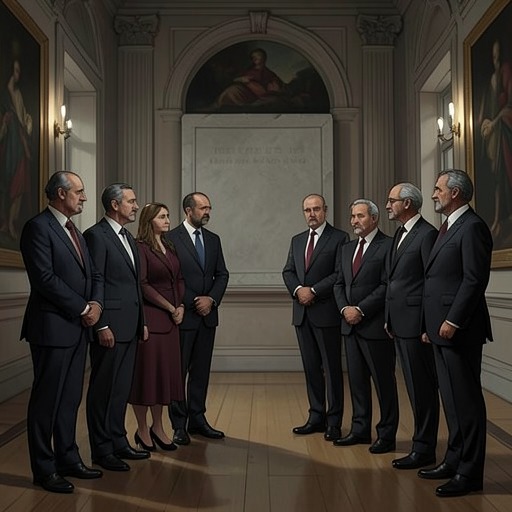
Their administration links education to the institutions they supply. A Council of Studies of twenty members oversees the selection system, with ten representatives from the Board of Educators and ten from the Order. The directors and senior teachers of the elite schools, rather than university faculties, constitute the Board of Educators, which is responsible for education and intellectual organizations across the country. Selection is therefore not merely a route into advanced study; it is how Castalia renews the bodies that direct its intellectual life.
The schools are described as a flexible system, not a single narrow course for one kind of prodigy. Castalia has four great elite schools, with numerous subdivisions and branch institutions. While students with exceptional gifts and character share the broad purpose of elite education, the system can accommodate differing strengths: intellectual ability need not be accompanied by conspicuous musical or philosophical talent. This breadth makes room for specialized scholars even as the system retains artistic and pedagogical expectations beyond ordinary marks and academic competence.
Selection and Schooling
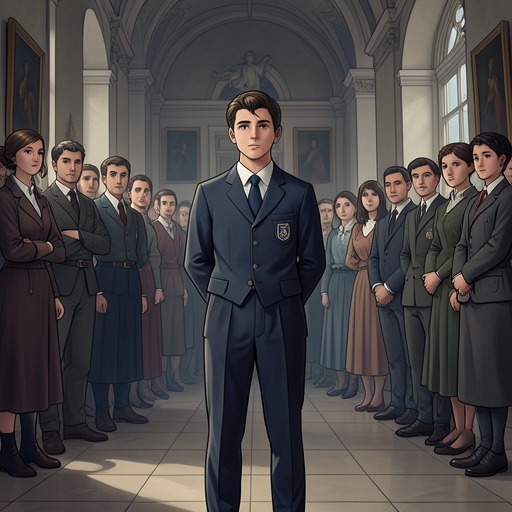
Entry begins with recognition by a teacher, not an examination. When a teacher judges that a child of about eleven or twelve might be suited to a Castalian school, the child is invited to consider whether the prospect attracts him and whether he feels a vocation for it. He is given time to decide. Admission on probation follows only if he agrees and both parents give unqualified consent. The procedure formally makes the child’s willingness and family agreement part of selection, rather than treating entry as an achievement imposed by a test or decided solely by authorities.
Once admitted, a pupil must continue to meet the school’s requirements. Failure in any course can send him back to the ordinary schools, so selection opens a pathway rather than guaranteeing permanent status. For those who remain, specialization develops during the school years. In the upper levels, students with particular aptitudes in languages, philosophy, mathematics, or other disciplines are transferred to the curriculum best suited to their abilities. The arrangement joins general formation to differentiated training: the system identifies talent, then directs it toward fields in which it can be cultivated.
Schooling is not measured by marks alone. Young people who are diligent and able to cope with their studies may still find that the elite schools’ wider pedagogical and artistic aims exceed their capacities. At the same time, the system does not require every candidate to excel in every domain: a gifted mathematician or student of languages and literature is not to be undervalued simply for lacking musical or philosophical ability. The schools therefore hold together two potentially competing principles: a broad ideal of cultivation and recognition of distinct intellectual aptitudes.
Graduation, Service, and Lifelong Obligations
The final courses are generally completed between the ages of twenty-two and twenty-five. Graduates then enter the Order. They do not ordinarily leave school to pursue a private profession or train for a livelihood outside Castalia; the Order and the academic hierarchy draw their members from this educated group. Its service range extends from grammar-school teaching to senior offices, including the twelve Directors of Studies, also called Masters, and the director of the Glass Bead Game, the Ludi Magister.
Admission to the Order continues to shape a graduate’s life even when his work takes him beyond Castalia. Former elite pupils who become teachers in public schools or universities remain members of the Order for life. Unless they resign, they cannot become professionals such as doctors, lawyers, or engineers, and remain bound by the Order’s rules of poverty and bachelorhood. In ordinary usage they are called mandarins, a label described as half derisive and half respectful. Elite education consequently produces not just scholarly distinction but a durable institutional identity, with restrictions as well as privileges.
Most former pupils ultimately become schoolmasters. A much smaller group, the top flight of the schools, can devote themselves to free study for as long as they wish. Those who are unsuited by physical limitation or temperament to teaching or administrative responsibility may also continue as scholars supported by the authorities. Their service may take the form of pure scholarship, advisory work for dictionaries, archives, or libraries, or research pursued as art for its own sake. Castalia thus accommodates forms of intellectual contribution that do not fit its ordinary teaching and office-holding careers, though these too depend on the institution’s support.
Intellectual Culture and the Glass Bead Game
The schools cultivate more than professional competence. Castalia’s intellectual culture includes strong artistic and musical tendencies, but it also contains recurring movements toward sober disciplines that disparage artistic “visionaries” and may reject the Glass Bead Game altogether. The elite system’s breadth allows such scholarly specializations to exist without making the artistic ideal universal among pupils. Within the wider Castalian world, the Glass Bead Game has itself developed from a specialized pursuit into a synthesis of intellectual and artistic disciplines, and it has partly assumed the place of art and speculative philosophy. Its players treat it as a shared symbolic practice, while the religious language absorbed into its symbols can make it approach worship without giving it a theology of its own.
The Game’s institutional life mirrors the schools’ selective method. In the Players’ Village, courses and seminars take in hundreds, who later return to other work; the most committed and gifted are trained to become artists of the Game. The Game Archive is the apparatus’s heart, served by everyone from the Magister and Archivist to the humblest errand boy. Those who reach the elite level continue developing and deepening their art throughout their lives, whether or not they hold official posts. The educational pattern therefore extends beyond admission to a school: selection, instruction, specialization, and lifelong cultivation recur within Castalia’s most distinctive discipline.
This ideal of cultural formation has a religious and civic dimension. The annual public Glass Bead Game brings together divergent Castalian tendencies in a symbolic act of harmony, establishing a truce among disciplines and recalling their unity. For believers it has the force of consecration; for unbelievers it can serve as a substitute for religion. Such ceremonial uses help explain why Castalian institutions can resemble religious structures even as the Order lacks the religious foundation that Catholic critics expect. In conversation with Joseph Knecht, Father Jacobus objects that the Castalian Order imitates Christian models without a religion, God, or Church at its base. Knecht answers that other conceptions of religion and God have existed and argues for the purity of Castalia’s intentions and its influence on intellectual life.
Boundaries and Vulnerability
The schools’ system of selection sustains a privileged intellectual group, but it also sets firm boundaries between its members and the ordinary population. Most students attend ordinary schools and prepare for professional lives; those identified for elite education enter an order of service, abstention, and hierarchy instead. Their separation is especially visible in the lifelong poverty and bachelorhood rules that bind Order members. Castalia’s educational achievement and its social distinction are therefore intertwined: the same institutions that cultivate rare talents also reproduce an elite whose commitments distinguish it from the country it serves.
That structure depends on political and material support. Castalians are largely insulated from current events and have neither political rights nor duties; Glass Bead Game players are especially inclined to protect the rarefied atmosphere of scholarly and artistic life from newspapers and politics. Yet the Magister Ludi warns that the Game is the most vulnerable part of the system in a national emergency. Other disciplines, such as mathematics, have obvious practical uses, whereas outsiders might see the Game as dispensable. If the country’s survival were threatened, elite schools could be contracted, collections and libraries deprived of funding, and the Game’s home in the Vicus Lusorum abolished. The schools thus form part of an institution whose independence rests on resources it does not control and whose most cherished work may be the first to be sacrificed.
The possibility of that contraction gives the schools’ promise a political edge. They are not simply places where individual gifts flourish: they channel those gifts into a hierarchy, preserve an intellectual tradition, and furnish Castalia’s offices and disciplines with successors. Their carefully regulated reproduction of an elite enables sustained scholarship and service, but leaves both the school system and the culture it supports exposed to decisions made beyond its protected world.