Cattle
The Glass Bead GameCattle are more than a measure of wealth in the Indian life embedded in the book. Sacred to Brahma and cared for in reserved pastures, they shape Dasa’s childhood, provide the route by which he returns to the royal world, and later become part of the conflict that exposes the personal fear beneath his public duties. Their changing place in the story links ritual and livelihood to the moral consequences of power and attachment.
Sacred Herd and Dasa’s Removal
Rajah Ravana owns a herd of cows dedicated to Brahma, whose milk and butter are regularly offered to the god. The animals’ sacred status also gives them a practical importance: their best pastures are set aside, and when drought threatens the grazing grounds, the herdsmen plan to move them into the mountains, where water and grass remain available.
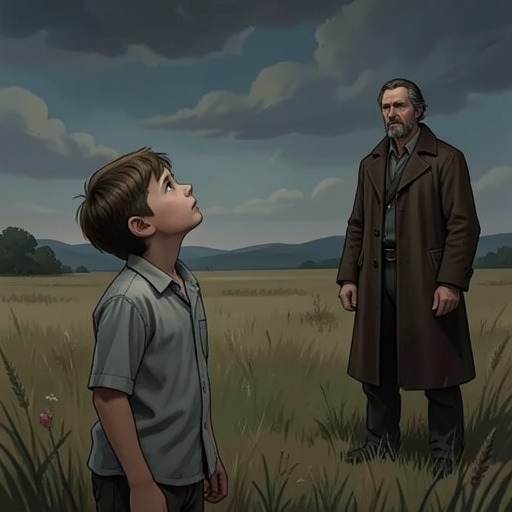
That planned journey makes the herd a means of escape for the young Dasa. The Brahman Vasudeva, aware that Ravana’s second wife intends to displace Dasa in favor of her own son Nala, confides in a herdsman he trusts. When Dasa disappears from the palace, the herdsman takes him into the hills to join the migrating cattle. The animals thus become the setting for a concealed change of life: the prince is removed from the court and raised among the herdsmen, beyond his stepmother’s immediate reach.
Childhood Among the Herdsmen
Dasa gladly adapts to the herdsmen’s work. He helps guard and drive the cows, learns to milk them, and plays with the calves. The herd’s daily movement leads him through mountain pastures and forest country, where he becomes familiar with trees, fruits, pools, and animals. His former home does not vanish from memory, but it recedes until his princely past seems dreamlike beside the life he now knows.
This upbringing changes the way Dasa later sees royal power. As a young man accompanying herdsmen to the capital, he encounters the grandeur of the court from the outside, with the practical outlook of someone accustomed to country life. The cows remain the reason for his presence there: the herdsmen are carrying butter for the festival sacrifices, and Dasa is one of the three chosen to deliver it. The herd that carried him away from court therefore also brings him back into its orbit, now as a herdsman rather than a recognized prince.
Offerings and Political Return
At the palace, Vasudeva receives the butter for the sacrifices but does not recognize Dasa. The young herdsman then joins the festival crowd. He sees the butter offered to the flames, alongside the parade and the public installation of Nala as Ravana’s successor. The ritual use of the herd’s produce places cattle at the center of the celebration, while the succession ceremony reveals the political outcome that followed Dasa’s removal.
The contrast is sharp: the herd’s butter participates in a formal act of devotion, yet the festival also displays a royal order that has excluded the legitimate elder son. Dasa is captivated by the spectacle but regards it with the grounded reserve of a herdsman. The cattle have enabled his return to the city without restoring his identity there; the apparent distance between the boy in the pasture and the heir in the palace remains intact for the time being.
Cattle, Duty, and Conflict
In Dasa’s later life as ruler, cattle again become a political matter. When a messenger reports that Govinda’s men have raided the frontier, stolen cattle, and taken some of Dasa’s subjects, Dasa prepares an expedition. His first response is shaped not simply by the loss of property or the challenge to his authority, but by the obligations a ruler owes to those who depend on him. He recognizes that ignoring the raid would wrong the exhausted messenger and the captured people, and would undermine his subjects’ expectation that their ruler will defend them.
Yet the incident also reveals a more intimate motive. Dasa’s reflections turn on the love he feels for his son Ravana and the fear that, without resistance, violence might eventually reach the child. His attempt to punish the raiders fails; they escape with their booty. To demonstrate resolve, Dasa then raids Govinda’s territory, damaging a village and carrying off cattle and people. The stolen herd has become part of a cycle of retaliation: an act undertaken in the name of protection produces new victims and prepares the ground for further violence.
Significance in the Indian Life
Across Dasa’s story, cattle move between sacred offering, pastoral livelihood, royal possession, and the spoils of conflict. Their significance is never limited to a single symbolic meaning: they are living resources that require care, objects of religious observance, and goods whose loss can provoke political action. The herd’s changing contexts keep the material conditions of the story visible even as Dasa’s understanding shifts from childhood wonder to adult reflection on duty.
The cattle also connect two turning points in Dasa’s life. In youth, their migration shelters him from a threatened succession and draws him into a different social world. In adulthood, their seizure helps set off a reprisal that makes him see how defense of his household and subjects can bind him to the violence he wishes to avoid. They are not the cause of that moral entanglement by themselves; rather, the episodes involving them expose how property, protection, and love become joined in the conduct of power.