Gaza
The Glass Bead GameGaza is the starting point of Josephus Famulus’s religious life and the place whose troubled visitors give his desert calling its enduring purpose. In the embedded account of the hermit, the city stands at the threshold between worldly study and ascetic withdrawal, while its surrounding region becomes the field in which his gift for listening is recognized.
Definition and Setting
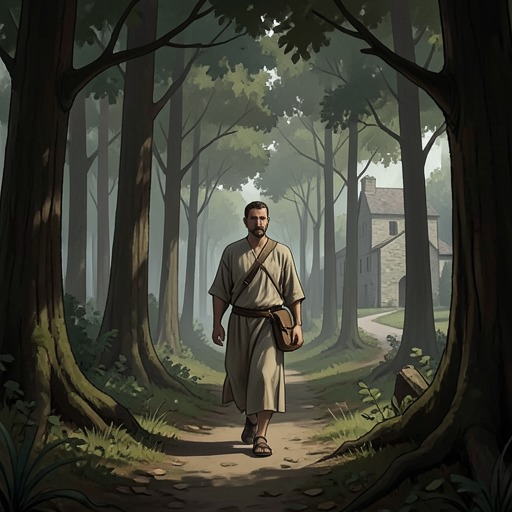
Josephus Famulus lived in Gaza during the time of St. Hilarion. Until about the age of thirty, he had led a worldly life and studied pagan books. A woman he pursued introduced him to Christian teaching and virtues; he was baptized, renounced his sins, and spent several years learning from the city’s presbyters. Their accounts of desert hermits eventually drew him beyond Gaza’s city gate and into the wilderness.
The departure is concrete and deliberate: Josephus gave his possessions to the elders for distribution to the poor, bade farewell to his friends at the gate, and left to live as a penitent. Gaza therefore marks not simply his birthplace in the narrative but the boundary he crosses when he exchanges urban life and its invitations for desert austerity.
The City’s Religious World
The presbyters of Gaza offered Josephus Christian instruction, but his earlier pagan learning continued to shape his attention. During sleepless nights in the desert he read stories and symbols in the constellations, a practice the presbyters regarded with abhorrence. His path thus begins in a city where Christian doctrine redirects him without immediately erasing the intellectual habits of his former life.
The wider desert setting around Gaza is presented as a landscape of springs, oases, and solitary or communal hermitages. Its penitents practiced poverty and love of neighbor, and pursued the ars moriendi: mortification of the self and withdrawal from the world as a passage toward the Redeemer. The account also notes that ancient purification practices and forms of yoga had once been known among some ascetics, but that Christianity increasingly prohibited pagan methods. Gaza’s Christian community and the wilderness beyond it are joined by this tension between inherited practices and religious discipline.
Josephus’s Reputation Beyond Gaza
After many years of penance, Josephus developed a gift not for judging visitors but for listening to them. People from hermitages, villages, and towns came to tell him their deeds, failures, temptations, griefs, and losses. He received their stories without imposing punishment or claiming the authority to absolve them: after a confession, he asked the penitent to kneel and recite the Lord’s Prayer, then dismissed him with a kiss on the brow. His practice made him a source of calm and fellowship for people seeking help in and beyond Gaza.
His growing reputation led some to mention him alongside Dion Pugil, the celebrated hermit near Ascalon. The contrast clarifies Josephus’s particular role. Dion was famed for discerning unconfessed sins without being told and for acting as a forceful counselor and judge; Josephus did not compare himself with him. His authority rested instead on attentive silence and a shared bearing of another person’s burden.
Significance
Gaza gives the hermit’s story its human and geographic point of departure: a city of Christian instruction from which a former student of pagan books chooses the desert, and a community whose people continue to seek spiritual care from the ascetic beyond its walls. The narrative’s emphasis falls less on Gaza’s physical description than on the passage it makes possible—from worldly pursuits to penitence, and from solitary withdrawal to service through listening.