Johann Albrecht Bengel
The Glass Bead GameJohann Albrecht Bengel is a Swabian Pietist remembered in the novel through the scholarly interests and conversations of Joseph Knecht and Father Jacobus. A philologist, teacher, and educator, he becomes an unexpected bridge between a Benedictine historian and a Castalian Glass Bead Game player. Knecht’s interest in him is at once personal and interpretive: he admires Bengel as a guide for youth, then recognizes in Bengel’s unrealized plan for an integrated system of knowledge an ancestor of the Glass Bead Game.
Historical and intellectual profile
Father Jacobus describes Bengel as a Protestant scholar whose moral influence continued to be felt for two centuries after his death. He places him within the rich, many-sided intellectual history of the eighteenth century, especially the Protestant attempts to reconcile divided Christian communities. For Jacobus, Bengel’s significance is not merely that he belonged to a particular theological tradition: he was a teacher and educator of exceptional stature, discovered through Jacobus’s own study of the period.
Bengel’s intellectual range included philology and mathematics as well as biblical scholarship. His years of study of the Revelation of St. John led him to devise a system for interpreting its prophecies and to calculate prophetic numbers. The narrative presents this work as a striking conjunction of precision and imaginative excess: the same scholar who aspired to bring knowledge into order also pursued predictions concerning the Antichrist and the Millennial Kingdom.
Knecht’s private engagement with Bengel
Before the conversation with Jacobus, Knecht had studied eighteenth-century Pietism for private reasons and had been especially impressed by several Swabian theologians, above all Bengel. He regarded Bengel as an ideal teacher and guide for youth. His admiration took a concrete form: he had a photograph made from a portrait in an old book and kept it above his desk. The portrait thus records a sustained personal attachment, not merely a name encountered in historical reading.
Knecht’s interest in Bengel also shaped a biographical writing project. While exploring the materials for an eighteenth-century Life, he researched church organization, Pietism, the liturgy, and church music, and considered Bengel alongside other figures of the period. He eventually abandoned the project, explaining that he had approached its subject from too many angles and gathered too many details to make a Life from them. The failure was not a loss of interest in Bengel; rather, the abundance of accumulated scholarship had made poetic transformation difficult. The book consequently distinguishes Knecht’s completed Lives as creations of a poetic spirit rather than works of scholarship.
Meeting of Jacobus and Knecht
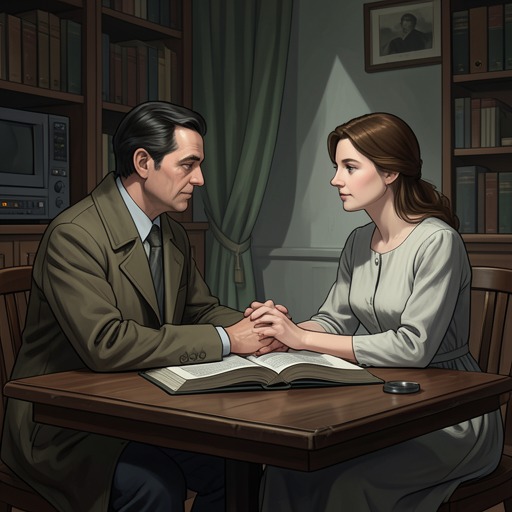
Bengel brings the conversation between Father Jacobus and Knecht into unusual accord. Jacobus has been discussing the history and legitimacy of religious orders, while sharply criticizing the Castalian Order as an imitation of Christian models without religion, God, or Church as its basis. Knecht answers that other religious traditions have existed and that their intentions and influence on intellectual life should not simply be denied. In the course of this exchange, Jacobus mentions a Swabian Pietist educator whose influence he has traced across two centuries. Knecht guesses Bengel, and Jacobus confirms that he had meant the same man.
Their shared discovery crosses institutional and confessional boundaries: Jacobus observes that Bengel has influenced both a Benedictine monk and a Castalian Glass Bead Game player. Knecht’s account of his portrait and private study makes the connection more than a coincidence of historical research. Their common interest briefly gives the conversation a personal warmth, even as it leads back to their difference over whether Castalia’s nonreligious order can claim a legitimate historical mission.
Bengel as a forerunner of the Glass Bead Game
Knecht jokingly calls Bengel a secret forerunner and ancestor of the Glass Bead Game. The claim rests on a specific youthful ambition: Bengel once hoped to arrange and summarize all the knowledge of his time symmetrically and synoptically around a central idea. Knecht sees this as more than encyclopedic accumulation. The defining aspiration, as he interprets it, is to establish an organic relationship among fields of knowledge, rather than simply place them beside one another. That aspiration resembles a basic principle of the Game.
The comparison is both generous and qualified. Knecht suggests that a system like the Glass Bead Game might have helped Bengel direct his many talents toward a single purpose and spared him some of the misguided labor of calculating prophetic numbers. Without such a unifying system, Knecht argues, Bengel’s mathematical gifts and philological bent produced an uneasy mixture of pedantry and wild imagination in his theory of the order of the ages. Bengel therefore stands as a precursor who sensed the need for synthesis but did not find a method capable of fulfilling it. His importance in the novel lies precisely in that gap between an integrated intellectual ideal and the divided course of his actual work.