Joseph Knecht
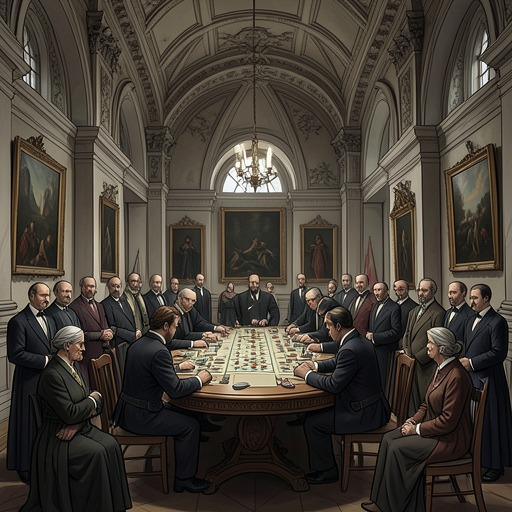
The Glass Bead GameJoseph Knecht, known in the Glass Bead Game Archives as Ludi Magister Josephus III, is the subject of a deliberately paradoxical biography: Castalia’s culture prizes the erasure of individual identity, yet the account seeks to recover his life in the name of truth and scholarship. He becomes the supreme master of the Glass Bead Game and a representative of the intellectual order, but the decisive measure of his life is that he eventually leaves that summit. His vocation does not end in the office that fulfills it; it carries him beyond Castalia and, in the biographers’ telling, toward legend.
Identity and Beginnings
Nothing is known of Joseph Knecht’s origins. Like many pupils of the elite schools, he may have lost his parents in childhood, or the Board of Educators may have taken him from an unfavorable home. Either way, he was spared the conflict between home and school that troubled other gifted boys and could obstruct their entry into the Order. The biography tentatively identifies Berolfingen, where he attended Latin school, as his birthplace, but cannot establish even that much with certainty.
The uncertainty is not incidental. Castalian hierarchy makes anonymity an ideal: integration into the collective intellectual life is so complete that the original names and personal histories of exemplary members may disappear. The biographers therefore distinguish their purpose from a cult of personality. They regard individual biography as a necessary counterweight to anonymity, since the history of the Glass Bead Game has itself been formed by phases of change and development. In recovering Knecht’s character, they seek to preserve both the principle of anonymity and the particular life that complicates it.
The account’s own limits are part of its subject. It acknowledges that history remains a form of literature and that the available evidence is scant, especially at the end of Knecht’s life. The biography can trace a sequence of stages, but it cannot claim full possession of the person it describes. Its portrait of Knecht’s serenely cheerful acceptance of destiny is therefore offered as an interpretation grounded in fragments and recollections, not as an exhaustive psychological record.
The Call, Friendship, and Awakening
The first decisive call comes not from scholarship but from music. At twelve or thirteen, while a scholarship pupil in Berolfingen, Knecht learns that the Music Master will visit to inspect the school’s music instruction. The teachers have already recommended him for admission to the elite schools, though he knows nothing of their recommendations. To him, the Music Master is one of the country’s most exalted authorities, a near-legendary figure whose arrival stirs him deeply. The biographers treat this musical encounter as the first summons of Mind and vocation.
At Waldzell, Knecht’s formation takes another, more unsettling shape through his friendship with Plinio Designori. He listens at the edges of student groups as Plinio attacks Castalian authority and praises the secular world as more natural and human. The speeches are sometimes treated by listeners as entertainment, but Knecht feels their attraction and alarm together. He does not simply agree with Plinio; rather, the possibility of doubt itself disturbs him. Their friendship becomes a public contest between two ways of life, watched by the school as though the arguments concerned everyone. Plinio draws energy from contact with the outside world; Knecht returns to meditation, study, and the Music Master, becoming a more assured representative of Castalia.
A personal confession from the Music Master helps Knecht recover when he recognizes the risk of neglecting meditation. The Master recalls that intense work can exhaust or possess a person, making it difficult to step back and regain perspective. For Knecht, the force of the story lies partly in learning that even a revered Master was once young and capable of error. A person may stray or fail and still find a way back. Knecht renews his meditation practice, overcomes his crisis, and continues to develop through a relationship that offers guidance without pretending that mastery means infallibility.
After graduating from Waldzell at about twenty-four, Knecht enters the years of free study. They are described as among the happiest of his life: the disciplined pupil is released into broad intellectual horizons, and his nature inclines toward integration and universality rather than a single specialty. This freedom is made possible, the biographers stress, by the prior discipline of elite schooling, meditation, and educational supervision; without those restraints, intellectual liberty could dissolve into dilettantism.
His months in the Bamboo Grove become what he later calls the beginning of his awakening. The term marks more than a repetition of his earlier sense of vocation. Knecht increasingly recognizes both his own distinctive position and the relativity of the hierarchies—Castalian and general—that had seemed to define the world. His Chinese studies continue beyond that stay, especially into ancient Chinese music, whose traditional association with order, morality, beauty, and health reconnects with the ethical understanding of music embodied by the Music Master.
History, Service, and the Summit
Knecht’s time at Mariafels introduces a further education through the Benedictine historian Father Jacobus. Their exchange begins in conversation and develops into friendship and formal disputation. Jacobus criticizes Castalia for turning world history into a refined history of ideas and art, detached from political and human events. Knecht does not dismiss the attack; some of its force compels him to reconsider Castalia’s relation to history. From Jacobus he learns the laws and contradictions of historiography, and to see both the present and his own life as historical realities. This is another stage of awakening: his intellectual formation acquires a sense of time, contingency, and the world beyond the Province.
Knecht nevertheless reaches the highest office in Castalia. As Magister Ludi, he becomes the leader and model for those who cultivate the intellectual life, administering and extending an inherited cultural tradition. The biographers describe him as having attained the summit of the hierarchy and the maximum it offers. Yet his appointment has not been the fulfillment of an ambition he pursued. The office came almost against his will; he would have preferred the life of an independent scholar without official duties, and he soon tired of some of the privileges and administrative burdens attached to his position.
His friendship with Plinio becomes newly consequential in these years. When the two meet again, Knecht interprets the encounter as a call from outside and as an opening toward the world Plinio inhabits. Their renewed closeness offers a bridge across the boundary between Castalia and secular life. Knecht’s increasing wish to leave the Province emerges not as a sudden rejection of his past but as a desire to bring its values into relation with another sphere. The impulse grows over years; it becomes familiar to him as a possible departure, at once like a prisoner’s expectation of freedom and like a gravely ill man’s knowledge of approaching death.
Resignation and the Teacher’s Work
Knecht turns his misgivings into a practical proposal in a circular letter to the Board of Educators. He argues that, as Castalia becomes more endangered and its treasures risk growing stale, the Province must give greater weight to teaching young people in secular schools. Educators who cultivate judgment, truthfulness, respect for language, and devotion to intellectual life are needed not only within elite schools but among the children who will become citizens, workers, soldiers, politicians, and rulers. He asks to be relieved of the Magister Ludi’s office and entrusted with an ordinary school outside Castalia, where he could serve with a group of young members of the Order.
The Board rejects the petition. It objects both to his joining a professional memorandum with a personal request and to the principle behind his proposal: if members chose their own positions instead of accepting hierarchical assignments, the structure of Castalia would be at risk. Its answer is no, and it directs him to continue in the office entrusted to him. Knecht does not mistake the refusal for a misunderstanding. He recognizes that the substance could hardly have been otherwise and even appreciates the care with which the reply’s author softened an unpleasant rebuke.
The rejection nonetheless makes his decision immediate. After meditating in the Magister’s garden, he meets with Master Alexander and explains that he will resign and undertake work outside Castalia without assignment or leave. He accepts that his action conflicts with the Order’s rules, but asks not to be judged a traitor or madman: he believes the step incumbent upon him and inseparable from his destiny. Alexander cannot approve a personal right to break the system he represents, but abandons the attempt to win Knecht back and accepts his voluntary resignation. Knecht hands over the Magister’s casket and submits notes about conditions at Waldzell, including his view of possible successors. The farewell is affectionate and painful; he asks to shake Alexander’s hand, then understands that he must forgo the gesture.
Knecht leaves with little property, taking his wooden flute while leaving writings and notebooks behind for the Players’ Village to use. On the second day he reaches the capital on foot and is welcomed by Plinio, who embraces him and says that they have been longing for him. Knecht is eager to meet his new pupil, Tito, and discuss how his new position will be arranged. The change from master of Castalia to schoolteacher is not an escape from service but a transfer of it: his authority is now to be exercised through a personal relation with a young person outside the elite institution.
Tito’s first response shows what this form of authority can do. Knecht’s manner is friendly and unpretentious, unlike the schoolmasters who lecture him about scholarship, virtue, and intellectual aristocracy. Yet it makes Tito feel answerable to his own better aspirations; deceiving an ordinary teacher might be amusing, but the thought does not occur in Knecht’s presence. Tito recognizes in him a nobility not inherited from family but cultivated within a single life. The boy begins to sense that serving this kind of nobility might itself be a duty and an honor.
The Legend and the Counterlife
The account’s biographical record stops at a boundary it cannot explain. It says that Knecht’s life is historical up to a particular day, but that his later end is known only through a legend; the biographers claim no knowledge of his death or its circumstances. They nevertheless accept the legend because its final stage seems to correspond organically with the succession of stages that came before. Knecht reaches the highest Castalian office, then moves beyond it into a sphere whose nature the biographers can only guess at. His biography, like his life, exceeds the customary limits and passes into legend.
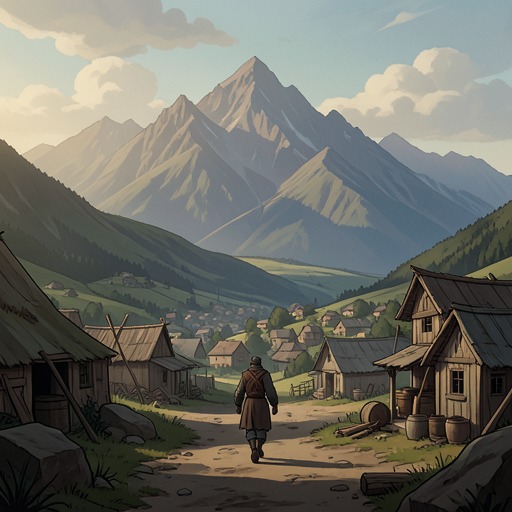
The novel’s wider life-history places this departure beside another existence: in a rainmaker village, Knecht becomes the apprentice and eventual successor of the old Rainmaker Turu. The boy follows Turu for hours, learning secret practical skills, plant names, and tasks by watching and doing rather than by studying concepts or written doctrine. When Turu finally takes him into his hut, Knecht is publicly recognized as apprentice and prospective successor. Their relationship shifts from guarded pursuit to trust and instruction, while obedience and reverence remain.
Knecht later becomes Turu’s son-in-law when the old man gives him Ada as a wife. He serves as assistant, then assumes official duties as Turu withdraws into the solitude of age. By the time Turu dies beside the small pots of magic brew on his hearth, his former pupil is already known to the village as the Rainmaker. Knecht demands an impressive funeral and burns precious medicinal herbs and roots as a sacrifice over the grave. He and Ada have several children, including a boy named Turu, understood within the village’s belief as the old man returned from his death journey to the moon.
This counterlife changes the terms of Knecht’s education. In Castalia, he ascends a hierarchy of intellectual disciplines; with Turu, he inherits a body of practical knowledge carried through senses, habits, observation, and tests. His attention turns persistently to the moon and its effects on seasons and weather, and he eventually surpasses his teacher in that knowledge. The two lives do not resolve into a single, securely documented biography. Instead, their juxtaposition gives form to the book’s recurring question of whether vocation consists in remaining at the summit of an inherited order or moving into another kind of service. Knecht’s life is defined by the movement itself: from call to awakening, from mastery to departure, and from the known record into an ending the biographers can only receive as legend.