Knecht’s Apprenticeship under Turu
The Glass Bead GameKnecht’s apprenticeship under Turu is a gradual passage from fascinated observer to acknowledged disciple and eventual successor. The Rainmaker makes the boy earn his place through persistence and practical tests, then trains him in a largely wordless body of knowledge grounded in nature, observation, and ritual. The apprenticeship becomes a vocation: Knecht takes Turu’s duties, marries Ada, and inherits a way of understanding the moon, the seasons, and human fear that he will ultimately pass on within his own family.
A Boy Drawn to the Rainmaker
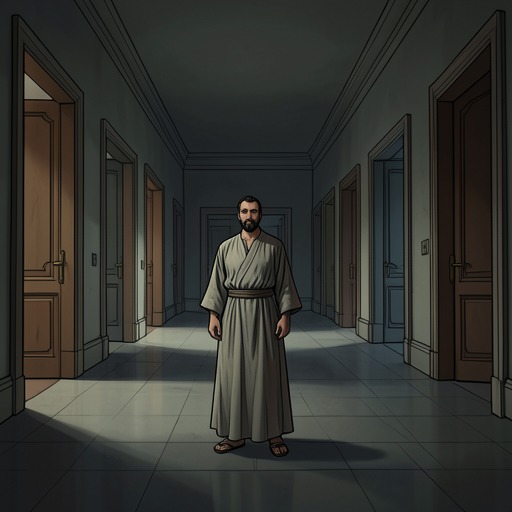
Turu is sparing with words and regarded by many villagers as peculiar or sullen, but his silence does not mean inattention. He has watched Knecht following him for a year or more and understands what the boy himself cannot yet fully explain: Knecht has fallen in love with rainmaking and longs to learn it. Turu reads in him the qualities of a prospective practitioner—the piercing yet dreamy gaze, reserve, alertness to sounds and smells, and an instinctive, searching manner. He thinks the boy may become a weathermaker, perhaps even a magician.
The possibility matters to Turu as well as to Knecht. His two earlier apprentices had married into distant villages and become rainmakers or gatherers of medicinal plants there; since their departure, he has been alone. If he takes another pupil, it will be to train his own successor. Yet he does not disclose his judgment or make the path easy. Knecht is still young, and Turu believes an apprentice must attach himself to the master and demonstrate that he can endure discouragement. The boy must make his own way to the recognition he seeks.
Knecht has no parents and is an orphan. His attraction to Ada and her hut is bound up with that absence, but his pursuit of Turu is its own persistent calling. The village around him is materially spare, without books, writing, or the arts and technologies familiar to later societies. Yet Knecht experiences his immediate world as inexhaustible: plants, animals, and stars offer continual discoveries, and the life of the tribe gives him a place within a network of shared existence. His apprenticeship grows out of this close attention to the living world rather than from formal study.
Tests, Service, and Recognition
Turu yields only grudgingly to Knecht’s importunity. When the old man goes alone into woods, swamps, or heath to set traps, track animals, dig roots, or gather seeds, he may suddenly sense the boy watching him. Knecht follows silently for hours. Sometimes Turu pretends not to notice; sometimes he growls and orders the boy away. At other times he beckons Knecht to stay, gives him work, demonstrates a skill, offers advice, or sets a test. Knecht may be told to fetch water or kindle a fire, or to learn the names of plants. The apprenticeship is assembled from such encounters rather than granted in a single formal lesson.
Turu’s selective welcome turns the pursuit into a discipline. Knecht must watch, wait, and serve before he can claim instruction. The Rainmaker teaches special tricks, practical skills, secrets, and formulas, insisting that they remain confidential. The secrecy marks the knowledge as a guarded inheritance, but the method of teaching is also intimate and concrete: the boy learns by accompanying Turu and carrying out tasks in the places where the craft is practiced.
When Knecht is older, Turu finally takes him from the youth house into his own hut. The move publicly distinguishes him from the other boys. He is now the Rainmaker’s apprentice, and, if he proves capable, the next Rainmaker. Turu’s act ends the period of distrust and constraint, though not the hierarchy of reverence and obedience between master and pupil. Having allowed Knecht to win him over through tenacious courtship, Turu now commits himself to making a worthy successor.
A Knowledge Learned Through the Senses
The instruction has few concepts and doctrines, no script or figures, and very few words. Turu trains Knecht’s senses more than his intellect. What he passes on is a dense inheritance of observations, instincts, habits of investigation, and accumulated experience—a practical understanding of nature that cannot simply be reduced to a set of written rules. Knecht has to grasp it, test it, and make it his own through direct encounter.
At the heart of this learning is knowledge of the moon: its phases, its effects as it waxes and wanes, and its place in the village’s understanding of death and rebirth. The dead are believed to go to the moon, which sends their souls forth into new births to make room for those who have newly died. The lunar cycle therefore joins the observation of the sky to a ritual account of human mortality. Turu’s craft is not only practical weather knowledge; it belongs to a larger system through which the community interprets the forces that threaten and sustain life.
One night fixes this teaching in Knecht’s memory. Turu wakes him two hours after midnight and takes him into the dark forested hills. On a ledge of rock, they wait in silence for the last rising of a vanishing crescent moon. Knecht, trembling with fear and lack of sleep, watches the thin curve appear in the place and shape Turu had predicted. The lesson is given not as an explanation but as an event to be witnessed: anticipation, patient observation, and the moon’s precise appearance bind instruction to experience.
The apprenticeship also prepares Knecht for the Rainmaker’s ritual responsibilities. In a life governed by fear of nature, death, and demons, people cannot overcome fear, but they can give it form—pacifying it, bringing it within bounds, and placing it within an ordered pattern of life. Sacrifices and their accompanying rites serve this purpose, and some fall within the Weathermaker’s province. Knecht’s inheritance thus includes both careful attention to natural signs and participation in the ceremonies through which the village meets its fear.
Marriage, Succession, and the Inherited Craft
Ada grows up alongside Knecht in Turu’s hut. When Turu judges the time right, he gives her to his disciple as a wife. Knecht is thereafter regarded as the Rainmaker’s assistant. Turu presents him to the village Mother as his son-in-law and successor, then allows him to perform many official acts and functions as deputy. Apprenticeship has become public office and family connection: Knecht’s place is secured not only by his private devotion to the craft, but by the community’s recognition of the succession.
As years and seasons pass, Turu withdraws into the solitary meditativeness of old age and leaves his duties to Knecht. By the time Turu is found dead, crouched over small pots of magic brew on the hearth, with his white hair singed by the fire, Knecht has long been known to the village as its Rainmaker. He asks the village council for an impressive funeral and burns a heap of precious medicinal herbs and roots over his teacher’s grave. The act honors Turu while also making visible the continuity of the office: Knecht is no longer merely the apprentice who watched and waited, but the practitioner responsible for carrying the craft forward.
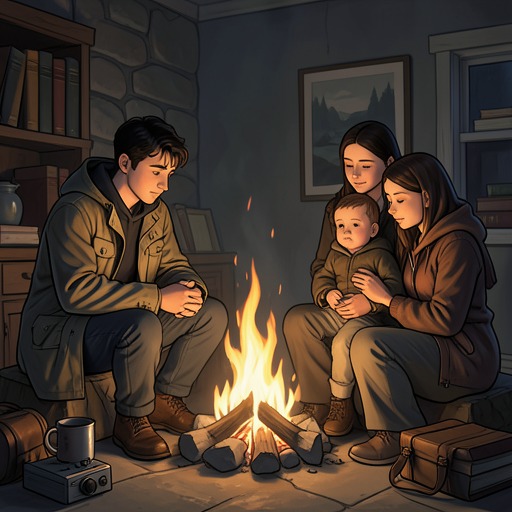
Knecht’s own life repeats the pattern of inheritance. Several of his children grow up around Ada, including a boy named Turu. In that child, the old teacher seems to have returned from his death flight to the moon. The succession therefore extends beyond the formal transfer from master to disciple: a name, a household, and a conception of return connect the generations.
What the Apprenticeship Makes of Knecht
Knecht’s career follows Turu’s in important respects. As he grows older, some of the fear in him is transformed into piety and thought; some of his youthful aspiration and profound longing remains, while some fades within the demands of work, love, and care for Ada and the children. His central passion for the moon endures. He studies its influence on seasons and weather persistently, eventually reaching and surpassing Turu’s knowledge.
The apprenticeship gives Knecht more than a technical craft. Because the moon’s waxing and waning are bound to birth and death, his study of it becomes a discipline for contemplating mortality. The fear of death, the strongest of human fears in this world, becomes less sovereign over him. Knecht develops a reverent, purified attitude toward death and understands himself as linked to the moon by delicate spiritual bonds. His learning remains precise and experiential, but its consequence is inward: observation deepens into devotion, and inherited knowledge becomes a way to inhabit the cycle of loss and renewal.
Turu’s method establishes the terms of that transformation. Knecht is not given a doctrine that would make the world conceptually manageable; he is taught to attend, endure, observe, and serve. The boy who once trailed the Rainmaker without being acknowledged becomes the man entrusted with the Rainmaker’s work. In the succession, the episode joins practical instruction to ritual, family, and spiritual change: Turu’s craft survives because Knecht has learned not only its secrets, but how to see and live within the world they describe.