Ludus anniversarius
The Glass Bead GameLudus anniversarius is the annual solemn Glass Bead Game that gathers Castalia around a shared act of intellectual and spiritual renewal. Still the Province’s great yearly festival after the era of weeks-long Games had passed, it gives symbolic form to the unity of its diverse disciplines; its importance is at once aesthetic, religious, and institutional, even as the particular Game anticipated by Joseph Knecht falls short of its promise.
Festival and Meaning
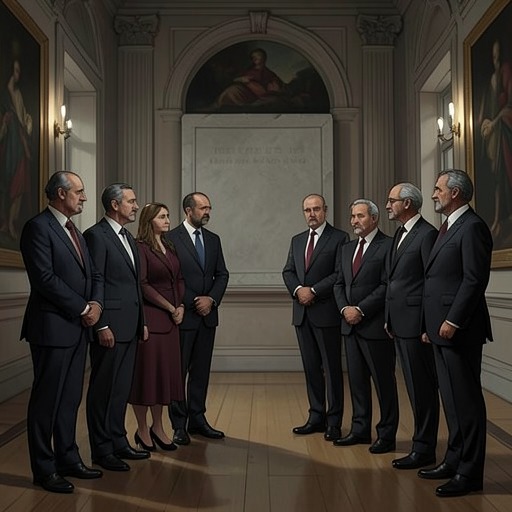
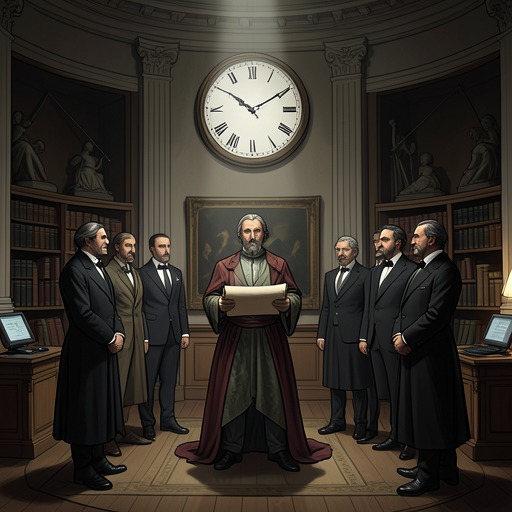
By Knecht’s time, the annual spring sessions had outlasted the older custom of Games lasting for weeks and drawing dignitaries and representatives from across the world. The surviving festival centered on one solemn Game, usually lasting ten days to two weeks, and remained the great festive event of the Castalian year. It brought advocates of the Province’s sometimes divergent tendencies together, established a truce among the ambitions of separate disciplines, and recalled the unity that held their variety within a common order.
The festival’s force depended on the participant’s relation to it. For believers, the Game possessed the sacramental force of a true consecration; for unbelievers, it offered at least a substitute for religion. For both, it could be an immersion in beauty. Its shared, ceremonial character made the Game more than a display of specialized learning: it enacted, for a time, the harmony that Castalia claimed to embody.
The wider history of the Glass Bead Game clarifies why this annual observance could carry such weight. The Game had grown from a specialized amusement into what its Castalian chronicler calls the quintessence of intellectuality and art, a mystical union of the separate members of universal learning. It had partly assumed art’s role and partly that of speculative philosophy; in the language of an earlier period, it had even been called a Magic Theater. Its symbols could incorporate Christian creeds, biblical passages, Church Fathers, or the Latin Mass as readily as geometry or music, though the Game deliberately developed no theology of its own. The solemn annual gathering thus occupied a charged borderland: religious in experience for some, and an alternative to religion for others.
Knecht’s Return and Preparation
Knecht postponed his final return to Waldzell until the spring festival. After his reassignment to Vicus Lusorum, he could not determine what his position would become and suspected that another office or mission would soon claim him. For the present, however, he looked forward to returning home, seeing his friends, and taking part in the annual celebration. His departure from Mariafels carried both sadness at leaving a place and stage of life to which he had grown attached, and festive anticipation of what awaited him.
He prepared for the Game on his own initiative, carefully undertaking the full series of meditation exercises prescribed for the occasion, despite lacking guidance or companions. He had invited Father Jacobus to accompany him, but the old monk declined; Knecht accepted this without losing his good spirits, understanding Jacobus’s reserved attitude toward Castalia. The refusal also marked the difference between them: Jacobus had come to understand and support the Castalian institution, yet did not thereby become a participant in its central ritual.
Ritual, Chance, and Disappointment
The narration distinguishes the enduring character of a festival from the success of any particular performance. For a devout soul, even a rain-soaked procession can retain its sacred quality, just as a spoiled feast need not destroy the occasion. Each annual Game is festive and, in a sense, hallowed to its players. Yet some festivals seem to lift every element into a shared climax, while others, despite preparation, remain merely decent attempts. The solemn occasion therefore depends not only on its inherited ritual meaning but also on whether its participants can bring the ceremony to life.
Knecht appears exceptionally well prepared: he is free of care, returns from abroad with honors, and approaches the event joyfully. Nevertheless, the coming Ludus sollemnis does not acquire the miraculous radiance he might have expected. It becomes cheerless and distinctly unhappy, close to an unsuccessful Game. Some participants may still feel edified, but the actors and organizers sense the failure more acutely as apathy, inhibition, bad luck, and a lack of grace. Knecht perceives that his expectations have been dashed, yet feels the fiasco less intensely because he is not playing and bears no responsibility for the performance.
Significance in Castalia
The contrast between the festival’s ideal and its disappointing realization makes Ludus anniversarius a measure of Castalia’s capacity to renew its unity, not an automatic guarantee that unity will be felt. The annual ceremony can bring competing disciplines into symbolic accord, but its sacred or aesthetic force remains vulnerable to the actual conditions of performance. Knecht’s own position sharpens that contrast: he arrives prepared to surrender himself to the occasion, yet attends without the responsibilities of a player. The Game’s failure therefore registers both as a breach in the anticipated festival and as an experience he can observe without being wholly defined by it.