Maro
The Glass Bead GameMaro is Joseph Knecht’s first apprentice in the rainmaker’s village, a clever pupil whose hunger for recognition and influence puts him at odds with the discipline of service. Dismissed for practicing unauthorized remedies and spells, he later becomes a popular entertainer and drummer, but remains Knecht’s secret enemy; when famine and illness deepen the village’s despair, he helps turn that distress against his former master.
Identity and Apprenticeship
Maro seeks Knecht’s favor as a pupil, but Knecht delays accepting him, trying deterrence before eventually taking him on. Maro presents himself as obedient and ingratiating. His weaknesses emerge gradually: he is afraid of night and darkness, and the fear persists rather than fading as ordinary childishness. More fundamentally, he lacks the self-forgetful attention Knecht expects from someone devoted to observing and learning the processes of rainmaking.
Maro is intelligent, quick-minded, and able to master whatever can be learned without surrendering the self. That qualification defines the limits of his apprenticeship. He learns readily, but does not give himself to the work or its ideas; instead, his motives become increasingly clear as he seeks distinction and advantage for himself.
Ambition and Dismissal
Maro wants status, applause, and power over others. He displays the fragments of knowledge and tricks he has acquired to his companions, at first in a way that might be dismissed as youthful showiness. Knecht comes to see that the display serves a larger ambition: Maro wants to count for something and gain advantages, rather than to serve the rainmaking tradition. The contrast is not between intelligence and ignorance, but between talent and vocation.
After several years as an apprentice, Maro commits serious breaches of trust. In one instance he accepts presents to treat a sick child with medicines without Knecht’s knowledge or authorization. In another, he attempts to rid a hut of rats by reciting spells on his own. Knecht warns him and receives pledges, but catches him repeating similar practices. He dismisses Maro, reports the matter to the tribal mother, and tries to put the ungrateful former pupil out of his mind.
Influence and Enmity
Dismissal does not remove Maro from the village or from Knecht’s life. Though he never wins especially high honor, he becomes extremely popular and influential. He takes a wife, entertains people as a mountebank and jester, and rises to chief drummer in the drum corps. His public standing contrasts with Knecht’s need for solitude and lack of social ease.
Maro remains a secret enemy, consumed by envy and ready to inflict injuries, large or small, whenever he can. His hostility teaches Knecht what it is to be hated by someone: the enmity spoils many of his days. Maro’s earlier failure as a pupil thus persists as a personal conflict, not merely a closed episode in Knecht’s teaching career.
The Rainmaker’s Crisis
Maro’s influence becomes politically consequential when the village’s fortunes deteriorate. In spring, the sowing signs fail to align, flowers are sparse, and buds shrivel. Knecht tries incantations and private sacrifices, then seeks to postpone public rites and sowing. The tribal mother is ill, and her sister handles her duties. Unlike the older woman, the sister is cool toward Knecht and has taken a liking to Maro, whose performance as drummer and mountebank entertains and flatters her.
When Knecht returns to seek more time, the sister uses expressions he recognizes as having learned from Maro. The exchange makes the former apprentice’s access to the new authority visible: Maro is no longer only a disgruntled villager but a source of counsel and influence around the tribal mother. Knecht secures a brief postponement and sets the sowing for the first day of the moon’s third quarter. On the day appointed, however, the old tribal mother dies, and the sowing must give way to her funeral. Maro leads the drummers at the ceremony and attracts attention and applause, while the agricultural rite remains unperformed.
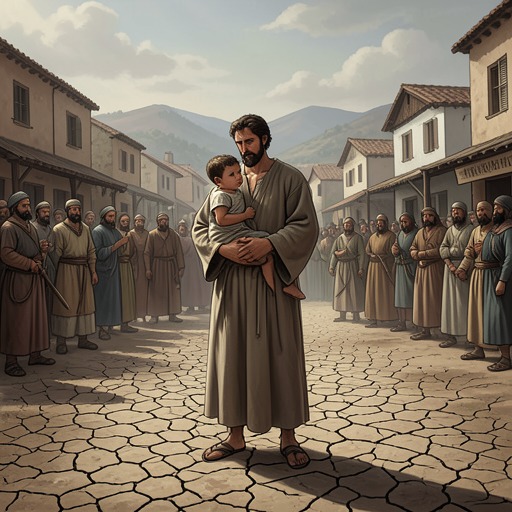
As hunger and despair mount, Maro incites the villagers, and threats and curses are shouted at Knecht. The public processions, sacrifices, and drum choruses fail to relieve the crisis. Knecht knows that Maro has already pressed the tribal mother to have him sacrificed. He dresses his son Turu in the ceremonial robes, presents him as successor, and offers himself in sacrifice. The tribal mother assents. Maro joins the procession to the forest clearing as chief of the drum corps. His role in the Rainmaker’s final ordeal does not erase the responsibility Knecht assumes himself, but it shows how the former pupil’s ambitions and influence have entered the village’s response to disaster.
Talent Without Vocation
The narrative treats Maro as an example of a gifted pupil whose abilities are not grounded in character or a capacity to serve. His quick intelligence and imagination are real, but they are directed toward display and advantage. Knecht’s dilemma is that a teacher must transmit inherited knowledge even to such a pupil, while recognizing that education can become a betrayal of the culture it is meant to sustain if knowledge equips someone who wants to rule but cannot serve.
Maro’s career carries that distinction from the teaching relationship into village life. The tricks that win him applause, his position among the drummers, and his access to the new tribal mother give him standing that Knecht’s inherited office cannot shield him from. He is both the failed apprentice and a popular rival: a figure through whom the story tests whether talent alone deserves authority, and shows how easily social influence can be used against the obligations of vocation.