Ravana
The Glass Bead GameRavana, the son of Prince Dasa and Pravati, is both the beloved child at the center of Dasa’s private life and the heir whose imagined vulnerability gives new force to his father’s public duties. His birth completes the happiness of his parents, while his death in Govinda’s capture of the capital turns Dasa’s earlier fear into the defining loss of this episode in Dasa’s story.
Identity and Family
Dasa names his son Ravana after his own father. Pravati has spent years adapting to the life of nobility, and the child’s birth crowns a marriage described as harmonious and loving. The people adore the couple, whose happiness seems to set them apart as favored by the gods.
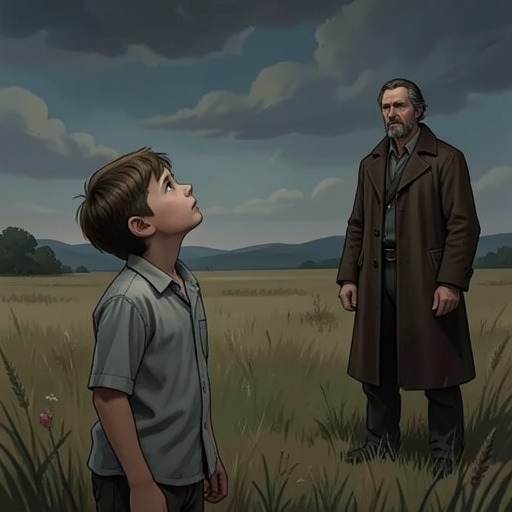
Ravana is described as a delicate, lovely child, with his mother’s doe-like eyes and his father’s inclination toward pensiveness and reverie. Dasa sees his own likeness in the boy’s quiet absorption: Ravana will stand before an ornamental tree or sit contemplating a stone, carved toy, or feather, his gaze intent but somewhat distant. Such moments make the resemblance intimate and visible, rather than simply a matter of inheritance.
Heir and the Meaning of His Birth
Before Ravana is born, Dasa’s possessions please him chiefly because they allow him to adorn Pravati with fine clothes and jewelry. With the arrival of his son, the same lands, power, estates, barns, dairies, cattle, and horses take on an additional meaning: they are Ravana’s inheritance and the basis of his future happiness. The child thus alters how Dasa understands his wealth, making it seem more valuable because it belongs to a future that can be passed on.
Ravana’s place as successor also changes the emotional stakes of Dasa’s responsibilities as ruler. When a border raid prompts Dasa to ride in pursuit of the raiders, he takes his small son in his arms and kisses him before leaving. The force of his love surprises him. On the journey, he recognizes that protecting his authority and subjects matters to him with particular urgency because unchecked violence could eventually reach Ravana. He imagines his son being taken and killed, and understands that fear of this loss—not ambition or concern for property alone—drives his zeal as a sovereign.
Capture and Death
That fear becomes real in the invasion by Govinda’s forces. A raid draws Dasa and his best troops toward the frontier while the main enemy force enters the country, storms the gates of the capital, and besieges the palace. Dasa turns back when he learns that Pravati and Ravana are surrounded. He reaches the city and fights his way toward the palace, but the battle ends with him wounded and captured.
When Dasa is brought before Govinda, he is led into the palace room where he had kept his scrolls. Pravati sits there under guard, with Ravana dead across her knees. The child’s death is the outcome Dasa had feared on the ride to defend his realm: the danger has passed beyond cattle, territory, or royal authority and struck at the person he most loves.
Dasa’s Grief and Narrative Role
Dasa calls Ravana his child and flower, kneels beside him, and bows his face over the boy’s head. He remains there in a posture compared to prayer, mourning both his son and Pravati and paying homage to them. He does not speak to Pravati, and she does not speak to him; the account leaves their shared loss in silence as the guards take Dasa away.
Ravana’s importance in the narrative lies both in his place as Dasa’s heir and in the revelation of what Dasa’s earlier conduct means to him. The child’s birth gives inherited wealth a future, and the threat to that future makes Dasa’s duty as ruler personally urgent. His death then breaks the connection between sovereignty and protection that had motivated Dasa’s expedition: the father who rode out to prevent this loss finds his son dead in the captured palace.