Veraguth
The Glass Bead GameVeraguth is a publicist, deputy, and forceful orator whose political lectures reshape Plinio Designori’s life. His appeal rests on both a program of justice and progress and a commanding personal style; the narrative later shows Plinio questioning how much of his commitment arose from conviction and how much from Veraguth’s charisma.
Identity and Public Appeal
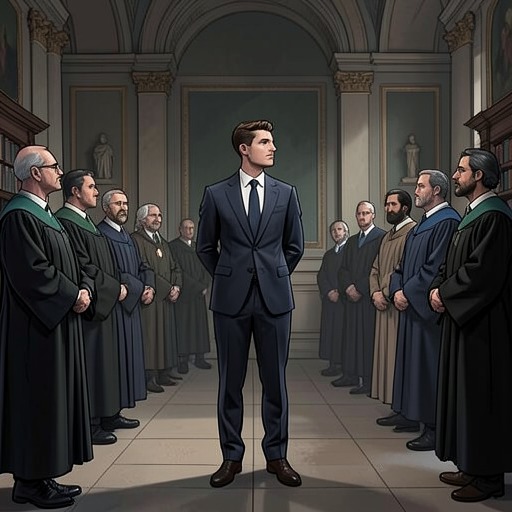
Veraguth leads the youthful left wing of an old middle-class liberal party. An emotional populist and libertarian, he gives public lectures in university towns and wins an enthusiastic student following. His wit, polished speech, good looks, and fighting spirit help make him persuasive, though his tendency to become intoxicated by his own rhetoric signals a gap between the force of his performance and the certainty of its political substance.
Influence on Plinio Designori
Plinio is already disappointed with university life and seeking an ideal to replace the Castalian morality that has lost its hold on him. Veraguth’s lectures offer political purpose and a language of justice and progress. Plinio joins students working for Veraguth’s party and aims, and, after completing his studies, becomes Veraguth’s disciple, assistant, and intimate associate. A few years later, he marries Veraguth’s daughter.
Veraguth thus becomes more than a political leader to Plinio: he is a teacher, leader, and older friend who appears to need and appreciate his young follower. Through this association Plinio gains convictions, party membership, work, and a sense of mission. The attachment also leaves him exposed to the costs of breaking with his family and former social position.
Conflict with the Designori Family
Plinio’s father, a lifelong conservative supporter of the established order, responds to his son’s political affiliation with anger. He travels to the university town, accuses Plinio of betraying his family and its traditions, and orders him to sever ties with Veraguth and the party. Plinio refuses, asserting his right to judge political, economic, and social questions for himself rather than accept the views of landowners. Their quarrel ends with his father’s abrupt departure; the former warmth between Plinio and his paternal home is never restored.
Plinio remains loyal to Veraguth and the party, but his choice carries enduring personal consequences. He feels guilty about the pain caused to his mother by the rift between father and son, and believes that the strain may have shortened her life. After her death he rarely visits his family home; when his father dies, he sells the old family seat.
Later Doubt and Narrative Significance
Plinio’s political commitment does not bring the inner security he had hoped for. As youthful fervor fades and professional experience sobers him, he begins to doubt the beliefs, work, and relationships that organize his life. He wonders whether he followed Veraguth from a genuine sense of truth and justice or was at least partly captivated by the man’s public gifts: his charm, nimble wit, resonant voice, and commanding laughter. His admiration is therefore presented with retrospective ambivalence, not as proof that Veraguth’s politics were false, but as evidence that political allegiance can be shaped by personal magnetism as well as principle.
Veraguth’s importance lies in the way his public rhetoric becomes a private turning point for Plinio. He supplies an alternative ideal and a direction for action, but the resulting loyalty cannot erase family loss or settle Plinio’s later questions of conscience. Through that tension, Veraguth’s influence illuminates the uncertain boundary between conviction and seduction in the making of a political identity.