“People go to the movies instead of moving”
The Glass Menagerie“People go to the movies instead of moving” is Tom Wingfield’s pointed criticism of a culture that lets Hollywood characters live adventures on behalf of a watching public. In the same speech, he turns that complaint into a declaration of intent: unwilling to wait for war to make adventure available to everyone, he says he is about to move.
The Phrase in Context
Tom speaks after saying that he is tired of the movies. When Jim echoes the word in disbelief, Tom insists that he means the movies themselves, gesturing toward the glamorous people on Grand Avenue. He describes them as monopolizing adventure while ordinary Americans sit in a dark room and watch.
The sentence’s contrast between “going” to the movies and “moving” makes spectatorship sound like a substitute for action. Tom presents Hollywood as a supplier of vicarious experience: its characters have adventures for the country while the audience remains still. The line therefore joins his irritation with entertainment to a more personal dissatisfaction with passivity.
Adventure and the Urge to Leave
Tom extends the thought by imagining war as the moment when adventure becomes available to the masses. He invokes the prospect of going to a South Sea island, making a safari, and becoming exotic and far-off, while emphasizing that he does not want to wait for that future. His impatience turns the speech from social complaint toward personal resolve.
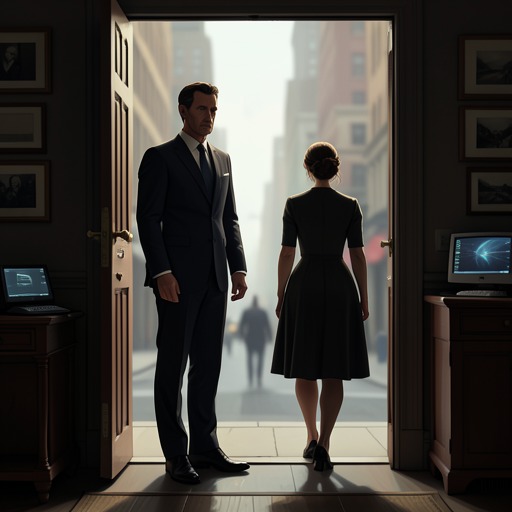
The final movement is from watching to acting. Tom says he is about to move, and Jim’s incredulous repetition prompts Tom to confirm it. The phrase thus crystallizes Tom’s escape impulse: he wants a life of movement and experience rather than one lived at a remove, through screens or within the limits of the apartment.
Dramatic and Thematic Significance
The line works as both a generalization about mass entertainment and a self-revelation. Tom condemns the spectators’ dark room, but his own language gives the complaint an immediate stake: he refuses to postpone his desired adventure until a war grants it to him. The speech’s shift from “people” and “everybody in America” to Tom’s own impending movement narrows a broad cultural critique into an individual decision.
Its force also depends on the verbal and physical contrast in the scene. Tom gestures toward the visible marvels of Grand Avenue, then speaks of the dark room where audiences watch other people act. Against that stillness, his closing declaration supplies the speech’s decisive turn. The phrase becomes a compact expression of the play’s escape motif, connecting Tom’s impatience with spectacle to his intention to leave his present circumstances.