Amanda Wingfield–Laura Wingfield mother–daughter relationship
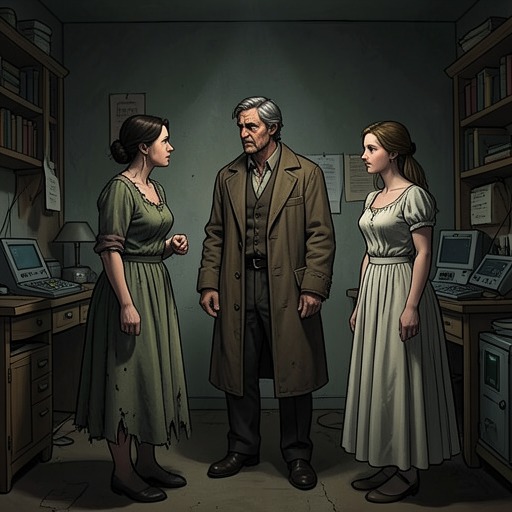
The Glass MenagerieThe mother–daughter relationship between Amanda Wingfield and Laura Wingfield is a struggle over what security, independence, and care can mean for a daughter whose prospects seem narrow. Amanda tries to prepare Laura for work and marriage, then treats a gentleman caller as a possible route to an independent home; Laura, frightened by social and professional demands, cannot simply inhabit the future her mother imagines. Their final scene gives the relationship a quieter aspect: after Tom leaves, Amanda comforts Laura tenderly, without the fuss and insistence that have marked much of their exchange.
Identity and Background
Amanda’s hopes for Laura take shape against the play’s economic uncertainty and its memory of a dissolving economy. She fears the prospect of unmarried women becoming dependent on relatives, living in cramped rooms and relying on grudging support. Her question about whether she and Laura will spend their lives watching parades pass leads her to imagine a future reduced to dependence. Marriage, in her account, is not merely a romantic possibility: it is one of the few alternatives she can see to a failed business career and lifelong reliance on others.
That fear has concrete roots in Laura’s experience. Amanda recalls that business college ended when Laura became so distressed during a speed test that she could not continue, and that the family’s fifty dollars in tuition and Amanda’s hopes for her daughter were lost. Amanda also says that the Young People’s League proved unsuccessful: Laura spoke to nobody, and nobody spoke to her. Laura is left at home with her glass collection and old records, while Amanda sees her lack of work and social connection as a condition that requires urgent intervention.
Amanda’s Plans for Laura
Amanda describes Laura as two years older than Tom and as someone who drifts through life without a settled occupation. She says this frightens her, and argues that the family must make plans and provisions for Laura. Her intended solution is that Laura should marry, have a home of her own, and become independent. In this arrangement, Laura’s marriage would also permit Tom to leave: Amanda tells him that he will be free to go wherever he wishes once Laura has somebody to take care of her. The plan reveals the double burden Amanda places on the hoped-for match: it should provide for Laura and release her son from responsibility.
The arrival of a gentleman caller transforms Amanda’s concern into preparation. She insists that the home must be presentable, naming the wedding silver, monogrammed table linen, clean windows, fresh curtains, and suitable clothes. She calls the occasion important because it is the first time a young man has been introduced to Laura. Her attention to domestic detail makes the suitor’s visit carry the weight of a prospective change in the family’s material future, though Tom warns that the young man is no one to make such a fuss over.
Amanda’s efforts to improve Laura’s appearance further expose the gap between her hopes and Laura’s comfort. When Laura says that Amanda’s fuss makes her nervous and makes the occasion seem too important, Amanda responds by producing powder puffs and placing them in Laura’s clothing, calling them “Gay Deceivers.” Laura refuses to wear them, but Amanda insists. The episode shows Amanda trying to prepare her daughter for how she believes a young woman must appear, while Laura experiences the preparation itself as another pressure.
Laura’s Self-Understanding and Resistance
Laura’s difficulty with Amanda’s plans is not simply a refusal to work or marry. She has already been overwhelmed by business training and unsuccessful in a church social group, and she cannot face the prospect of a caller whom Amanda has made so consequential. When Amanda asks whether Laura was in love with a boy, Laura says she does not know, but that she could not sit at the table if the caller were him. Amanda replies that it will not be him, yet orders Laura to come to the table whether or not it is. The exchange makes the difference between them plain: Amanda treats attendance as a duty, while Laura describes an inability to bear the situation.
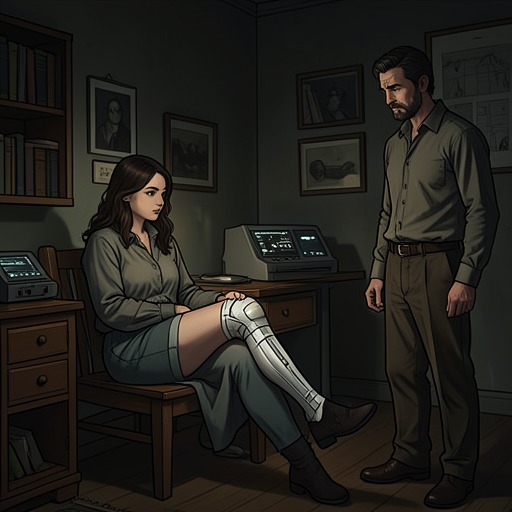
Their clearest conflict over Laura’s identity comes when she apologetically says that she is “crippled.” Amanda rejects the word and insists that Laura has only a slight defect, one that is hardly noticeable; she advises her to cultivate charm and vivacity. Amanda’s reassurance aims to protect Laura from a self-description she finds painful, but it also replaces Laura’s account of her own body with her mother’s preferred language. In the same moment, Amanda turns to the photograph of her absent husband and remarks on his charm, linking the quality she urges Laura to develop to a remembered family ideal.
Amanda’s conviction that Laura can be guided toward a conventional future meets Laura’s repeated withdrawal from the situations meant to prepare her for it. The failed business course, the unsuccessful church group, her reluctance about the caller, and her nervous response to the preparations form a sequence in which Amanda’s attempts at help become pressure. Amanda sees resistance where Laura is reporting distress; Laura’s difficulty, in turn, intensifies Amanda’s fear that no viable future is being formed.
Care, Dependence, and Conflict
The relationship is entangled with the family’s limited resources. Amanda connects Laura’s prospects to the loss of tuition, the abandonment of a business career, and the possibility of depending on relatives. She regards Laura as young and dependent, and tells Tom that his responsibility is to look after his sister until she has an independent home. In this way, care is both an intimate obligation and a practical arrangement made under financial pressure.
Amanda’s language about dependency is anxious and socially specific. She fears a life in which unmarried women are tolerated by a sister’s husband or brother’s wife, moved between relatives, and left without a home of their own. Her concern for Laura is therefore genuine, but her chosen remedy narrows independence to a future secured through marriage. She urges Laura toward a suitor while also insisting on managing the details of the visit, from the household’s appearance to Laura’s own presentation.
The strain is not limited to the mother and daughter. Amanda’s plan for Laura is directly bound to her conflict with Tom: she knows about his Merchant Marine letter and permits him to leave only after someone can take his place in caring for Laura. The arrangement makes Laura the focus of Amanda’s protective duty, but also places her future inside a bargain about her brother’s freedom. The play does not show that this bargain succeeds; instead, Tom ultimately leaves, and Laura remains at home with Amanda.
The Closing Image and Significance
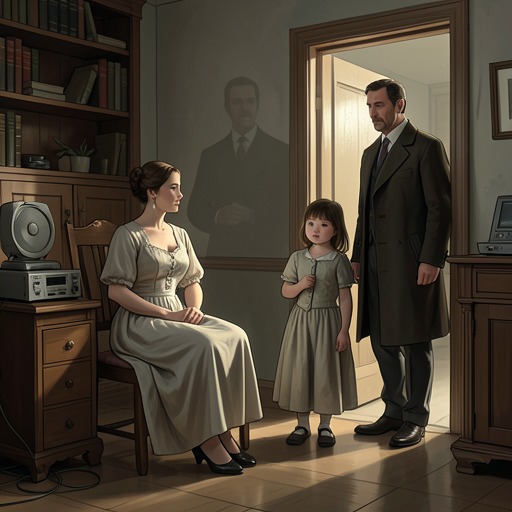
After Tom smashes his glass and leaves on the fire escape, Laura screams, and Amanda appears to comfort her on the sofa. The audience can see Amanda’s gestures but cannot hear her speech. With her usual manner of fussing absent, she appears dignified and tragically beautiful; Laura’s hair hides her face until she lifts her head and smiles at her mother. Amanda glances briefly at her husband’s photograph before withdrawing through the portieres. The silent scene gives visible form to tenderness that has been obscured by her anxious commands and elaborate plans.
Tom’s closing narration describes his own continuing effort to escape the memory of Laura, whom he says he tried to leave behind but could not. The final image of Amanda and Laura is therefore held beside his guilt and departure: Amanda comforts the daughter she has tried to prepare for an independent life, while the son who was meant to remain responsible for her has gone. Their relationship ends neither with a solved plan nor with a clean break, but with a moment of mutual closeness inside an unresolved dependence.