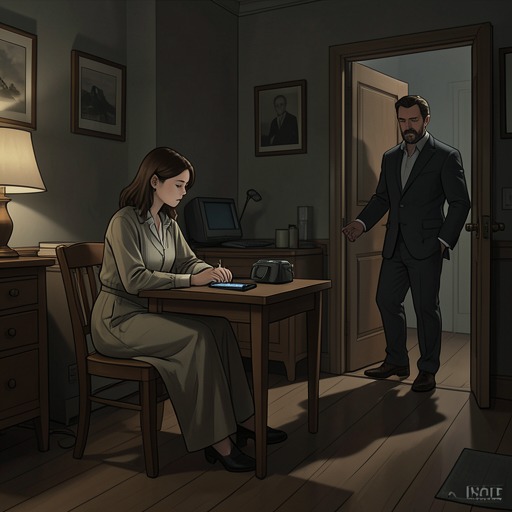
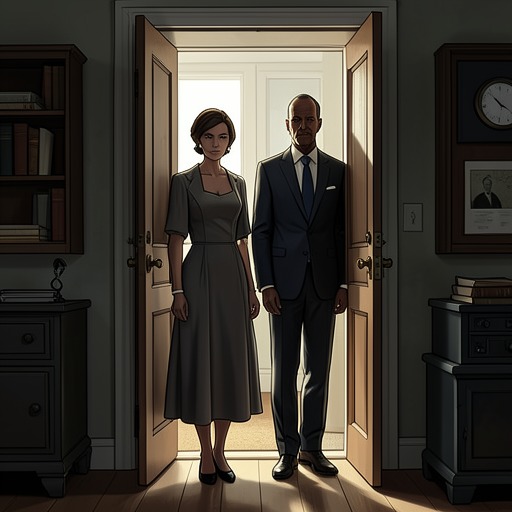
Jim O'Connor visits the Wingfield apartment
The Glass MenagerieJim O’Connor visits the Wingfield apartment as the gentleman caller on whom Amanda has placed the family’s hopes for Laura’s future. His arrival briefly gives Laura a chance to be recognized and desired, but the possibility collapses when he reveals that he is going steady with Betty and will marry her. The visit’s decisive movement is from anxious expectation to a painful reversal: Jim’s kindness is genuine, but it cannot make him available to Laura or fulfill the future Amanda has imagined.
The Future Amanda Is Trying to Secure
Amanda’s preparations for the visit arise from a fear that Laura will remain economically dependent and socially isolated. She pictures unmarried women without careers as “little birdlike women without any nest,” living on relatives’ grudging support and “eating the crust of humility all their life.” With business college abandoned after Laura’s distress and the Young People’s League unsuccessful as a route into social life, Amanda sees marriage as one of the few futures still available to her daughter. Laura’s days, by contrast, seem to Amanda to consist of drifting, handling glass figures, and playing the records left by her father.
That concern links Jim’s call to the family’s precarious arrangements rather than making it merely a romantic occasion. Amanda tells Tom that he must look after his younger sister until she has someone to care for her, a home of her own, and independence; only then, she says, will he be free to go wherever he pleases. Her hopes for Laura and Tom’s desire to escape are thus made dependent on the same event: a successful match for Laura might release Tom from his obligation to remain.
Amanda treats the caller’s arrival as a test the household must pass. She insists that the wedding silver be polished, the monogrammed table linen laundered, the windows washed, and fresh curtains hung. The preparations aim to present the home as suitable for a gentleman caller, while Tom protests that there is no reason to make such a fuss. Amanda answers that Jim is the first young man they have introduced to Laura, making the evening carry the weight of all the opportunities she believes her daughter has missed.
Her efforts extend to Laura’s appearance. Amanda stuffs two powder puffs, wrapped in handkerchiefs, into Laura’s clothing and calls them “Gay Deceivers”; Laura resists, but Amanda insists. The detail makes the visit’s social pressure tangible: Laura is not simply being introduced to a guest but being dressed and staged for a hoped-for future that she has not chosen in the same way her mother has.
Arrival and Recognition
As Tom and Jim approach on the fire escape, Laura reacts with panic. She retreats behind the portieres, and when the doorbell rings she catches her breath and touches her throat. Amanda calls for her to answer; Laura remains still until her mother orders her to go to the door. A distant, scratchy rendition of “Dardanella” gives her strength to move. She cautiously opens the door, and Tom introduces Jim as his sister’s caller.
The first encounter contains an immediate, oblique recognition. Jim jokes that he did not know Shakespeare had a sister, while Laura, later speaking with him about having heard him sing, asks whether he remembers her. Jim says that he thought he had seen her as soon as she opened the door and almost remembered her name, though what came to mind was not a name. Laura supplies the old nickname: Blue Roses. His uncertain recollection confirms that she is not a stranger to him, while the name recalls an earlier connection that she has clearly retained.
A Moment of Intimacy
Jim’s attention to Laura shifts the evening away from Amanda’s arrangements and toward Laura herself. He tells her she is pretty, naming her eyes, hair, and hands, and says that he is speaking sincerely rather than merely being polite because he has been invited to dinner. He identifies her lack of confidence around people and urges her to become proud rather than shy, turning his compliments into an attempt to encourage her. Then he says that somebody ought to kiss her and kisses her on the lips.
Laura sinks onto the sofa with a bright, dazed look after he releases her. The scene makes the kiss a sudden opening in the social isolation that has shaped Amanda’s fears and Laura’s hesitation: for an instant, Laura receives direct affirmation from the young man whose attention the household has anticipated. But the moment remains sharply limited. Jim’s gesture and praise do not amount to a promise of courtship, and the visit will soon expose the distance between emotional intimacy and an available relationship.
The Reversal and Its Consequences
After offering Laura a mint, Jim explains that he cannot call her or arrange another date. He says that he has “strings on me” and is going steady with a girl named Betty. Betty, he adds, is a home-girl, Catholic, and Irish, and the two get along well. He met her on a moonlight boat trip up the river to Alton, on the Majestic, and says that they fell in love at once. Laura asks whether he will not call again; he answers that he cannot.
The truth changes the meaning of the kiss without erasing its tenderness. Jim has encouraged Laura and kissed her, yet he is unavailable, and he now explains the limit of what he can offer. Laura’s expression slowly changes as she looks away from him and down at the glass figure in her palm. The shift from his face to the fragile object gives the scene a visible point of withdrawal: the hope opened by his attention returns to the solitude represented by the glass she holds.
Amanda learns the news only after asking who Betty is. Jim initially calls her just a girl, then clarifies that she is the girl he goes steady with. When Amanda asks whether the romance is serious, he announces that they are going to be married on the second Sunday in June. He explains that the engagement has not yet been disclosed at the warehouse, where his co-workers call him Romeo. The announcement makes the reversal definitive: Jim is not a possible suitor whose intentions remain uncertain, but a man already preparing to marry someone else.
The visit therefore fails as the family’s proposed solution to Laura’s dependence and as the condition Amanda has attached to Tom’s freedom. Jim’s arrival has not supplied Laura with a husband or a home of her own, and nothing in the encounter releases Tom from responsibility for her. Instead, the carefully polished silver, formal linen, changed curtains, and forced enhancement of Laura’s appearance stand beside the unplanned fact that Jim is engaged. The scene’s hope is real, but its ending reveals how little control the family has over the future it is trying to arrange.