Laura Wingfield’s physical disability
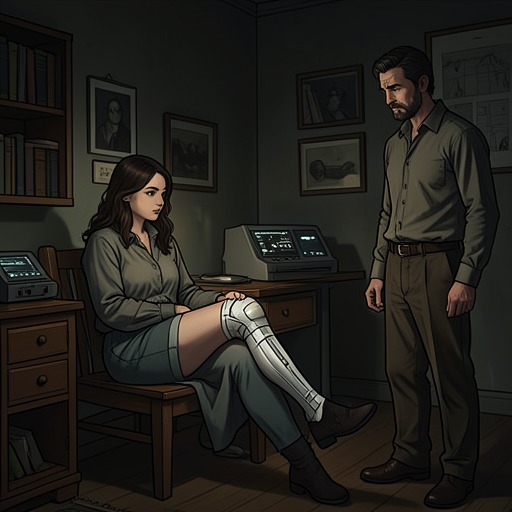
The Glass MenagerieLaura Wingfield’s physical disability is a childhood-onset difference in her legs: one leg is slightly shorter than the other and held in a brace. It is both a practical part of her daily experience and a focus of other people’s judgments. The play traces how it affects movement and confidence, while distinguishing Laura’s embodied difficulties from the shame and limitations that others attach to them.
Physical Condition and Stage Presentation
The introductory description identifies a childhood illness as the cause of Laura’s disability and specifies that one leg is slightly shorter and held in a brace. It instructs that the difference need only be suggested onstage. This restrained presentation leaves the condition present without making visual display its measure, though the same description links Laura’s increasing separation from others to the image of a delicate piece of her glass collection, too fragile to move from its shelf.
That image frames Laura’s isolation, but her experience is more concrete than the metaphor alone: she wears a brace, finds stairs difficult, and remembers being acutely conscious of how she moved. The disability is not simply an abstract sign of fragility; it is part of the bodily circumstances through which she encounters school, public space, and other people.
Movement, School, and Withdrawal
At Soldan High School, Laura attended on Mondays, Wednesdays, and Fridays. She recalls that climbing the stairs was hard with the brace on her leg, and that its sound seemed so conspicuous to her that she dreaded entering class. When Jim O’Connor says he never heard it, Laura’s recollection captures the difference between her intense awareness of her movement and another person’s perception of it.
Her difficulty at school was not limited to the brace. After enrolling at Rubicam’s Business College, she became physically ill during a typing test and stopped attending. She then concealed her absence from Amanda Wingfield, spending the days walking in a park and going into places to get warm. The sequence shows how a particular educational crisis and Laura’s inability to face returning led to withdrawal; it does not establish that the disability alone caused her to leave college.
Naming and Interpretation
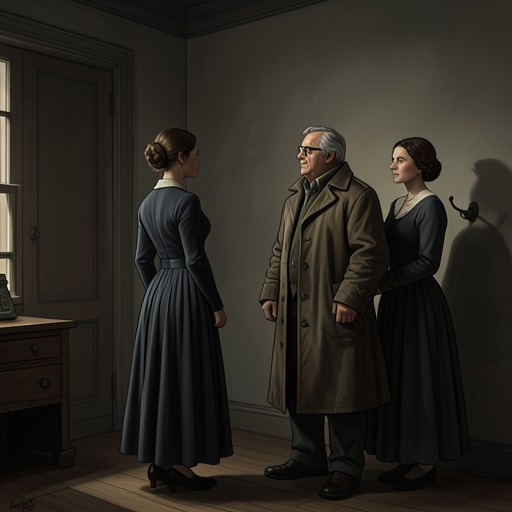
Laura names herself as disabled in a moment of frightened apology. Amanda rejects the word, recasting the condition as a slight, hardly noticeable defect and advising Laura to compensate through charm and vivacity. Her reassurance is affectionate, but it also redirects the conversation from Laura’s own naming of her body toward the qualities she is expected to cultivate.
Jim similarly treats the physical difference as small and emphasizes its amplification by Laura’s imagination. He argues that her lack of confidence led her to give up education over a clump he says he never heard. His encouragement offers a counter to Laura’s self-consciousness, but his explanation is his interpretation of her experience, not proof that the stairway difficulty or the brace’s effects were unreal. Together, Amanda’s reassurance and Jim’s advice show how others can minimize the bodily difference while trying to address the isolation and low confidence associated with it.
Narrative Significance
The disability connects movement through ordinary spaces with Laura’s growing retreat from social participation: stairs are difficult, the classroom becomes a source of dread, and the business college becomes impossible for her to face. Yet the play gives more than one account of that experience. Laura describes the brace and her difficulty directly; Amanda denies the severity of the difference, while Jim locates the chief problem in Laura’s confidence.
The tension between these accounts matters. Laura’s disability is materially present, but its social consequences are also shaped by how she anticipates being perceived and how others define what should count as noticeable. The play’s delicate-glass imagery intensifies the association between disability and vulnerability, while Laura’s specific memories resist reducing her to that symbol: they show a person negotiating movement, education, embarrassment, and other people’s assumptions.