Tom joins the Union of Merchant Seamen
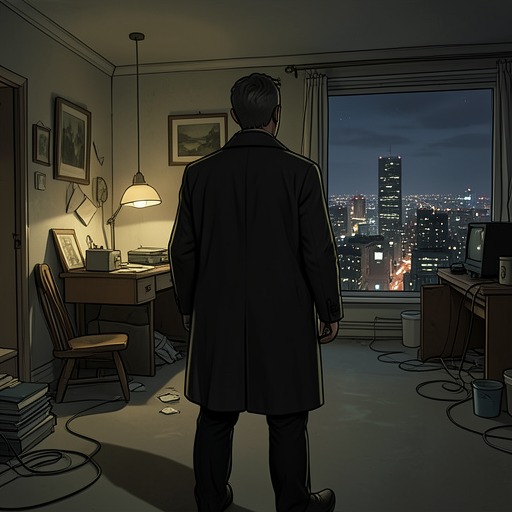
The Glass MenagerieTom’s membership in the Union of Merchant Seamen makes his wish to escape more than a private fantasy: he has paid his dues and is preparing to go, even at the cost of the electricity bill. The choice brings his longing for a different life into direct conflict with his mother’s demand that he remain responsible for Laura, while the darkened apartment gives his decision an immediate household consequence.
Background: Work, Family, and Escape
Tom’s decision grows out of an existence he describes as intolerable. At the warehouse, he handles shoes for a salary of sixty-five dollars a month, work he says consumes the dreams of what he might do and become. He contrasts that routine with travel, imagining shoes not as merchandise but as something worn on a traveler’s feet. The contrast turns a familiar object of his labor into an emblem of the life beyond it.
The family conflict is not simply between Tom’s ambition and Amanda’s dislike of change. Amanda sees Laura as older than Tom, without a settled occupation, and drifting through life. Her attempts to prepare Laura for independence have failed: business college made her sick with fear, and the Young People’s League did not lead to social connection. Amanda therefore insists that Tom cannot leave until Laura has someone to care for her and a home of her own. In her view, his freedom is conditional on Laura’s future security.
Amanda’s fears also reflect the family’s limited economic choices. She imagines unmarried women without positions living on reluctant support from relatives, and regards marriage as one possible alternative to lifelong dependence. Her plans for Laura consequently combine practical anxiety with a hope that a gentleman caller might change the family’s prospects. The Union membership takes shape against this background: Tom is seeking escape from an arrangement in which his wages and continued presence help sustain the household.
The Disclosure and Its Immediate Cost
Tom reveals his membership to Jim while describing the pressure he feels beneath his apparently dreamy manner. He produces a paper from his pocket and identifies himself as a member of the Union of Merchant Seamen. The physical act of showing the document gives the announcement a different weight from his earlier complaints: the aspiration now has an affiliation and a practical commitment behind it.
The decisive cost emerges when Tom explains that he paid this month’s dues instead of the light bill. Jim warns that the lights will be turned off; Tom answers that he will not be there. His response makes the payment more than an impulsive substitution between two expenses. It declares that he is willing to let the household bear a consequence from which he expects to be absent.
The missed bill becomes visible during the evening when the electricity fails. Amanda calls Tom’s name and reminds him of the bill and the notices they had received. Later, she complains that negligence has a high price and says the family will have to spend the remainder of the evening in the nineteenth century, before electric lighting. Her irony acknowledges the practical inconvenience, but the darkness also exposes what Tom’s private decision has already set in motion: his hoped-for departure is entangled with the family’s immediate dependence on him.
Amanda’s Conditions and Tom’s Resolve
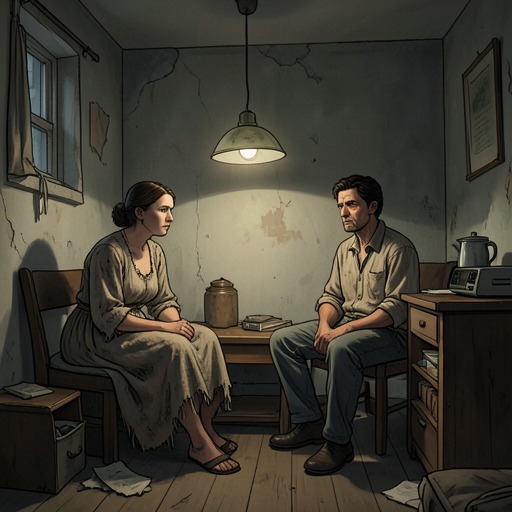
Amanda connects Tom’s plans to the history of his father, who left the family and has been absent for nearly sixteen years. She tells Tom that he reminds her of his father and says she has seen his Merchant Marine letter and understands what he is dreaming of. Her permission is qualified: once Laura is married, has a home of her own, and is independent, Tom may go wherever he pleases, by land or sea. Until then, Amanda insists, he must look out for his sister.
Tom’s own account of the conflict is more urgent. He says that he rises and goes to work despite hating the warehouse, and contrasts that obedience with the possibility of leaving as his father did. When Amanda grabs his arm as he starts past her, he tells her not to hold on to him and says he is going to the movies. The declaration of membership deepens this earlier confrontation: the outward excuse of a movie outing sits beside a concealed but real step toward a life away from home.
The exchange with Jim also shows that Tom recognizes the family cost rather than overlooking it. When Jim asks about Amanda, Tom answers by comparing himself to his absent father. That comparison conveys both identification and repudiation: Tom sees himself following the same path of departure, yet the conversation makes clear that his exit would leave his mother and sister facing the consequences.
Significance in the Play
The Union membership concentrates the play’s conflict between aspiration and obligation into a small, concrete transaction. Tom’s dues are paid; the household bill is not. The choice links his imagined freedom to the loss of a basic domestic service, so that escape is neither merely rhetorical nor free of consequence.
The event also complicates Amanda’s effort to make Laura’s future the precondition of Tom’s departure. Her concern arises from Laura’s isolation and economic dependence, but the condition places Tom’s life on hold while the family waits for a solution. His membership is a quiet countermeasure to that delay: without announcing that he has already left, he begins committing resources to the possibility of going. The ensuing darkness gives that commitment a visible cost, while leaving unresolved what will happen to Laura and Amanda when Tom is gone.