Tom leaves the Wingfield family
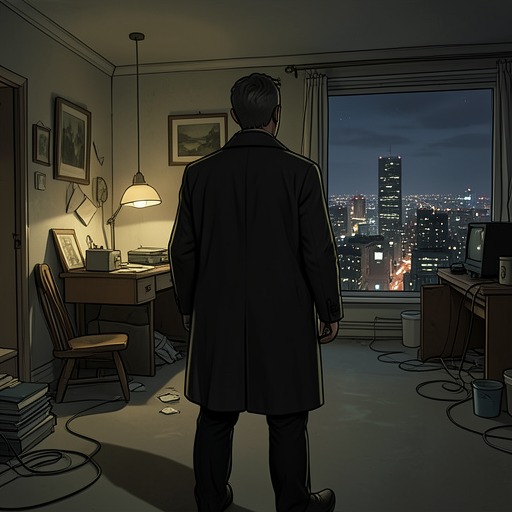
The Glass MenagerieTom leaves the Wingfield family after an argument with Amanda, but departure does not sever the bond he has tried to escape. He walks out of the St. Louis apartment and eventually follows his father’s example by traveling, yet the play’s closing recollection makes clear that Laura continues to accompany him in memory. His escape achieves distance, not freedom from responsibility or loss.
Causes and Circumstances
Tom’s departure grows out of the economic and domestic pressures that have narrowed the family’s choices. The play places their situation against the 1930s, when a “dissolving economy” left the American middle class struggling to understand a changing world. Labor disturbances in cities including Chicago and St. Louis establish a broader atmosphere of social strain, while the Wingfields’ own conflict is played out through wages, bills, and dependence.
At the warehouse, Tom earns sixty-five dollars a month, work he describes as a sacrifice of his dreams and ambitions. He resents the routine of the job and Amanda’s repeated morning call, while she fears that his risking employment would jeopardize the security of the household. Their conflict is therefore not simply a clash of temperaments: Tom wants a life beyond the warehouse, but the family depends on the income he brings home.
Amanda’s fears also have a future-facing dimension. After Laura has abandoned her business-college plans, Amanda imagines the two women living as dependent, unmarried relatives, without independent careers. She sees the abandoned business plan as leaving dependence as their only alternative, unless Laura marries. Her anxiety about the family’s precarious prospects stands in direct contrast to Tom’s desire to leave, because his escape means that Amanda and Laura must face that insecurity without him.
The overdue light bill makes the financial strain concrete. When Amanda reminds Tom of the bill and the notices they have received, he acknowledges the matter, but it does not become the subject of an immediate resolution in the scene. Instead, it remains part of the household’s accumulating pressures: even as Tom seeks a way out, he is bound to a family whose ordinary expenses depend on him.
The Argument and Departure
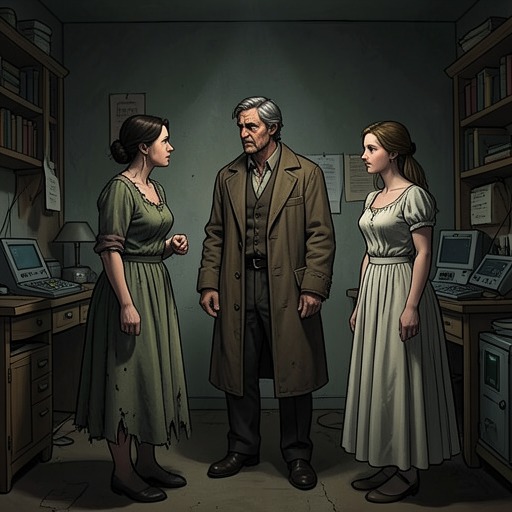
The decisive break follows the evening’s preparations for Laura’s gentleman caller. Amanda accuses Tom of selfishness and points to the effort and expense of the new floor lamp, the rug, and Laura’s clothes. The caller, she says, was engaged to another woman; what the family prepared as a possible opening for Laura has ended in disappointment. Her reproach makes Tom’s wish to go out seem to her like another abandonment of the household.
Tom answers by accepting, rather than deflecting, her accusation: the more she calls him selfish, he says, the more quickly he will leave, and he will not go to the movies. Amanda tells him to go to the moon, calling him a selfish dreamer. The argument turns a familiar destination into a pointed refusal: Tom is not simply going out for the evening but breaking from the family conflict that has made leaving seem necessary.
He smashes his glass, rushes onto the fire escape, and slams the door. Laura screams in fright as the dance-hall music grows louder; outside, Tom grips the rail beneath a break in the storm clouds that lets moonlight fall on his face. These stage images register the emotional rupture without making it a clean triumph. Tom has left the room, but the family remains inside it, and the scene ends with Laura still exposed to the consequences of the argument.
Life After St. Louis
In his closing speech, Tom looks back on what followed. Not long after the departure, he was fired for writing a poem on a shoe-box lid. He then left St. Louis, descended the fire escape for the last time, and took up the wandering life associated with his father. The sequence distinguishes the immediate exit from the later, lasting separation: the argument sends him out of the apartment, but the loss of his warehouse job and his decision to leave the city mark the beginning of a new course.
Tom describes travel as an attempt to find, through motion, what had been lost in space. Cities pass around him like leaves torn from their branches, a figure that makes movement appear restless and severed rather than liberating. He says he would have stopped, but something repeatedly caught him by surprise. At times the reminder is music; at others, a piece of transparent glass. Neither the distance he travels nor his changing surroundings prevent the past from returning.
One such recurrence takes the form of a shop window filled with colored glass and small bottles. Tom imagines turning from it to find Laura touching his shoulder and looking into his eyes. The moment is presented as a memory or imagined encounter, not a literal reunion: Laura’s presence interrupts his solitary travel, bringing the person he meant to leave behind back into the scene.
Laura, Memory, and the Ending
Tom’s confession gives the departure its lasting consequence. He says he tried to leave Laura behind but proved more faithful than he intended. When her image returns, he responds by reaching for a cigarette, crossing the street, and seeking refuge in a movie theater or bar, or by speaking to a stranger. These actions are efforts to escape the reminder, but the need to perform them shows that leaving the household did not end his attachment to his sister.
The play’s final stage picture places that private recollection beside the family’s last moments together. As Tom speaks, Amanda appears to comfort Laura; unseen and unheard through the staging, she seems to lose her earlier silliness and acquire dignity and tragic beauty. Laura eventually lifts her head and smiles at her mother. Amanda glances toward her absent husband’s photograph before withdrawing, while Laura bends to the candles and blows them out at the close of Tom’s speech.
That final extinguishing links Tom’s departure to the play’s central tension between escape and remembrance. He has gone far beyond the moon, but distance cannot erase the scene he left or the sister whose candles he cannot stop trying, in memory, to extinguish. The family’s separation is final in the action, while Tom’s narration keeps Laura present: departure grants him movement, but not release from the past.