
Liesel and Hana’s Intimacy
The Glass RoomThis flow follows a friendship that carries erotic, maternal, and romantic meanings without becoming a simple or stable partnership.
increasing Bearing strength in each event
 decreasing
Bearing strength in each eventdecreasingA Friendship of Candor

A Different Kind of Confidence
Sharing private knowledge
Hana gives Liesel a space to speak about sexuality and motherhood without the reserve expected in polite society. Her jokes are often outrageous, but they make difficult subjects speakable.
Liesel values Hana’s intelligence and emotional candor even when she rejects her advice.
A bond beyond convention
Hana’s care for Liesel is more than social companionship. Their friendship allows affection, curiosity, jealousy, and desire to coexist without being resolved into a single label.
The Unnamed Boundary

Intimacy and Restraint
A charged encounter
When Hana touches and kisses Liesel during a private moment, both women encounter feelings that exceed ordinary friendship. Liesel stops the intimacy, but the experience remains powerful and unspoken.
Hana turns to humor afterward, using the pendulum ritual to make the moment appear playful.
A lasting ambiguity
The episode does not end their closeness. Instead, it establishes a boundary that each woman understands differently, leaving attraction and tenderness intertwined.
A Confession in the Glass Room

Love Spoken Aloud
A direct admission
Hana finally tells Liesel that she is in love with her. She asks not for immediate reciprocation but for the truth to be known between them.
Liesel is startled, yet she does not reject Hana or treat the confession as a threat.
Friendship remains
The women choose to preserve their bond without forcing it into a sexual relationship. Their intimacy becomes a quiet secret within the household, expressed through music and companionship.
Separation by History

The Farewell
A political parting
As the Landauers prepare to leave, Hana asks what will happen to her and the friendship she has built with Liesel. Liesel promises to write, but neither can make the danger or distance manageable.
Hana’s love is explicit; Liesel’s love is real but divided among husband, children, and friend.
A letter across borders
Their correspondence becomes a fragile connection affected by censorship, delay, and uncertainty. Letters preserve affection but cannot restore daily life together.
Reunion After Decades
Recognition and Renewal
A remembered voice
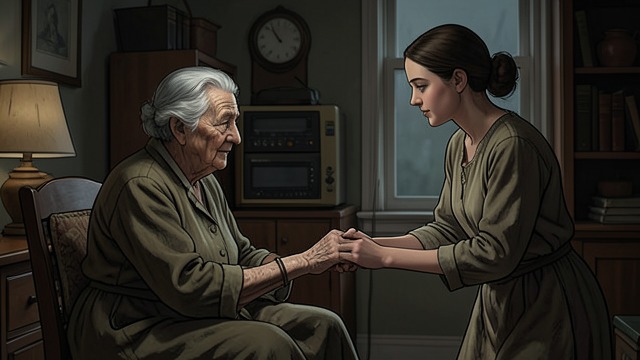
Blind and back in the house, Liesel recognizes Hana by presence rather than sight. Their reunion returns an old intimacy to the place where it began.
The intervening years have not erased their emotional knowledge of one another.
A future still open
Hana introduces Liesel to Zdenka and speaks about a happiness she has found again. The reunion does not recover the past, but it allows the women to share memory and affection in the present.
During Liesel’s pregnancy in the late 1920s
After Liesel gives birth to Ottilie
During the charity gathering before the occupation
During the 1939 departure from Město
Thirty years after the departure
