
The Charity Recital and Public Attention
The Glass RoomThis flow follows a private home’s transformation into a public stage for culture and humanitarian concern.
increasing Bearing strength in each event
 decreasing
Bearing strength in each eventdecreasingA Housewarming Becomes an Exhibition
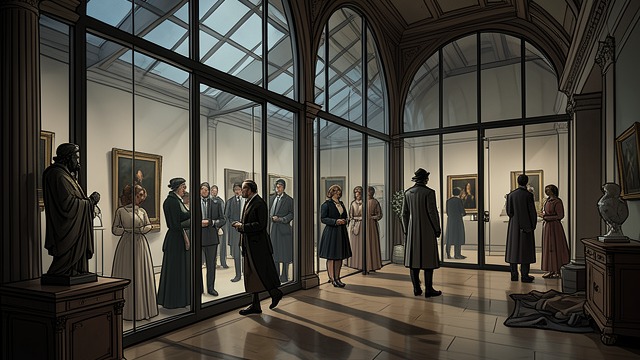
The House Opens to Guests
Public curiosity
The Landauers’ housewarming attracts artists, architects, writers, and journalists. Guests respond to the Glass Room as though they are visiting an exhibition rather than a private home.
Rainer von Abt’s presence turns the building into a public statement about modern architecture.
Performance of domestic life
Viktor’s speech presents the house as a visible expression of who he and Liesel are. The event makes hospitality and self-presentation difficult to separate.
The Public Debate
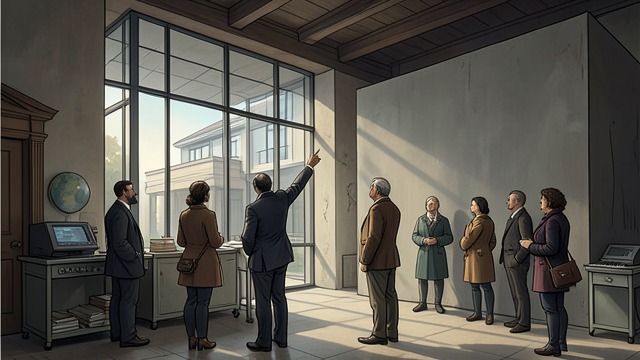
Who Should Modernism Serve
Criticism in print
An architectural review debates whether the house is an extravagant palace for capitalists or a genuine work of modern design. Correspondents also question whether an open-plan house can support ordinary domestic life.
The argument links architectural form to class and political purpose.
Liesel’s defense
Liesel replies that the family helped create the house and that its curtains provide privacy and flexibility. Her letter makes clear that the home is lived experience, not merely a symbolic object.
A Charity Concert Proposed
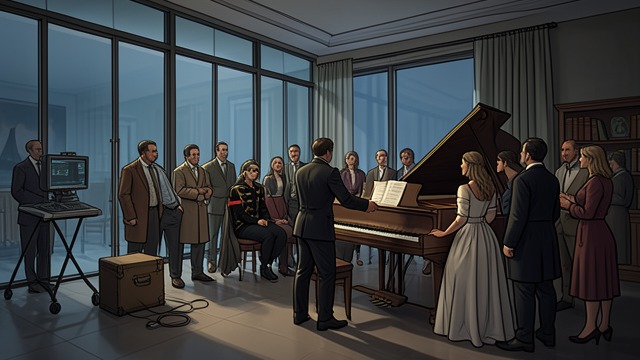
Art in the Service of Aid
Viktor’s proposal
Viktor suggests using the house for a fundraising recital benefiting refugees. He asks whether Miroslav Němec might perform before a paying audience.
Liesel is uneasy about opening the family home to public attention again.
Domestic boundaries
The proposal brings humanitarian obligation into tension with privacy. The house’s reputation can help raise money, but public access risks turning family life into a spectacle.
The Recital for Refugees
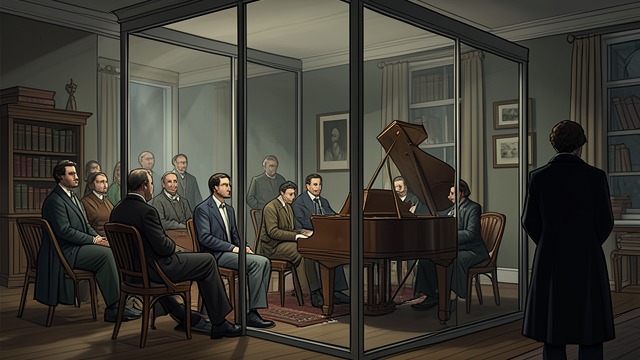
Culture and Warning
A public performance
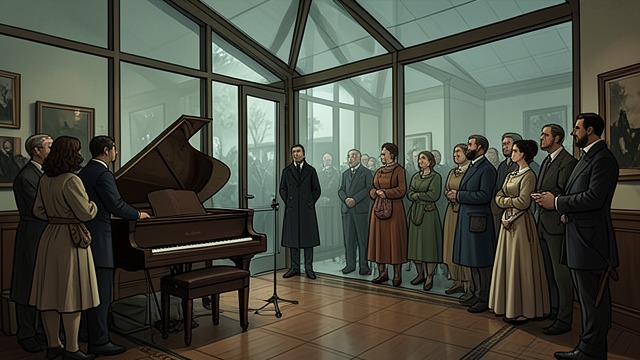
Miroslav Němec performs Brahms, Janáček, and Schubert in the Glass Room, drawing an audience that includes supporters of the refugee effort. Viktor warns that oppression beyond the border may eventually reach them.
The recital joins musical pleasure with political concern.
A room without politics
The building remains aesthetically calm while the crisis grows around it. Its beauty cannot shelter the people endangered by events, but it gives them a place to gather and listen.
A Temporary Public Good
The Limits of a Benefit
Hospitality as action
The recital raises support and gives the crisis a cultural platform. It demonstrates the Landauers’ willingness to use their resources beyond their own household.
Yet the effort cannot substitute for government protection or stop persecution.
The coming storm
As political events worsen, the house’s gatherings take on the character of a brief pause before disaster. The charity work remains meaningful, but its achievements are sharply limited.
At the end of 1929
After the housewarming party
During growing concern about refugees
Before the occupation of Město
As the refugee crisis deepens
