
The Repeated Language of Mothers and Children
The Glass RoomThis flow traces motherhood as joy, bodily change, political vulnerability, and a source of chosen care across generations.
increasing Bearing strength in each event
 decreasing
Bearing strength in each eventdecreasingLiesel’s First Pregnancy
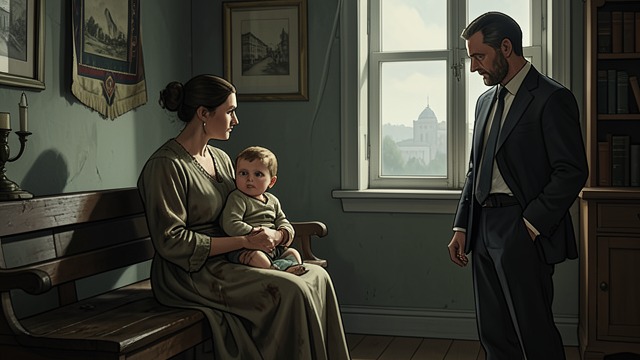
A New Family Takes Shape
Pregnancy and expectation
Liesel discovers she is pregnant as the house is being imagined. She experiences the child as part of a future that is both bodily real and still uncertain.
Her pregnancy makes the architectural project more intimate and urgent.
A shared social world
Hana helps Liesel speak about pregnancy and desire, while Viktor sees the expected child as a new family responsibility. Different views of motherhood emerge inside their close circle.
Hana’s Motherhood in the Camp
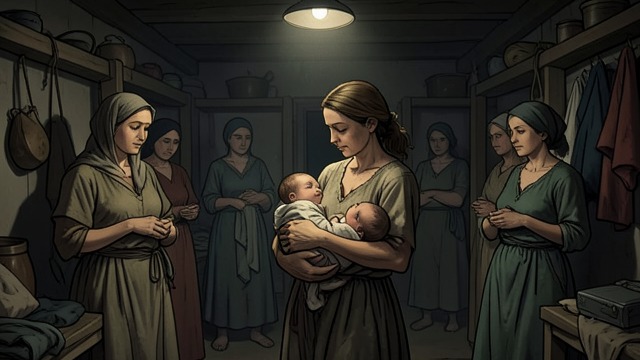
A Brief Maternal Bond
Birth amid deprivation
Hana gives birth to Světla under conditions of imprisonment, supported by women in her barrack. For a short period she holds and tries to feed her daughter.
The scene locates maternal love inside a system designed to destroy ordinary family life.
Loss becomes a reason to live
When the baby is taken away, Hana imagines a possible future reunion. That fragile hope helps her survive, even though she never learns what happened to the child.
Katalin and Marika’s Refuge
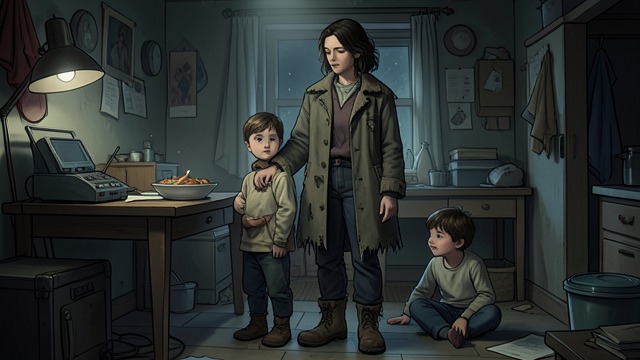
A Mother Protects Her Child
Flight and shelter
Katalin flees Vienna with Marika and finds temporary shelter through Liesel’s offer. Her decisions are shaped by the need to keep her daughter safe and fed.
The two depend on charity while trying to maintain the dignity of a small family.
Care across households
Katalin’s maternal steadiness makes her valuable to the Landauer children as well. The shared household creates closeness but also entangles care with employment and Viktor’s hidden desire.
Liesel’s Recovery After Martin
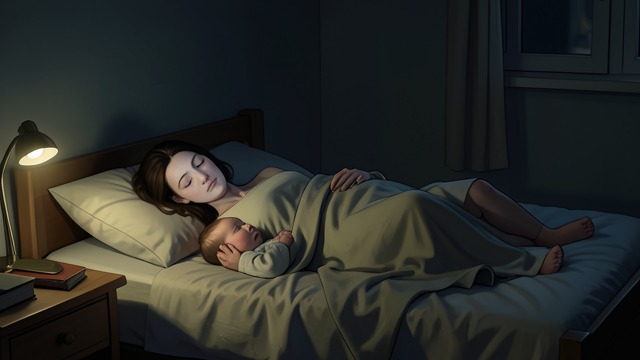
Motherhood and Survival
A dangerous delivery
Liesel becomes gravely ill after Martin’s birth and struggles to recover. The baby is present, but the expected ease of motherhood gives way to fear and physical weakness.
Hana helps care for Liesel when Viktor does not know how to manage the crisis.
A changed sense of self
Liesel returns home feeling altered by her proximity to death. Her relationship with her body and marriage changes, showing that motherhood can transform a person in ways no idealized image predicts.
Motherhood Across Exile
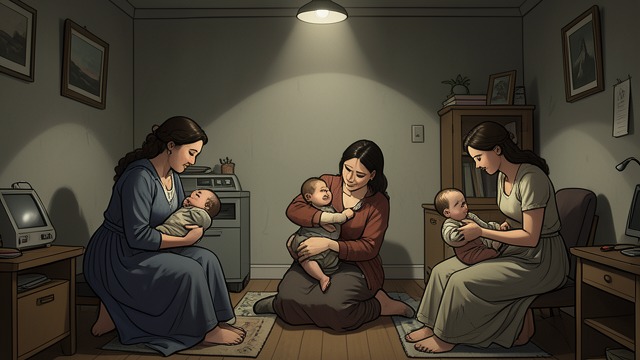
Care Becomes a Household
Children raised together
Liesel, Katalin, and Hana each occupy different maternal or caregiving roles in the children’s lives. The family’s practical arrangements are shaped by separation, employment, and affection.
Marika and Ottilie grow close, and Martin receives care from more than one adult.
Loss and continuation
The children’s lives continue across borders, but the missing mother-daughter histories remain. The novel presents care as something that can be shared, while never making separation painless.
During the design of the Landauer House
During Hana’s imprisonment at Ravensbrück
During their arrival in Město
After Martin’s difficult birth
During the family’s life in exile
