
A Home Between Family and Public Memory
The Glass RoomThis flow traces the tension between Liesel’s personal memories and the public institutions that claim to preserve the house’s history.
increasing Bearing strength in each event
 decreasing
Bearing strength in each eventdecreasingThe Family’s Private Map
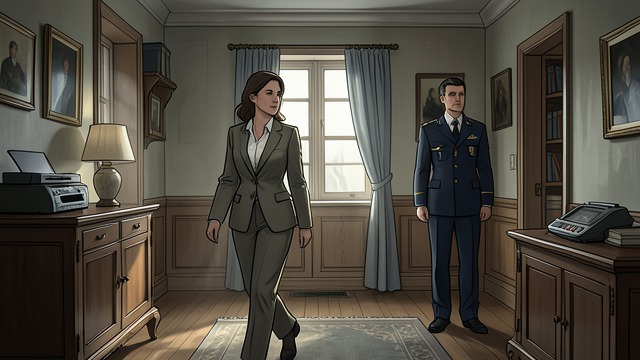
Home as Intimate Geography
Remembered paths
Liesel knows the house through repeated routes, particular rooms, children’s play, and the sound of its spaces. These details turn architecture into a private map.
The map belongs to relationships and habits rather than to a floor plan alone.
A family’s world
The house holds the family’s ordinary life, not just its celebrated modernist features. Those everyday experiences later become the elements Liesel tries to recover from memory.
The Public Article
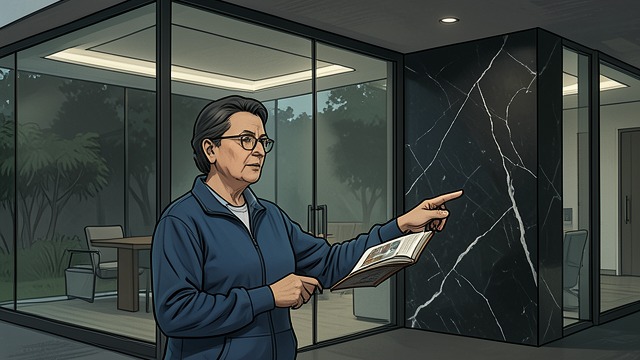
The House Described for Readers
A guided account
An article describes the building’s modernist design, the view, the glass walls, and the onyx partition. It presents the house as an architectural treasure and asks whether a gym is an appropriate use.
The public account makes the building legible to people who have never lived there.
What description leaves out
The article can list materials and design features, but cannot capture the family’s affection, betrayal, or exile. Public knowledge is valuable yet necessarily incomplete.
The Family Photograph

A Private Record Shared
Faces on the terrace
Hana shows Zdenka an old photograph of Viktor, Liesel, and their children. The image records a family moment that exists nowhere else in the present.
Liesel’s gaze toward the photographer suggests an intimacy the camera cannot fully explain.
Memory enters public history
The photograph helps Zdenka understand the people behind the building’s reputation. A private object becomes a bridge between generations and forms of knowledge.
The Museum Tour

The House Explained
Official interpretation
A guide describes the rooms, materials, dates, and architectural design to a group of visitors. The house is presented as a public cultural asset.
Liesel hears descriptions of places she remembers from life, and the official vocabulary cannot match her personal knowledge.
A clash of registers
Museum language and memory do not cancel one another. The guide offers historical facts; Liesel carries the texture of the life that those facts cannot recover.
A Shared but Unfinished Inheritance
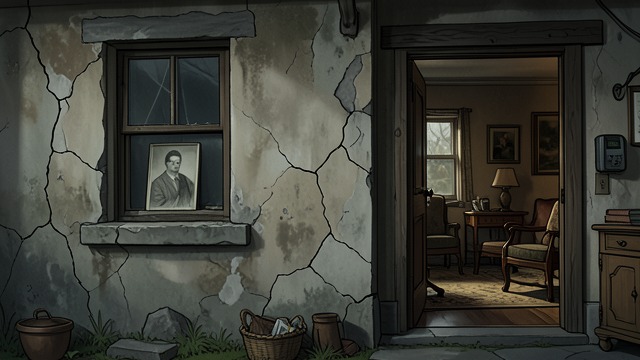
What the House Holds
Several histories coexist
The house belongs to the city as a museum, to the hospital through its former medical use, and to the Landauers through memory. The people who visit it bring different claims and forms of attachment.
The building’s history cannot be reduced to a single owner or institutional story.
A living archive
The house persists as an archive made of architecture, photographs, testimony, and remembered sensations. It preserves traces without resolving the losses those traces reveal.
During the years in the Landauer House
After the architectural heritage visit
During Hana’s visit with Zdenka
During Liesel’s return in 1990
At the close of the 1990 visit
