
The Political Failure of the Glass Ideal
The Glass RoomThis flow traces the contrast between an ideal of transparent, democratic life and the successive political systems that occupy the house.
increasing Bearing strength in each event
 decreasing
Bearing strength in each eventdecreasingThe House as Civic Hope
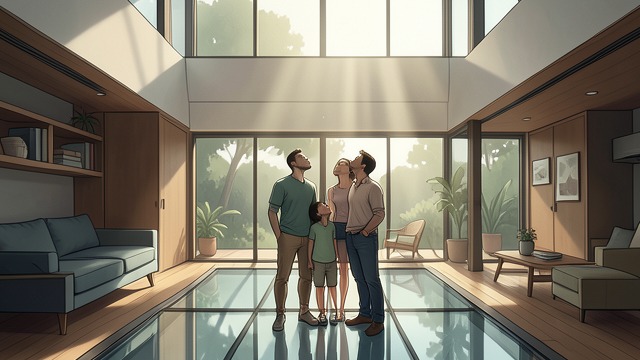
Architecture and Democracy
A new society imagined
Viktor sees the house’s open design as part of a future in which people are not confined by inherited cultural categories. The building’s lightness reflects his belief in civic progress.
The family imagines an international home that can belong to modern life rather than an old national order.
Hope made visible
The Glass Room gives political aspiration a domestic form. It cannot guarantee democratic institutions, but it makes the desire for openness tangible.
The House as an Instrument of the State

Transparency Reversed
Exposure and classification
The Nazi biometric centre uses the open room to examine and photograph people. A space once associated with freedom becomes an instrument for state surveillance and racial classification.
The visual openness of the building does not make the authorities’ aims transparent to their subjects.
The democratic promise collapses
The house cannot protect its owners or its visitors from political power. Its appropriation exposes the weakness of architecture as a guarantee of freedom.
The House as a Postwar Clinic
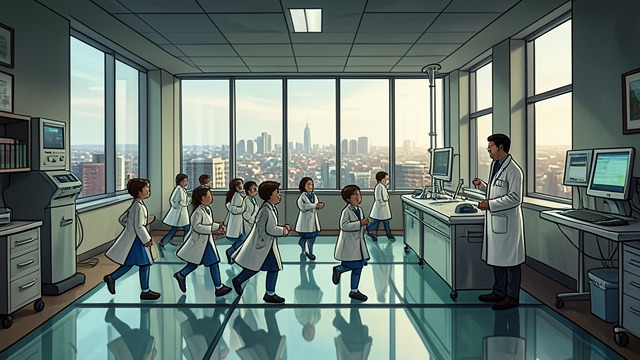
Public Use and Social Purpose
A working institution
The house serves the hospital as a physiotherapy space for children. Its open floor supports treatment, and its former luxury becomes a resource used by people far removed from the original family.
The change gives the building a social function without erasing its earlier history.
A new political claim
Local officials present the building as a public asset, while heritage advocates argue for preservation. The competing claims reveal that no political system simply inherits a neutral space.
The Spring’s Promise Fades
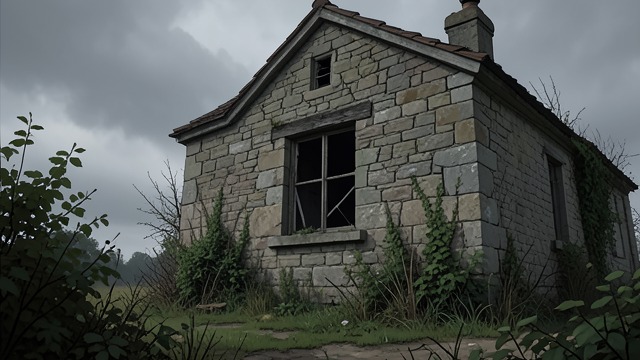
Openness Is Reversed Again
Reform interrupted
The reform period creates the possibility of cultural and political openness, but Soviet intervention ends it. Hana expects normalization to restore familiar controls.
The hopes attached to the heritage project and public life become uncertain.
Repeated historical pattern
The building’s successive uses show that a language of public benefit can accompany very different kinds of power. Openness remains an aspiration, not a stable political condition.
A Public Symbol in 1990
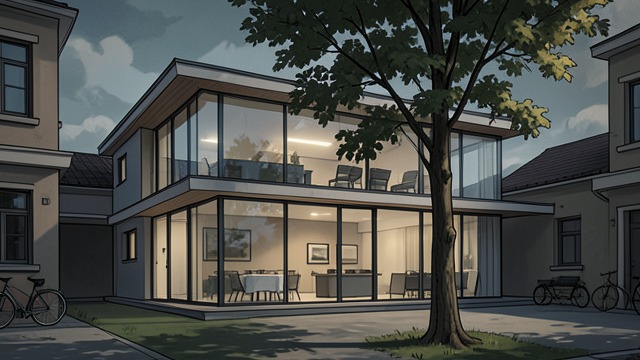
The Ideal Revisited
The house as heritage
The house is presented as a symbol of modern architecture and, by some visitors, of peace. Former occupants return to find their private past placed within a public narrative.
The building’s recovery offers a new kind of visibility after decades of political control.
No final guarantee
The history of occupation, confiscation, and repeated state use prevents the house from serving as a simple symbol of progress. The ideal survives only alongside its failures.
During the late 1920s
During Nazi occupation
During communist rule
After the 1968 Soviet intervention
After the fall of the Iron Curtain
