
Laník’s Rise Through Wartime Survival
The Glass RoomThis flow tracks Laník’s transition from servant and caretaker to opportunistic trader and, eventually, a political official who shapes the house’s public history.
increasing Bearing strength in each event
 decreasing
Bearing strength in each eventdecreasingA Servant at the House
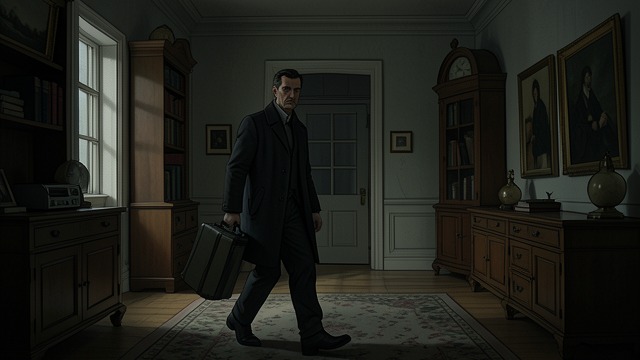
Near the Family, Outside It
Work and observation
Laník serves the household as chauffeur and caretaker, moving through a home whose owners possess wealth and influence. He sees its routines from the margins and resents what he cannot share.
His familiarity with the house gives him practical knowledge, but not belonging.
Quiet surveillance
Laník watches the Landauers and forms his own judgments about them. His position allows him to observe private life while remaining largely unnoticed by those he serves.
Caretaker After Flight
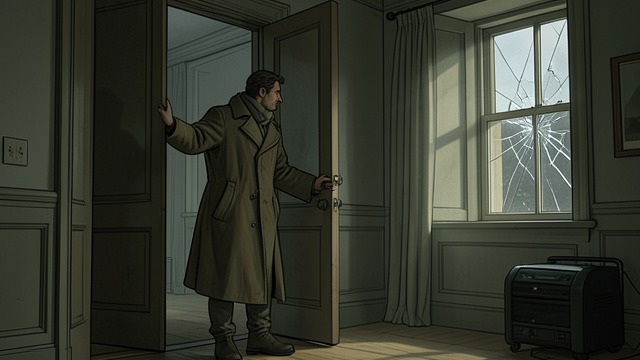
A House Left Behind
New authority
After the family departs, Laník finds himself responsible for a building that once belonged to them but is now subject to state seizure. He prefers control of the place to its beauty or former purpose.
He takes possession emotionally before the formal changes are complete.
Self-interest
Laník and his sister remain in the building and debate whether the Landauers will return. His private answer is that the house and its contents can be turned to advantage.
Trading from the Basement
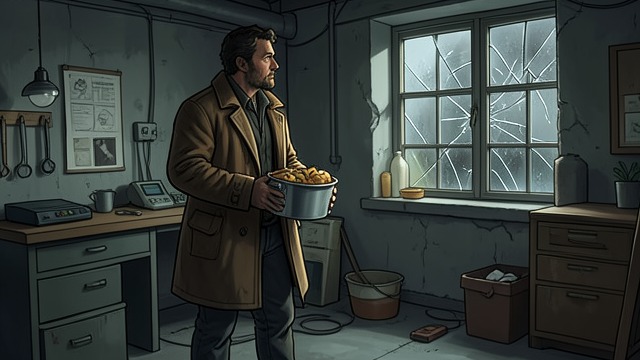
Survival Becomes Enterprise
Hoarded necessities
Laník stores food, fuel, cigarettes, and other scarce goods in the basement. As ordinary commerce collapses, he trades those supplies for what people can offer.
He presents accumulation as preparation, but his sister sees how easily survival becomes exploitation.
The house as a resource
The building’s hidden rooms and storage spaces make Laník’s informal business possible. He treats the former family home as a reserve of both shelter and exchange value.
Surviving Bomb and Battle
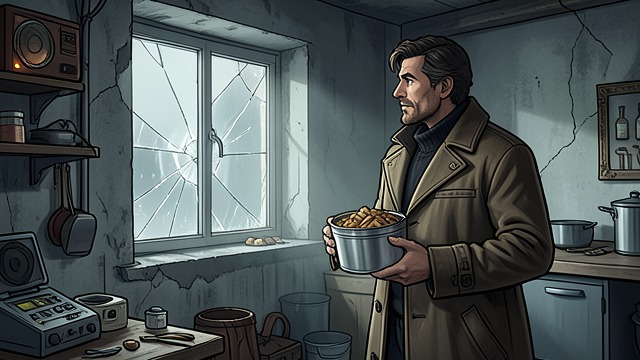
The Building Under Fire
Bomb damage
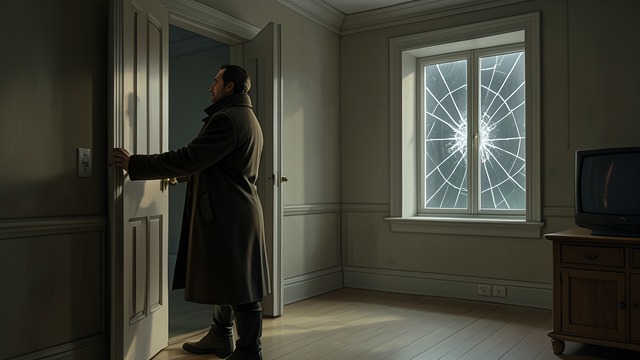
A bomb strikes the garden, shattering the Glass Room’s windows and damaging the interior. Laník and his sister survive in the basement, but the house loses the transparency that once defined it.
The damaged building becomes a dark shelter rather than an elegant modern home.
Occupation changes hands
As Soviet troops reach Město, Laník negotiates with soldiers to protect his stores and position. He survives by adapting to whichever authority controls the street.
Official History and Return
The Caretaker Becomes a Narrator
Political advancement
After the war, Laník rises into local political life and becomes a public guide to the building’s wartime history. He presents his conduct in a flattering account of resistance and preservation.
His story omits the more self-serving choices that the reader has witnessed.
Memory disputed
When Liesel returns, Laník addresses her with official confidence, though she remembers the servant who made her uneasy. The gap between his narrative and hers reveals how power shapes public memory.
During the Landauers’ years in Město
Immediately after the Landauers leave in March 1939
During wartime scarcity and German retreat
November 1944 and the Soviet capture of Město
After the war, culminating in the 1990 return
