A Czechoslovak identity beyond ethnic divisions
The Glass RoomA Czechoslovak identity beyond ethnic divisions is the civic ideal that Viktor Landauer imagines for his family and his country: belonging chosen through common political life, not dictated by ethnicity, religion, or a single language. The novel gives this hope a home in the modern house he commissions, carries it into his children’s multilingual upbringing, and subjects it to the pressures of persecution and flight. Its decisive contradiction is that a person may reject inherited divisions, yet still be classified and endangered by states that make ancestry a legal fate.
A chosen political identity
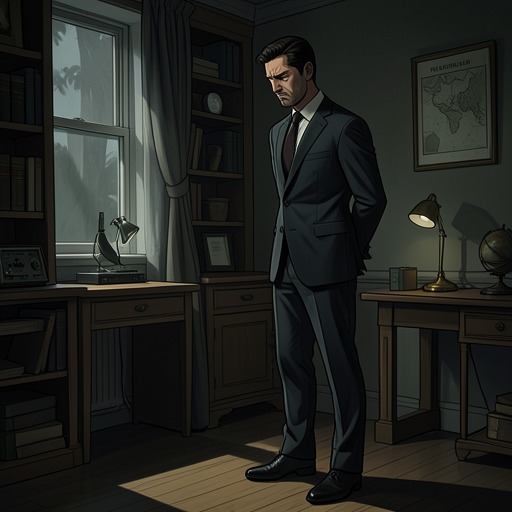
Viktor’s vision for the house grows from a wider conviction about the future of Czechoslovakia. He and Liesel have already considered conventional proposals, from gables and towers to ornate, mullioned windows, and even inspected a studio’s balsa-wood-and-celluloid model. None answers Viktor’s wish for a future not confined by race or creed. His politics are embodied in ordinary practices as well as declarations: he speaks Czech alongside German, reads Lidové Noviny, and invokes innovation and progress. He regards Czechoslovaks as newly created political beings able to choose their history and make a new world, rather than as people whose identities are settled by a German or Slavic inheritance.
The house is to make that aspiration inhabitable. When he asks Rainer von Abt to sketch the sort of space the architect would wish to enclose, Viktor describes a steep hillside above Lužánky Park, with the whole city spread out below. The imagined building is a family home of about three hundred square metres, for Viktor and Liesel and no more than three children. Its outlook places private life against the civic landscape: this is not simply a refuge from the world, but a home conceived in relation to a city whose inhabitants, in Viktor’s hope, can share a future across inherited divisions.
That ambition is condensed in his description of the project as universal: neither Jewish nor German nor Czech, but international. The formulation does not mean that Viktor has no attachments. His engagement with Czech language and politics is explicit, as is his Jewish inheritance. Rather, the house expresses his resistance to making any one of those identities the exclusive measure of a person. In the glass building’s modernist clarity, he seeks a form suited to a future not governed by the ethnic and national categories that older architectural styles seem to preserve.
Language, family, and the future
Viktor’s civic ideal becomes a domestic practice in the children’s upbringing. Liesel speaks German to them, while their nanny, Liběna, speaks Czech; as a result, both children, especially Ottilie, move readily between the languages. Multilingualism is not treated as a problem to be resolved by choosing one national culture over another. It gives the children a lived capacity to cross a boundary that political rhetoric often treats as fixed.
Viktor wants his children to escape labels not only by language but by culture and family identity. His stated hope is that they grow up as citizens of the world. The arrangement thus links the intimacy of everyday care to his larger belief in a chosen civic future: the children’s ease between Czech and German gives the ideal practical substance, while his opposition to labels resists the idea that their parentage should dictate their place in the world.
The novel nevertheless distinguishes this universalist hope from the particular histories that make it necessary. Viktor’s identity does not disappear when he rejects ethnic divisions. As antisemitism intensifies beyond Czechoslovakia’s borders, the children’s mixed inheritance becomes a potential target of state classification, and the family’s multilingual home cannot insulate them from the laws and institutions of other countries.
The pressure of borders and racial law
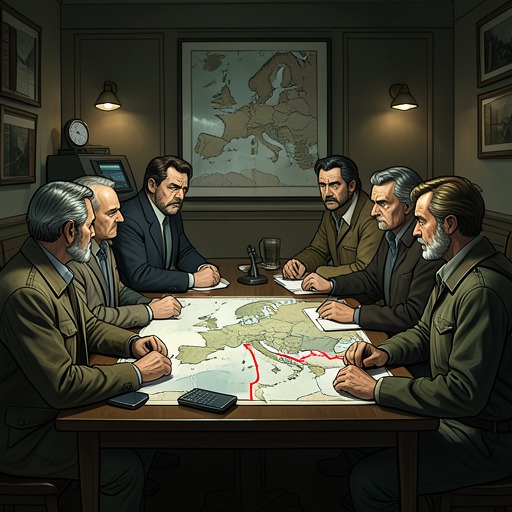
A new border makes the conflict visible even before the family’s flight. Von Abt describes passport control on the way to visit as absurdly ironic: a world moving forward has created a border where none existed before. Liesel answers that change has cost some freedoms while bringing others. The exchange captures how a new political order can promise collective possibility and at the same time place movement under fresh administrative control. The civic identity Viktor imagines must operate in a world where papers and borders increasingly determine who can pass.
The threat becomes more intimate when Viktor reads that Jewish doctors in Germany are being forbidden to treat non-Jewish patients. Liesel initially imagines that the news belongs to another country, another world; Viktor’s silence marks the distance between her confidence and his recognition that fellow Jews are being targeted in the present. He has come to accept his Jewishness as an ordinary fact of inheritance, not an atavistic rediscovery of origins. Yet German law turns that inheritance into a state-imposed category. Were the family in Germany, he would have to alter the ownership and management of Landauerovy Závody so that only Aryans held executive and board positions; the family would need a different doctor, and Viktor’s marriage to Liesel, though still valid, would be treated as an anomaly. Ottilie and Martin would be classified as Mischlinge, or half-breeds, and designated lesser beings. The narration’s blunt judgment that this is absurd does not soften the fact that it is happening.
The pressure also exposes the limits of Viktor’s hoped-for belonging in social life. When a German guest appeals to him as someone with a duty toward German national culture, Viktor answers that he is not German but Jewish. The reply refuses the assumption that speaking German or being addressed as a Czech German settles his allegiance. It also shows why a universal identity cannot simply be declared into existence: others claim the authority to define him, while the legal and social consequences of their classifications fall on his family.
Refuge, unequal vulnerability, and the test of universality
The refugee committee held in the house’s Glass Room brings the abstract question of belonging into a room full of people made vulnerable by displacement. Three adults and three children are ushered before the assembled audience: a middle-aged couple with a ten-year-old boy and a fifteen-year-old girl whose spectacles have a cracked lens, and a woman with her young daughter. Their crumpled clothes suggest a difficult journey, though the narration leaves the precise circumstances uncertain. The room takes on the quality of a small theatre, with the refugees placed in view of people who can watch and discuss their presence. The scene makes a sharp contrast with Viktor’s ideal of a space governed by reason and proportion: the people seeking assistance appear as individuals, but the committee’s arrangement risks turning them into a display.
Among them is Kata, whom Viktor recognizes. Later, she explains that he helped her when it was difficult to get by. She challenges the assumption that accepting money should make her ashamed, pointing to the material facts of poverty: finding work, paying rent, securing a place to sleep, and buying clothes for a baby. Her account makes clear that freedom of choice is shaped by economic circumstance. The novel thereby complicates any account of universal belonging that leaves unequal resources out of view: the same society does not give everyone the same room to refuse dependence or to secure safety.
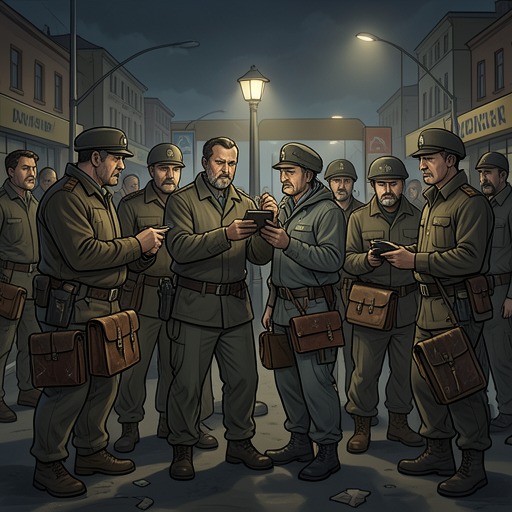
The difference between legal papers and actual protection becomes still more stark at the station during the family’s flight. A German official demands documents. Viktor lays out the family’s papers, including French transit and Spanish visas, and identifies the people travelling with them: Liesel, their two children, their nanny, and the nanny’s daughter. Katalin has a refugee passport, a Nansen passport, but the official does not let Viktor speak on her behalf. Officials examine her papers, then take her by the elbow toward a hut. When Marika is separated from Liesel and pushed toward her mother, Liesel tries to reassure the child and says she will be looked after; Viktor protests that Katalin’s papers are in order and valid for travel. He is warned that he too may be detained if he does not move back to the train.
The scene does not resolve the danger by appealing to shared humanity. The crowd’s fear of being singled out helps clear space for the inspection to continue, and the family is pushed back toward the carriage while Katalin and Marika are taken away with their suitcases. The episode shows the practical limit of a border-crossing identity: papers may document a person’s status without securing passage, and a family’s wish to stand together cannot prevent officials from separating its members. The identity Viktor hopes to build remains ethically compelling precisely because the novel shows what happens when institutions deny its premise—when belonging is assigned by race, mediated by documents, and enforced through unequal power.
A house transformed
The changing use of the house makes the conflict material. Its construction has proceeded alongside Ottilie’s growth: her first grasp, focused gaze, smile, recognition of her parents, effort to raise herself, and laugh unfold as the building’s steel beams are laid, concrete poured, and spaces enclosed. Delays, shortages of materials, and disputes with the workforce interrupt the work before the shell is completed in winter. This parallel connects the ideal of a future home to the slow, contingent labor of making one, rather than to a finished architectural image alone.
That home is later remade into an institution for racial classification. Offices occupy the upper floors, the kitchens are converted into a laboratory, and a basement room is prepared for an X-ray machine. The onyx wall stands before anthropometric equipment: scales, a height-measuring stand, and a chair fitted with suspended steel rulers. The dining area becomes a photographic studio; the Rolleiflex camera is set up before the curved Macassar panelling. Even the family’s Bösendorfer piano remains, tuned by a Jewish piano tuner, amid this transformation. In the garage, once used for two Landauer cars, large Hollerith machines and boxes of files establish a new documentary apparatus.
The change is more than a reversal from private home to public institution. The same architecture once meant a future beyond ethnic categories; it is now used to measure bodies and sort people according to the categories Viktor rejected. The house’s light and openness cannot guarantee moral or political transparency. Its rooms can be reassigned to an institution that makes inherited identity into data, while the piano and onyx wall carry traces of the former home into that new order. The novel’s civic ideal survives not as a protected condition but as a standard against which such transformations—and the exclusions they enact—can be understood.