Czechoslovak army
The Glass RoomThe Czechoslovak army is presented less as a sequence of battles than as the institution caught between military readiness and political abandonment. Its mobilization raises the prospect of another war, while its enforced inaction during the dismemberment of the country marks the collapse of the state it was meant to defend.
Mobilization and the Memory of War
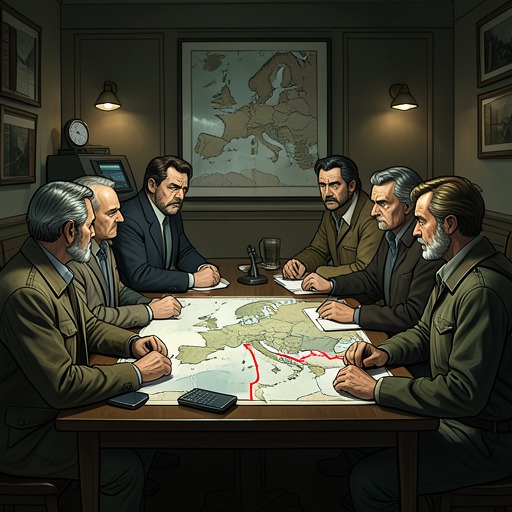
When news reports German troops massing at the border, the Czechoslovak army mobilizes. The description gathers the sounds and movements of preparation—sabre-rattling, roaring engines, marching boots—into a renewed military spectacle. For Viktor, the scene recalls the previous war, when he held a bureaucratic post at a headquarters in Graz and watched thousands march away to die.
That earlier conflict had also brought Viktor together with Benno, Liesel’s brother. They met by chance near a parade ground where Benno’s unit was assembling. Their conversation turned to home and family, and Benno told Viktor that his younger sister, then about fourteen or fifteen, had a crush on him. The army thus connects national mobilization with a private turning point: hearing that he was loved was a new experience for Viktor.
Readiness and Threat
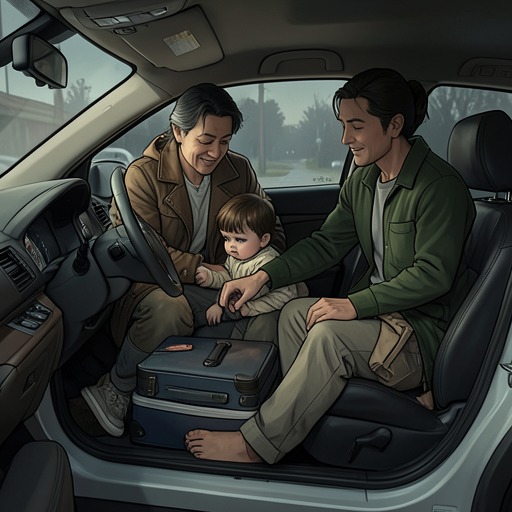
The army’s mobilization also enters the Landauers’ family life. During a summer holiday at Marienbad, the Czechoslovak army becomes Landauer Motors’ largest customer, ordering military vehicles and lorries. On a drive toward the monastery at Teplá, the family encounters a column of army trucks heading toward the border, prompting Martin to ask his father whether they are going to fight.
The holiday’s appearance of security is shadowed by signs of political danger. Calls for Anschluss appear as graffiti, Sudetenland flags fly over the spa gardens, and military vehicles move toward the border. The army’s presence signals preparation, but the family’s question remains unanswered in the supplied scene; the contrast is between visible readiness and an increasingly uncertain future.
The Army During the Dismemberment of Czechoslovakia
That autumn, the Great Powers assist in dividing the country. The Czechoslovak army stands down while German troops enter towns including Eger, Karlsbad, Teplitz, and Liberec. Poland takes part of Czech Silesia, and Hungary takes parts of Slovakia. The army’s inaction is set against the movement of soldiers across the country and the flight of refugees, who travel on crowded roads and trains with their belongings.
The narration frames the country’s partition as the removal of limbs from a body, but its central political fact is stark: the army watches while territory is taken, and the Republic of Czechoslovakia ceases to exist. The truncated successor, called CzechoSlovakia in the account, is described as a short-lived remnant. Military mobilization has not prevented the state’s destruction; the army’s stand-down makes the distance between readiness and effective defense visible.
Aftermath and Historical Memory
The army’s story is carried forward through the later consequences of the country’s rupture. Decades afterward, an invitation from Město’s authorities asks Liesel to witness the handover of the house. Her son Martin warns that accepting could amount to recognizing the city’s legal ownership. A city representative presents the invitation as part of a changed political climate and an effort to restore relations, address past errors, and open toward the West. The dispute shows how the collapse of the prewar state continues to shape questions of property, return, and public recognition.
The family’s recollection of the postwar years further complicates any simple account of restoration. Liesel says they had believed Hana dead after hearing of her arrest and deportation in 1942; after the war, expulsions and displaced people’s attempts to return made information difficult to obtain, and the Iron Curtain later seemed to close the country off altogether. The novel’s later scenes in the Glass Room bring the family back into a place shaped by these successive political changes, but they do not undo the losses or settle the ownership dispute. The army’s brief wartime role therefore belongs to a longer history in which the state’s collapse keeps reverberating through family memory and the possibility of return.