Glass Tranquillity
The Glass RoomTomáš’s Glass Tranquillity is both a hospital gymnasium and an imagined refuge from time: a bright, still space where he can be with Zdenka. Its apparent openness promises honesty, yet the room also becomes a setting in which his desire to live only in the present conflicts with Zdenka’s need to reckon with their relationship and its history.
A room that means peace
Tomáš always calls the gymnasium the Glass Room. The name carries a linguistic double meaning: the word he uses for “room” can also mean peace, tranquillity, or quiet, so the Glass Room is also, in his hearing, Glass Tranquillity. The room seems to belong to no particular period or style. For Tomáš it is simply light and stillness, a place to be with Zdenka after work.
The gymnasium is not literally a private retreat. It is a state-owned hospital space where Tomáš treats children whose bodies have been impaired by disease. Zdenka also holds dance classes there after work to earn extra money. Although this private use of the building is irregular, it is tolerated because some of the dancers are children of Party officials. Tomáš sometimes sits in a corner to watch them practise. Their ungainly or beautiful movements, and their lively chatter when they relax, offer him relief from his medical work; he thinks of their voices as like swallows.
Openness and erotic performance
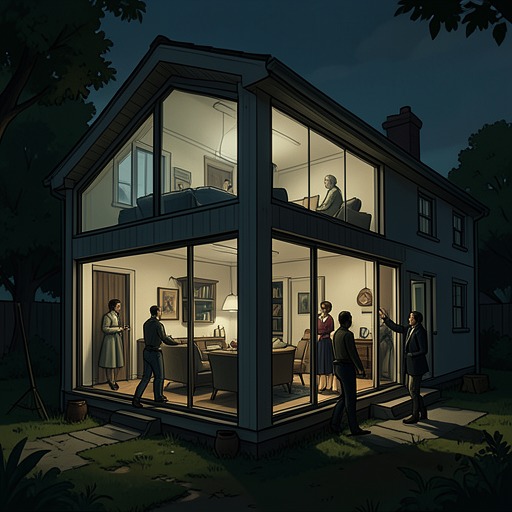
After one class, Tomáš persuades Zdenka to dance naked. She protests that she feels shy, but he insists that the Glass Room demands openness and honesty. He opens the curtains, bringing the evening light and the city’s roofs into the scene as witnesses, and says that he wants her to dance before the city and the world. The exposure is symbolic: from outside, nobody could make out her naked figure through the panes. Yet the glass makes the imagined audience feel real, turning intimacy into a performance before an unseen public.
Zdenka’s dance changes as she moves. At first she dances poorly, her body seeming out of step with the music; then the movement takes over and she appears to Tomáš as a water creature, her limbs undulating and her hair moving like sea grass. The transformation ends in a distinctly erotic image, and they make love more passionately than before on the gymnasium floor, in front of a city and world that cannot see them. The room’s transparency thus produces not actual public scrutiny but a charged sense of exposure shared unequally: it excites Tomáš and intimidates Zdenka.
The present against memory
The name Glass Tranquillity returns when Tomáš and Zdenka face what will happen to them. Their five days in Paris have already become past experience, but Tomáš does not grant the past any lasting reality. He treats the present moment in the Glass Room—with a cigarette and a view over the city—as the only time that exists. When Zdenka asks what will happen now, he answers by reducing their future-facing question to the immediate act of making love.
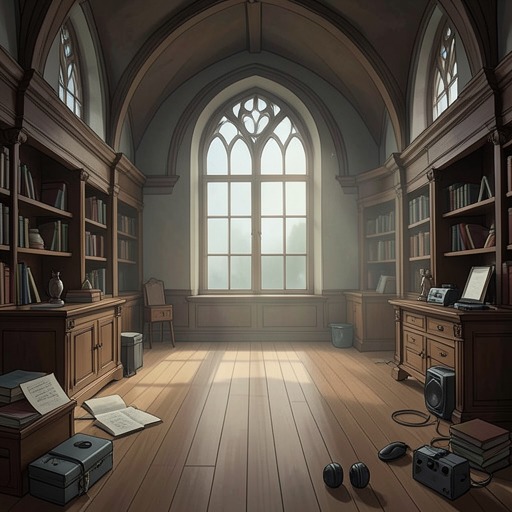
Tomáš explains the room’s supposed perfection through its lack of points of reference: it has no memories or illusions, he says; it simply exists. The bare space, chromium pillars, white walls, cream floor, and curved wooden panels seem to support his fantasy of a place detached from history. Even the wall of patterned stone, the room’s one irregular feature, stands out against this spare setting. But the claim that the room has no references cannot hold. Zdenka tells him that the building was once a famous private house belonging to the Landauer family, who made cars before the war. The gymnasium’s present use has overwritten, but not erased, that history.
Intimacy and estrangement
Zdenka’s tears expose the cost of Tomáš’s retreat into the eternal present. He is confused and tries to comfort her, but she pushes him away and calls him cold. She contrasts the warm, loving man she experienced in Paris with the one who now insists that the Glass Room and their immediate physical intimacy are enough. His sanctuary from memory is, for her, a refusal to answer for the relationship beyond the moment.
She then asks whether there is another woman and connects her uncertainty to Tomáš’s emotional distance. He dismisses the suggestion as absurd. The exchange makes the room’s promise of openness sharply ambiguous: its glass and imagined exposure have enabled a naked dance, but they have not made Tomáš emotionally transparent. Glass Tranquillity is therefore not a settled peace. It is an ideal Tomáš uses to suspend memory and consequence, while Zdenka’s questions bring the past and the uncertain future back into the room.