Hana's letter to Liesel
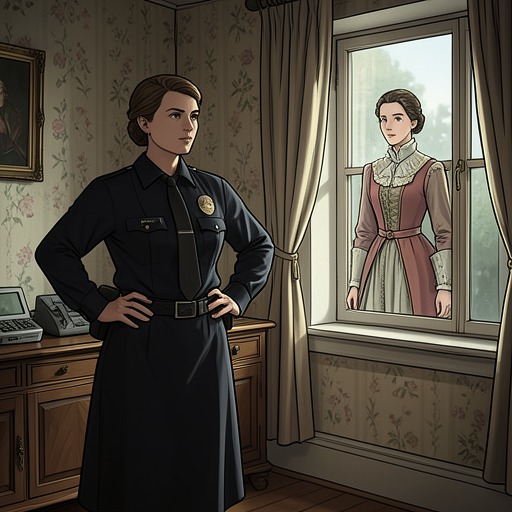
The Glass RoomHana’s letter to Liesel is the long-delayed sign that Hana Hanáková is alive, transforming a family visit into a private encounter with a past Liesel had believed ended in death. Marked “personal,” written in handwriting Liesel recognizes, and addressed through intimate Czech phrases, the letter is not read aloud to the gathering: Liesel takes it in her hands and asks to be left alone with it.
Arrival and Discovery
The letter appears during Veselý’s visit, among the papers he brings to the family. He presents it as another letter, apparently from someone on Město’s architecture committee, and points out that the envelope is marked “personal.” That label already distinguishes it from the political matter being discussed around the visit, but the contents prove more consequential than an ordinary committee message.
Ottilie takes the envelope. Although she asks whether she should open it for her mother, she has already done so and can see the scrawl of handwriting. Turning the pages over, she notices the writing on the back and reacts with astonishment: the letter is from Auntie Hana. The discovery enters the room through Ottilie’s voice, before Liesel herself has confirmed what the letter means.
The News That Hana Is Alive
Liesel responds with disbelief. She moves her head as though trying to see through fog and says she thought Hana was dead. The letter therefore does more than carry a message: its mere presence contradicts the family’s settled understanding of Hana’s fate. For Liesel, the first question is not what Hana wants, but whether the sender can truly be the woman she remembers.
Ottilie reads out two short Czech phrases and supplies their English meanings: “Moc pro mne znamenáš,” meaning that Liesel means a great deal to Hana, and “Líbám tě,” meaning “I kiss you.” She adds that the handwriting seems familiar and recalls the letters Liesel used to receive in Switzerland. The new letter thus links the present discovery to an earlier correspondence and gives the apparent reunion a recognizable, intimate continuity.
Handwriting, Touch, and Privacy
Liesel reaches for the letter and holds it herself. When Ottilie offers to read it aloud, Liesel repeats her request to have it. She keeps the page for a moment, lays it on her knee, and runs her fingers over the spider-scrawl of the handwriting, as if contact might let her sense what the writing contains. The gesture makes the material page, and not merely its words, central to the recognition: handwriting is a trace of the person whose survival Liesel cannot yet quite accept.
Veselý watches Liesel’s fingers move across the page and briefly wonders whether she might be like people he has heard of in the Soviet Union who could read through their fingertips. His speculation is explicitly framed as an absurd thought, not as an ability the scene confirms. What the moment does establish is Liesel’s reluctance to surrender the letter or receive it secondhand. She wants possession of the page before anyone reads its contents for her.
A Private Reunion in Prospect
When Liesel asks whether it can really be Hana, Ottilie answers that this is what it seems and offers to read the letter. Liesel does not accept. Instead, she says that they should be left alone because this is a private matter, and insists that she does not want the letter read in front of everyone. The request changes the room’s terms: a document introduced during a family and political discussion becomes an encounter reserved for its recipient.
The letter’s decisive effect in this scene is therefore both factual and relational. It makes Hana’s survival newly credible, recalls the letters that reached Liesel in Switzerland, and conveys affection in Hana’s own handwriting. Yet its full message remains unread before the others. The passage closes not with a completed reunion, but with Liesel claiming the privacy in which she can face the letter—and the possibility of Hana—on her own.