Hartheim Castle
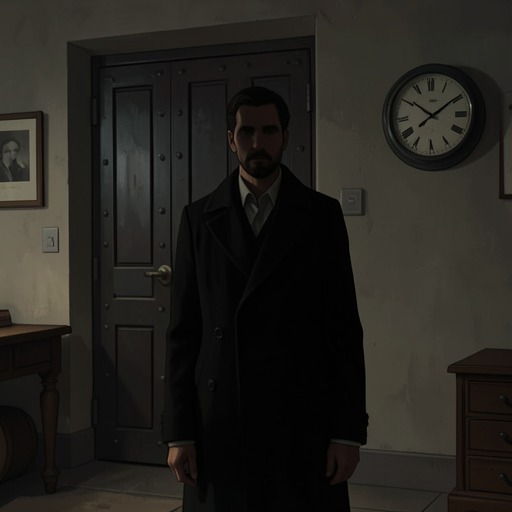
The Glass RoomHartheim Castle is the Upper Austrian institution to which Rainer and Hedda take their four-year-old daughter, Erika, and where she is killed. Recalled in the Glass Room, the Castle stands for the lethal violence hidden behind administrative efficiency and the promise of medical mercy. Rainer’s account reveals both the circumstances of Erika’s death and the persistent moral wound he attempts to explain away as an act for the best.
Setting and Appearance
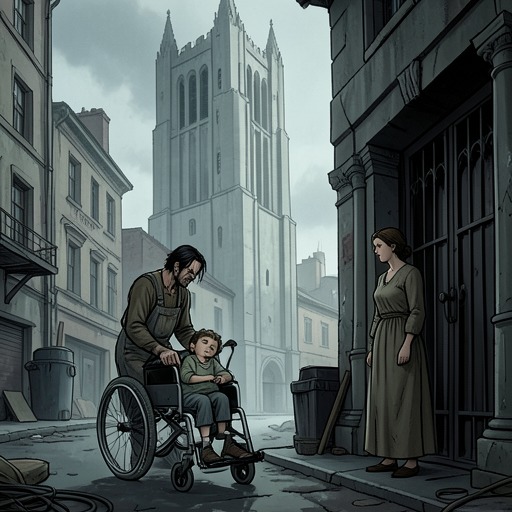
The Castle stands on high ground at the edge of a quiet village in Upper Austria. Its shape makes it seem secretive: it is tall and hunched, ringed by high walls, with windows likened to small, surprised eyes. Pointed corner towers rise beside a clock tower topped with an onion dome, while a steep grey-tiled roof completes the outline. The architecture’s watchful, enclosed quality distinguishes the institution from an ordinary clinic before its function is disclosed.
The journey to the Castle takes place in winter. Rainer says he and Hedda drive from Munich along difficult roads, park outside the main gate, and carry Erika to the entrance through the snow. The setting’s quietness and isolation contrast with the speed of the procedure that follows: a bell is rung, and an orderly arrives almost at once, as though the family’s arrival has been anticipated.
Erika’s Arrival and Death
Rainer describes the Castle as a kind of clinic. The family signs forms, but the arrangements have already been made; staff chiefly confirm their identities before showing them to a waiting room. They are told they can use the brief wait as they wish, but saying goodbye to Erika has, in Rainer’s view, already become impossible. He says that they had said goodbye to their child months earlier. After five minutes, a nurse comes and takes Erika away.
When Hana asks what the institution was for, Rainer tells her that Erika was taken there to be killed. He describes the death as intended to be painless and quick, through injections of morphia and scopolamine. He then says he thinks it was for the best. The clinical vocabulary and prepared paperwork do not soften the fact at the centre of the memory: a family brings a child to the Castle, and its staff carry out her death under institutional care.
Rainer’s Account and Its Consequences
The Castle enters the conversation after Hana questions Rainer’s previous account and he says that what she has heard is not what happened. Her expression combines compassion with horror. Rainer resents the pity, and, looking around the Glass Room in the fading light, turns to the memory of Erika. The recalled place gives him a way to tell what he has withheld, but disclosure does not resolve the moral contradiction in his story. He invokes scientific faith and the wish to relieve suffering, yet the admission that Erika was deliberately killed remains inseparable from his claim that it was for the best.
Hana responds quietly that she does not know how to take what he has told her. Rainer answers that there are no easy answers and brings Hedda into the account: a few days after Erika’s death, she returns early from the conservatory, runs a bath, and kills herself with one of Rainer’s razors. The narrative thus makes the Castle’s consequences extend beyond Erika’s death. The parents’ brief, managed farewell is followed by a family bereavement that Rainer cannot present as settled or understood.
Memory and Narrative Significance
The Castle is encountered through Rainer’s recollection, not as a present-day destination. Its story is set within a later exchange in the Glass Room, where the surroundings and Hana’s response frame an account that Rainer has been reluctant to give. The movement from Hana’s question to the winter journey, the waiting room, and the nurse’s arrival transforms the Castle from an ominous architectural image into the site of a specific killing.
The institution’s orderliness is central to its significance. Identity checks, signed forms, an arranged waiting room, and a prompt handover make the process appear controlled and routine, while Rainer’s description makes clear that this procedure ends in a child’s death. His later reference to taking Erika to Hartheim Castle when discussing the need to suppress pity shows that the memory remains a measure against which he understands his own emotional responses. The Castle therefore holds together the story’s tension between a claimed scientific rationale and the irreducible human cost that rationale cannot erase.