Landauer Family Chata
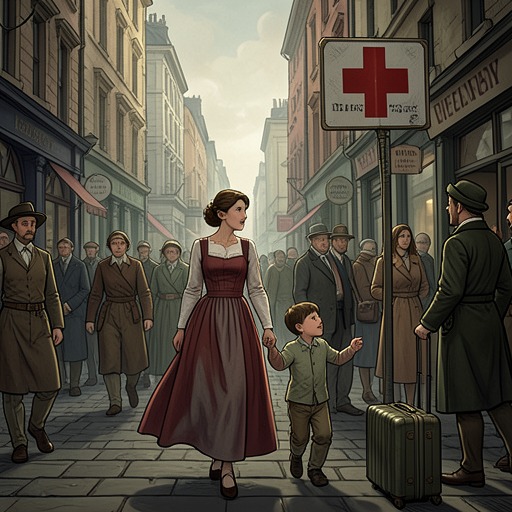
The Glass RoomThe Landauer Family Chata is a small summerhouse on the Landauer estate, first remembered as a childhood hideaway and later offered by Liesel as temporary shelter to Kata and her daughter, Marika, after they flee Vienna. Its cramped domestic scale contrasts with the modernist Landauer House above it. Within the chata, refuge becomes entangled with Viktor’s renewed attachment to Kata, turning a practical act of hospitality into a private and precarious space of desire.
A childhood hideaway
Liesel recalls the chata as a place she and Viktor used when they were children. It also carries a more particular memory: when Liesel had scarlet fever, she stayed there with a nurse so that her brother Benno would not catch the illness. The recollection gives the building an intimate history before it becomes a shelter for refugees. It has already served as a space set apart from the main household, associated with childhood, sickness, and protection from contagion.
The chata is not a second grand residence but, as Liesel explains, little more than a hut. It has a cooker, or at least once had one, and a bathroom with only a shower. There is scarcely room to turn around. Her suggestion that Kata and Marika live there is therefore both generous and provisional: the building can give them a measure of independence while they find their footing, but it cannot erase the insecurity that brought them there.
Shelter for Kata and Marika
Liesel proposes the chata after learning that Kata has little family to rely on. Kata describes herself as the black sheep who left home for the city and has not seen her relatives for years. Liesel turns to Viktor to ask what he thinks, then explains the building’s limited facilities to Kata. She offers more than a roof: Kata can be her own mistress while she sorts out her circumstances, and Liesel suggests that her skills as a dressmaker may help her find work. The offer gives practical shape to Liesel’s impulse to help rather than leaving it at sympathy.
When Liesel returns from speaking with her mother, she runs down the steps to tell the others that the arrangement is acceptable as an act of Christian charity. Her excitement recalls her earlier enthusiasm and emphasizes how wholeheartedly she takes up the plan. The chata becomes a refuge within the grounds of the Landauer estate, close enough to offer assistance but separated from the main house by hedges, a garden, and changes in elevation. That physical arrangement makes shelter possible while also preserving a boundary between the refugees’ precarious independence and the Landauers’ protected domestic life.
Viktor’s visits and the private space of desire
For Viktor, the route to the chata passes through the French windows and across the lawn, toward hedges that conceal it from the house. The path carries its own past: when he and Liesel were courting, they used the summerhouse to kiss and cuddle, though Liesel would stop him from going further. The remembered intimacy makes his later visits to Kata occur in a place already marked by his marriage and its earlier limits.
The building itself is plain: brick footings, dark creosoted wood, and a tarpaper roof. Yet when Viktor approaches it alone, its silence and concealment make it seem threatening, like a fairy-tale cottage inhabited by a witch who eats children. The image gives his movement toward Kata a quality of apprehension. The chata is at once familiar and estranged, a secluded refuge whose apparent safety is shadowed by the secrecy of the relationship developing there.
Inside, Kata is adjusting one of Liesel’s black silk dresses, a Schiaparelli garment Hana had brought back from Paris for Liesel. The dress links the hidden meeting to the household above and to the women’s movements across borders. Kata tells Viktor that the arrangement between them is over: she understands his help as an act of business and escape, not a promise of intimacy. She has little time before Marika returns from school and lunch must be prepared; she is also wary of being seen, especially by an older woman who watches the household closely. The chata may be screened from the main house, but its occupants remain subject to observation and suspicion.
Viktor’s account of the visit as an ordinary check on Kata’s welfare cannot quiet his feelings. He tells himself that he has only dropped by to see how she is managing in exile, invoking the obligation one owes to a workforce. Yet he has lost his sense of time in the close confines of the chata and in Kata’s presence. When he leaves, the upstairs window of the big house is closed, the garden appears empty, and only about fifteen minutes have passed. He climbs back toward the trees separating Kata’s part of the grounds from his own, aware of the undergrowth as a way through and a barrier at once. The refuge has become a place where his carefully managed explanation collides with an attachment he cannot contain.
A small space within a changing estate
The chata’s meaning is inseparable from its position below the Landauer House. The main house’s open modernist spaces can be transformed into offices, a laboratory, and a photographic studio under Nazi occupation; the Glass Room’s onyx wall becomes a backdrop for anthropometric measurement, while the building’s former domestic life is appropriated for racial science. Against that institutional takeover, the chata retains the scale of a hut and the layered associations of a hideaway, refuge, and secret meeting place. It is not untouched by history: the refugee crisis brings Kata and Marika to its door, and Viktor’s visits make their shelter part of the Landauers’ own intimate conflicts.
Later, under Communist rule, the Landauer House is used as a children’s gymnasium, which Tomáš calls the Glass Room. He values it as a space of light and stillness, and it becomes a place where he can be with Zdenka; the room’s name also carries an association with peace and quiet. In a later account of the house, a journalist identifies it as a modernist architectural treasure in the Blackfield district, overlooking Lužánky Park and the city centre. The chata belongs to the same estate but to a different register of space: not the celebrated two-hundred-and-thirty-square-metre living room with its glass walls, but a small, screened building whose importance lies in the lives temporarily held within it.
After the fall of the Iron Curtain, the Landauer House is restored as an architectural site: original furniture is returned approximately to its places, and plate glass restores the Glass Room’s clarity. Visitors arrive to see the modernist building, and Marie Delmas eventually comes from Paris after recognizing it in a book. That later history makes the contrast between public monument and private refuge especially sharp. The estate can be repaired, displayed, and interpreted as architectural heritage; the chata’s significance comes instead from its remembered uses, the fragile shelter it offers, and the concealed passage between domestic generosity and desire.